What You Need to Know About Solar Permits in Oregon
Oregon requires two permits for solar panel installation: a structural permit and an electrical permit. The Oregon Building Codes Division (BCD) mandates these permits for all qualifying residential and commercial solar PV installations under the Oregon Structural Specialty Code (OSSC) Section 3111 and Oregon Residential Specialty Code (ORSC) Section R324.3.
Solar permits in Oregon cost between $576 and $770 for building permits, plus $143 to $265 for electrical permits, depending on system size and permit pathway. Oregon offers two permit pathways: the prescriptive pathway (no engineer required, lower fees, faster approval) and the engineered systems pathway (requires Oregon-registered design professional, higher fees, longer review).
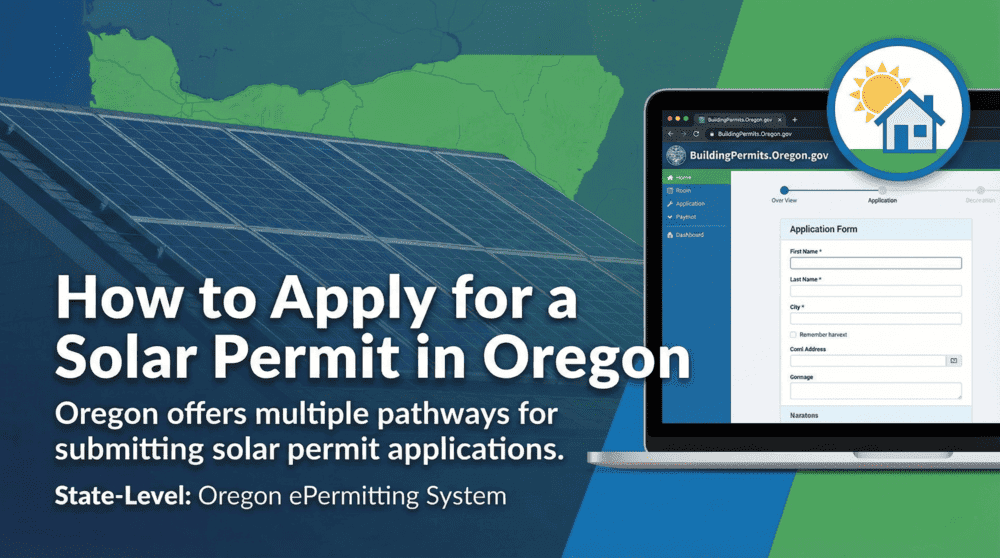
Homeowners and contractors can apply for solar permits online through the Oregon ePermitting system at BuildingPermits.Oregon.gov or through local jurisdiction portals like Portland’s Development Hub PDX (DevHub). The permit review process typically takes 1-4 weeks, and both structural and electrical inspections are required before system activation.
This guide covers Oregon’s complete solar permitting requirements, including required documents, application steps, permit fees, inspection processes, and common mistakes to avoid.
Why Solar Permits Are Required in Oregon
Solar permits serve as a critical safeguard for homeowners, contractors, and the broader community. Under Oregon building codes, a structural permit is required for all qualifying solar photovoltaic (PV) installations. This is not bureaucratic red tape but a carefully designed system to ensure safety, compliance, and protection for everyone involved.
Structural Safety
A typical residential solar array can add 1,000 pounds or more to your roof structure. Oregon’s permits verify that your roof can safely support this additional load, accounting for factors like snow loads (minimum 20 psf in Oregon) and wind speeds (minimum 98 mph design wind speed). This is particularly important given Oregon’s varied climate conditions, from heavy snowfall in mountainous regions to strong coastal winds.
Understanding solar engineering requirements for permits helps ensure your installation meets all structural standards from the start.
Electrical Safety
An electrical permit is required for every solar installation in Oregon. Solar PV systems involve high-voltage DC electricity that, if improperly installed, can cause fires, electrocution, or damage to your home’s electrical system. The permitting process ensures all wiring, inverters, disconnects, and connections meet the National Electrical Code (NEC) requirements and Oregon Electrical Specialty Code standards.
Fire Code Compliance
Solar permits also address fire safety requirements, including firefighter access paths on rooftops. These clearances ensure emergency responders can safely access your roof and ventilate structures during a fire emergency without being hindered by solar panel placement. Understanding rapid shutdown requirements is essential for fire code compliance.
Grid Interconnection
Most residential solar systems are interconnected with the utility grid. Faulty interconnections can have detrimental effects on utility infrastructure and energy access for your neighbors. Permits verify that your system meets all requirements for safe grid connection, protecting both your property and the broader electrical infrastructure. Learn more about solar interconnection methods to understand your connection options.
Protection for Homeowners
Beyond safety, properly permitted solar installations protect your investment in several important ways:
- Preserve your homeowner’s insurance coverage
- Maintain manufacturer warranty validity
- Ensure property value and transferability when selling your home
- Protect you from fines, removal orders, or legal liability
Installing solar without proper permits can result in significant consequences, including having to remove an unpermitted system entirely at your expense.
Types of Solar Permits in Oregon
Understanding the different types of permits required for solar installation helps ensure you obtain all necessary approvals before and after your installation. Oregon requires multiple permits that address different aspects of your solar project.
Structural/Building Permits
According to the Oregon Building Codes Division, a structural permit is required for all qualifying solar PV installations. This is the primary permit that covers the physical mounting of solar panels to your roof or ground-mount structure. The structural permit process verifies that your mounting system and attachment points are properly engineered to handle the weight of the panels plus environmental loads from wind, snow, and seismic activity.
Electrical Permits
Per Oregon BCD requirements, an electrical permit is required for every solar installation. This permit covers all electrical components of your system, including
- PV panels and their wiring
- Inverters (string or microinverters)
- Rapid shutdown devices
- Disconnects and overcurrent protection
- Battery storage systems (if applicable)
- Grid interconnection point
Electrical permits are typically obtained after installation but before the system is approved for operation. Proper solar conductor sizing per NEC standards is critical for passing electrical inspections.
Plumbing Permits
If you are installing a solar water heating system rather than (or in addition to) photovoltaic panels, you will need a plumbing permit. Solar thermal systems involve fluid circulation through collectors and heat exchangers, requiring plumbing inspections to ensure safe operation and prevent leaks or contamination.
Zoning Permits
Depending on your location, you may need zoning approval for your solar installation. This is particularly important for:
- Properties in historic districts
- Neighborhoods with active homeowners’ associations (HOAs)
- Areas with height restrictions or setback requirements
- Ground-mounted solar array installations
Some jurisdictions may require design review approval, especially if your panels will be visible from the street or affect the aesthetic character of a historic neighborhood.
Standalone vs. Combo Permits
Oregon’s ePermitting system allows for both standalone permits (separate building and electrical permits) and combination permits (building and electrical combined into one permit). Combo permits can streamline the process and allow you to schedule all inspections in one phone call, potentially saving time and reducing administrative complexity.
Oregon’s Two Permit Pathways Explained
One of the most important decisions in the Oregon solar permitting process is determining which permit pathway applies to your installation. Oregon offers two distinct paths: the prescriptive pathway and the engineered systems pathway. Each has different requirements, costs, and timelines.
The Prescriptive Pathway
The prescriptive pathway is designed for straightforward solar installations that meet specific criteria outlined in the Oregon Residential Specialty Code (ORSC) and Oregon Structural Specialty Code (OSSC). This pathway offers a simplified approval process with lower fees and faster turnaround times.
Qualifications for Prescriptive Path:
- The roof framing meets prescriptive standards in the state building code
- Standard mounting configurations are used
- The installation does not exceed typical residential system sizes
- The roof can support the additional load without modification
Key Benefits of Prescriptive Path:
- No Oregon-registered design professional required
- Lower permit fees (Prescriptive Photovoltaic fee includes plan review)
- Potentially faster approval timeline
- Simplified documentation requirements
Portland’s Bureau of Development Services provides a Solar Worksheet that helps contractors determine prescriptive path eligibility by assessing the roof construction through a series of questions during the permit application process.
The Engineered Systems Pathway
When a solar installation does not meet the prescriptive standards, it must follow the engineered systems pathway. This requires more extensive documentation and professional oversight but allows for more complex or custom installations.
When an Engineered Path Is Required:
- Roof framing does not meet prescriptive standards
- Complex roof geometries or unusual mounting configurations
- Larger commercial installations
- Ballasted mounting systems
- Structures with complex roof framing systems
- Solar roof tile installations (in most cases)
Requirements for Engineered Systems:
- Must be designed by an Oregon-registered design professional
- Engineering calculations must be stamped and submitted
- Higher permit fees (Non-Prescriptive Photovoltaic fee plus Structural Plan Review)
- Longer review timeline
For commercial solar design projects, the engineered pathway is typically required due to system size and complexity.
Solar Roof Tiles Exception
Oregon provides a notable exception for solar roof tiles (such as Tesla Solar Roof). These installations are NOT required to be designed by an Oregon-registered design professional, provided they meet all of the following conditions:
- The net installed weight of the system, including all components above the roof sheathing, is less than or equal to 4 pounds per square foot (psf)
- Solar tiles are installed directly over existing sheathing by removing all existing roofing material above the existing sheathing
- All solar tiles (both active and inactive tiles) are uniformly supported over the existing sheathing
For qualifying solar tile installations, instead of engineering calculations, applicants must provide a letter certifying that the installation meets the requirements of section 1507.16 of the 2022 Oregon Structural Specialty Code or section 905.16 of the 2021 Oregon Residential Specialty Code, along with the manufacturer’s installation requirements.
Solar Permit Solutions
Skip the Permit Headaches
We design plan sets that pass inspection the first time. Code-compliant, PE-stamped, accepted by AHJs nationwide.
Required Documents and Submittal Requirements
One of the most common causes of permit delays is incomplete or incorrect documentation. Understanding exactly what documents you need and how they should be formatted is essential for a smooth approval process. All solar permit applications in Oregon must include materials uploaded in Adobe Acrobat (.pdf) format, and all plans must be drawn to scale.
Structural Design Criteria
The structural design criteria must be listed on the first page of the drawings and stamped by a registered design professional registered in Oregon (for engineered systems). At minimum, the design criteria must include:
- Design sloped roof snow load: Shall not be less than 20 pounds per square foot (psf)
- Basic design wind speed: Minimum 98 mph, along with the exposure category
- Solar panel system dead load: The weight of the panels and mounting hardware
Site Plan
A site plan showing the property layout, building footprint, and solar array location is required. This helps reviewers understand the overall project scope and verify zoning compliance.
Fire Access Path
Documentation showing firefighter access paths on the roof is required for most installations. This is not required for solar tile installations. Fire access requirements typically include setbacks from roof edges and ridges to allow emergency responders safe access for ventilation and firefighting operations.
Roof Framing Plan
A roof framing plan showing the existing roof structure is required for most applications. This requirement is waived if the roof is framed using pre-engineered trusses or for solar tile installations. For installations using pre-engineered trusses or solar tiles, provide a roof plan showing the layout of the solar panels instead.
Roof Cross-Section
A roof cross-section detail is required for most applications, showing the roof construction layers. Like the roof framing plan, this requirement is waived for pre-engineered truss roofs and solar tile installations.
System Racking Attachment Detail
This detail is required for both engineered and prescriptive pathways. It must show the attachment to the existing framing and clearly identify:
- PV panels
- Racking system
- Attachment hardware
- Required fasteners
Engineering Calculations
Engineering calculations stamped by an Oregon-registered design professional are required for all engineered systems. The exception is solar tile installations meeting the criteria outlined earlier, which require only a certification letter and manufacturer’s installation requirements.
What NOT to Submit
Portland’s permitting guidelines specifically prohibit certain types of submissions:
- No sketches
- No Google Maps images
- No photographs (as substitutes for scaled drawings)
All plans must be professional, scaled drawings in PDF format. Following a comprehensive solar permit checklist helps avoid common documentation errors.

How to Apply for a Solar Permit in Oregon
Oregon offers multiple pathways for submitting solar permit applications, depending on your jurisdiction. Understanding both the state-level ePermitting system and local jurisdiction processes will help you choose the most efficient route for your project.
State-Level: Oregon ePermitting System
The Oregon Building Codes Division administers an online permit service program that allows contractors and homeowners to apply for building permits from anywhere. Access the system at BuildingPermits.Oregon.gov.
Step-by-Step Application Process:
- Create an Account: Register for an ePermitting account with your username, email, password, and security question. Contractors use their license credentials; homeowners use the homeowner registration process.
- Apply for Structural Permit: Apply for a commercial or residential structural permit and enter the submitted job value for the project.
- Select Category of Construction: Choose the structure type the system is being installed on. Important: Solar is NOT considered “Other” under the category of construction.
- Select Type of Work: If the structure is newly constructed, select “New.” If the structure already exists, select “Alteration.” If installing with a new addition, select “Addition.” Solar is NOT “Other” under Type of Work.
- Fee Assessment: For prescriptive systems, delete automated fees and add the Prescriptive Photovoltaic fee. For non-prescriptive systems, delete automated fees and add both the Non-Prescriptive Photovoltaic fee and Structural Plan Review fee.
- Submit Plans: Upload all required documentation in PDF format.
- Plan Review: Both prescriptive and non-prescriptive installations require plan review. The workflow moves through plan review to the Completeness task.
- Issuance: Issuance fees are collected, and the permit is issued.
Local Jurisdiction: Portland Example (DevHub)
Portland uses its own online permitting system called Development Hub PDX (DevHub) for solar permit applications. Many other Oregon cities use similar local systems or participate in the state ePermitting program.
Portland DevHub Process:
- Create Account: Set up a DevHub account with PortlandOregon.Gov credentials
- Start Application: From your DevHub Home page, select “Apply for a New Permit” and then “Solar Permit Request.”
- Select Permit Path: Choose between Prescriptive Path or Engineered System Path. If unsure, start with prescriptive, as the system will indicate if engineered is required
- Complete Application: Answer required questions about work location, contractor information, category of construction (Residential or Commercial), system type (PV Modules or Solar Water Heating Collectors), and firefighter access
- Upload Documents: Upload your PDF plan set (maximum 100MB file size) and any additional required documents
- Submit: Review acknowledgments and certifications, then click Submit
After submission, you will receive an email confirmation and can track your permit status from the My Permits & Requests page. Portland Permitting & Development also provides helpful resources, including video tutorials showing how to submit applications in both English and Spanish.
Timeline Expectations
Permit review timelines vary based on several factors, including current workload, completeness of your application, and whether corrections are needed. Understanding the average solar permit timeline by state helps set realistic expectations. Generally:
- Prescriptive pathway permits are processed faster than engineered systems
- Portland contacts applicants within one to two business days if additional information is needed
- Plan review typically takes one to four weeks depending on complexity and jurisdiction
- Engineered systems may require longer review periods due to the additional technical analysis required
Solar Permit Costs in Oregon
Understanding permit costs helps you budget accurately for your solar project. Fees vary by jurisdiction, system size, and permit pathway. The following table shows Portland’s estimated permit fees as a representative example.
Portland Solar Permit Fee Estimates
Additional Fee Considerations
- State Surcharge: The Oregon ePermitting system automatically adds a state surcharge to permit fees
- Plan Review: Prescriptive Photovoltaic fees include plan review; Non-Prescriptive fees require separate Structural Plan Review fee
- Valuation-Based Fees: Non-prescriptive/engineered systems use valuation-based structural fees
- Trade Permits: Electrical and plumbing permit fees depend on system size and fixture count
- Final fees: May vary based on the actual size and complexity of your installation
Learn more about how to reduce solar permit design costs and approval times to maximize your project budget.
The Inspection Process
Once your permit is approved and your solar installation is complete, you will need to pass inspections before the system can be energized. The inspection process verifies that the actual installation matches the approved plans and meets all applicable building codes.
Required Inspections
For a typical solar PV installation, you will need:
Structural Inspection: Verifies mounting hardware, attachment points, and load distribution meet approved plans and code requirements.
Electrical Inspection: Verifies all wiring, inverters, disconnects, grounding, and grid interconnection components are properly installed and meet the National Electrical Code.
If you have a combination permit, you can schedule both inspections in one phone call. Separate permits require separate scheduling calls.
Plumbing Inspection: Required for solar water heating systems.
Scheduling Inspections
In Portland, call 503-823-7000 for inspection requests (this number is on your permit inspection record card). You will need:
- Your 7-digit IVR inspection number to identify the project
- The phone number of the contractor or electrician who will be on-site during the inspection
Inspections are typically scheduled within 1-2 business days. For language interpretation assistance, call 503-823-7388 for residential projects or 503-823-7303 for commercial inspections.
Preparing for Inspection Day
To ensure a successful inspection:
- Approved permit plans are on-site
- Contractor or electrician is present to answer questions and provide access
- All work is complete and matches the approved plans
- System is ready for visual and functional inspection
- Access to all components (roof, electrical panel, inverter, disconnects) is clear
After the Inspection
Once the final inspection is approved, the permit is finalized. While a Certificate of Occupancy (COO) is not typically issued for solar installations, a Certificate of Satisfactory Completion (CSC) is considered best practice and provides formal documentation that the project has met all requirements.
In the Oregon ePermitting system, the CSC can be generated via Summary tab, then Reports dropdown. The report automatically attaches to the Documents tab and can be downloaded by the applicant or other parties associated with the permit.
Working with Utility Companies and Net Metering
Beyond building permits, you will need to coordinate with your utility company to connect your solar system to the grid. Oregon law allows all utility customers to generate their own electricity, and the state’s net metering policies make solar an attractive investment.
Understanding Net Metering
Net metering allows you to reduce electricity bills by offsetting utility power consumption with your solar production. Your utility provider will replace your existing meter with a bidirectional “net” meter that tracks:
- The power you consume from the utility
- The excess power you send back to the grid
You are only charged for the “net” difference between what you use and what you produce. If you generate more power than you use in a billing period, you will only be responsible for basic utility service charges with no kilowatt-hour usage charges.
Permission to Operate (PTO)
Before you can activate your solar system and begin net metering, you need Permission to Operate from your utility company. This approval process demonstrates that your system meets building code requirements and is safe to connect to the grid.
The PTO process typically takes one to three weeks after installation, though some jurisdictions may have longer wait times due to inspection backlogs. Your solar contractor should handle the PTO application and keep you informed on the status. Solar Permit Solutions can help manage the entire interconnection process.
Energy Trust of Oregon Resources
The Energy Trust of Oregon offers valuable resources for solar customers, including:
- Incentives for qualifying solar installations
- Guidance on choosing a solar contractor
- Information about solar net metering programs
- Rebates and financing options
Visit the Energy Trust of Oregon website for current incentive programs and eligibility requirements.
Common Permit Delays and How to Avoid Them
Understanding common pitfalls in the solar permitting process can help you avoid costly delays. The Oregon Building Codes Division notes that solar PV permits are among the most commonly incorrectly set up record types in the ePermitting system.
Common Causes of Delays
Incorrect Category of Construction or Type of Work: One of the most frequent errors is selecting “Other” for either Category of Construction or Type of Work. Solar installations should use the actual structure type and installation context (new, alteration, or addition).
Incomplete Applications: Missing electrical diagrams, structural load reports, or product specifications will slow down review. Ensure all required documents are included before submission.
Incorrect Fee Assessment: Automated structural permit fees do not apply to solar installations. Failing to delete automated fees and add the correct prescriptive or non-prescriptive photovoltaic fees causes processing issues.
Generic or Outdated Plans: Plan sets that do not match your actual installation or use generic designs lead to rejections and revision requests.
Missing Professional Stamps: Engineered systems require Oregon-registered design professional stamps on calculations and drawings.
Zoning Conflicts: Height limits, setback requirements, or HOA restrictions that were not addressed upfront can halt your permit.
Historic District Complications: Properties in historic districts may require additional design review, extending the permitting timeline.
Understanding AHJ solar requirements helps navigate these challenges effectively.
Best Practices for First-Time Approval
To maximize your chances of first-time approval:
- Use Portland’s Solar Worksheet (or equivalent tools in other jurisdictions) to determine the correct permit pathway before applying
- Double-check all documentation for completeness and accuracy
- Verify all plans are to scale and in PDF format with no sketches, Google Maps images, or photographs
- Ensure correct fee selection (Prescriptive or non-prescriptive photovoltaic).
- Research zoning requirements and HOA restrictions before designing your system
- Work with experienced solar contractors familiar with Oregon’s permitting requirements
- Consider scheduling a free 15-minute question appointment with city staff to clarify requirements before submitting
Using solar permit design tools can significantly streamline the documentation process and reduce errors.
Resources and Support
Oregon provides numerous resources to help navigate the solar permitting process. Here are the key contacts and resources you should know about.
Oregon Building Codes Division
- Phone: 503-378-4133
- Website: oregon.gov/bcd
Portland Permitting & Development
- Phone: 503-823-7300 (Monday through Friday, 8am to 5pm)
- DevHub Help Line: 503-823-7300 (Monday through Friday, 8am to 4pm)
- Website: portland.gov/ppd/solar-development
In-Person Services (Portland)
- Location: Development Services Center, 1900 SW 4th Ave, Portland
- Hours: Tuesdays 8am to 4pm, Thursdays 8am to noon (appointments required)
Online Portals
- Oregon ePermitting: BuildingPermits.Oregon.gov
- Portland DevHub: devhub.portlandoregon.gov
- Oregon ePermitting Help Center: orepermittinghelp.kayako.com
Additional Resources
- Energy Trust of Oregon: energytrust.org
- DSIRE Database: dsireusa.org
- U.S. Department of Energy Solar Information: energy.gov/eere/solar
Code References
- Oregon Residential Specialty Code (ORSC): Chapter 3 Building Planning, Section R324.3
- Oregon Structural Specialty Code (OSSC): Chapter 31 Special Construction, Section 3111
- Fee Methodology: OAR 918-050-0180
- National Electrical Code Article 690: NFPA 70
Conclusion
Navigating the solar permitting process in Oregon does not have to be overwhelming. By understanding the difference between prescriptive and engineered pathways, gathering complete documentation, selecting correct fee categories, and working with experienced professionals, you can achieve a smooth approval process and get your solar system up and running efficiently.
Remember that permits are not just bureaucratic hurdles but essential safeguards that protect your investment, ensure safety, and maintain your home’s value. Taking the time to do things right from the start will pay dividends throughout the life of your solar system.
Ready to start your Oregon solar project? Solar Permit Solutions offers comprehensive permitting services to help homeowners and contractors navigate Oregon’s requirements efficiently. Our team specializes in preparing complete permit packages, managing the approval process, and ensuring your project meets all state and local requirements. Contact us today to learn how we can streamline your solar permitting experience.
FAQs
Skip the Permit Headaches
We design plan sets that pass inspection the first time. Code-compliant, PE-stamped, accepted by AHJs nationwide.
Frequently Asked Questions
Yes. Oregon requires both a structural permit and an electrical permit for all qualifying solar PV installations. Some installations may also require plumbing permits (for solar water heating) or zoning approvals (for historic districts or HOA-governed properties).
Timeline varies by jurisdiction and permit pathway. Prescriptive pathway permits are typically processed faster than engineered systems. Generally, expect plan review to take one to four weeks. Portland contacts applicants within one to two business days if additional information is needed. Complete, accurate applications are processed more quickly than those requiring corrections.
Yes, homeowners can apply for permits through the Oregon ePermitting system using the homeowner registration process. However, most homeowners work with licensed solar contractors who handle the permit application process as part of their installation services. This ensures professional-quality documentation and familiarity with local requirements.
The prescriptive pathway is for straightforward installations meeting standard criteria in the state building code. No Oregon-registered design professional is required, fees are lower, and approval is typically faster. The engineered pathway is for complex installations that do not meet prescriptive standards. It requires engineering calculations stamped by an Oregon-registered design professional, has higher fees, and takes longer to review.
Costs vary by jurisdiction and system type. In Portland, prescriptive building permit fees are approximately $576 for residential PV systems, while engineered systems cost approximately $770. Electrical permit fees range from $143 to $265 depending on system size. Additional state surcharges apply. Check with your local jurisdiction for exact fee schedules.
Only for engineered systems. If your installation qualifies for the prescriptive pathway, no Oregon-registered design professional stamp is required. However, all engineered systems must have calculations and drawings stamped by a registered design professional. Solar roof tiles meeting specific criteria (weight of 4 psf or less, installed over existing sheathing, uniformly supported) also do not require engineering stamps.

SPS Editorial Team
Solar Permit Solutions
Solar Permit Solutions provides professional solar permit design services for residential, commercial, and off-grid installations across all 50 states. Our team ensures permit-ready plan sets delivered fast.
Related Articles
Off-Grid Solar System Requirements: Sizing, Permits & NEC Code Guide
Off-grid solar permit requirements by state: building codes, NEC compliance, bat...
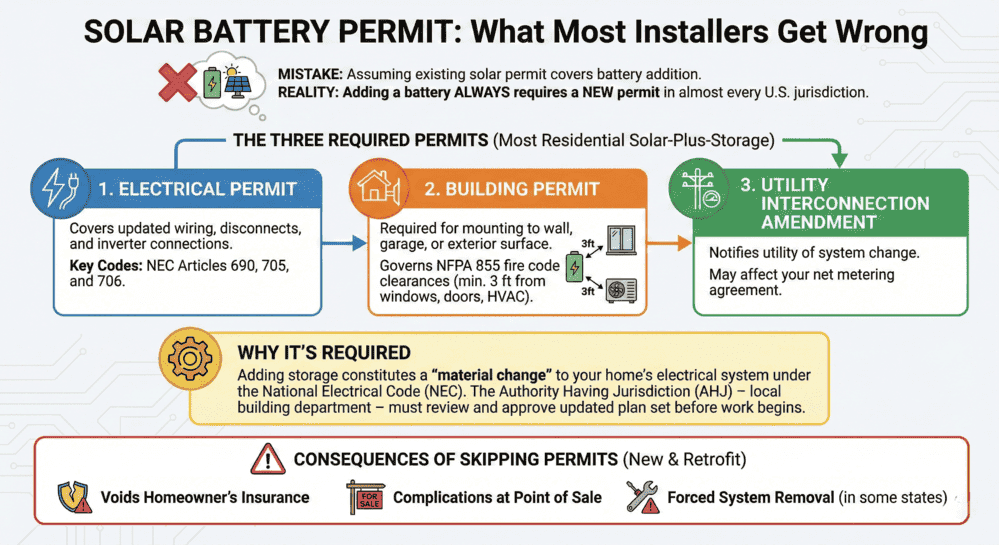
Solar Battery Permit: What Most Installers Get Wrong
Quick Answer: Adding battery storage to a solar system almost always requires ne...
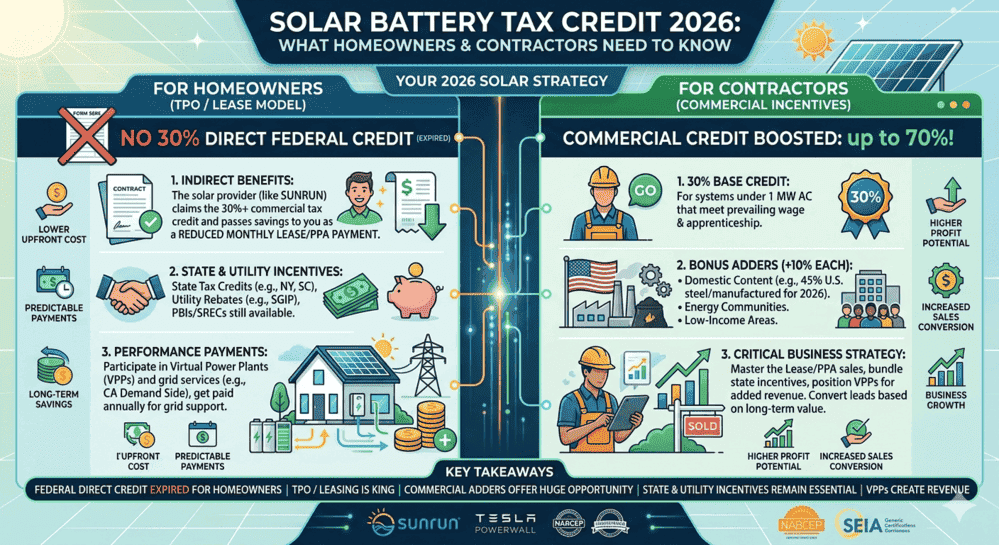
Solar Battery Tax Credit 2026: What Homeowners and Contractors Need to Know
There is no federal solar battery tax credit available to homeowners in 2026. Th...