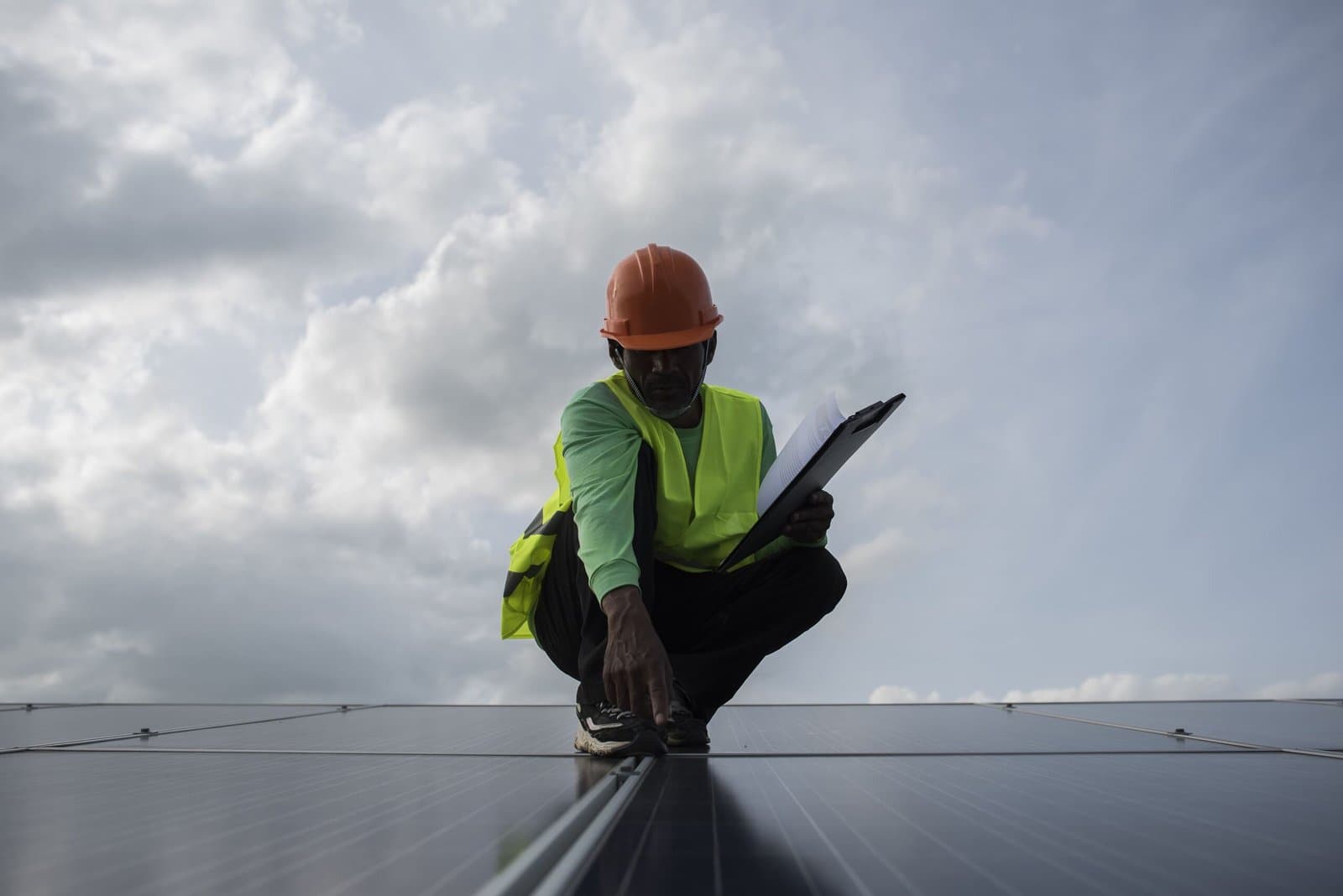
Quick Answer: Solar panel systems typically require professional repair when they show declining energy output, inverter error codes, monitoring system failures, or unexpected utility bill increases. Most solar systems last 25 to 30 years with proper maintenance, but repairs become necessary when performance drops below expected levels or equipment malfunctions occur.
When Your Solar Panels Need Repair: 6 Critical Warning Signs
Solar panel repair becomes essential when homeowners notice any of these performance issues:
- Energy production drops below historical averages or system specifications
- Monitoring apps display communication errors, offline status, or missing data
- Inverter warning lights show red flashing indicators or error codes
- Physical damage appears on panels including cracks, discoloration, or hotspots
- Utility bills spike unexpectedly despite system operation
- Original installer closed leaving system without support or warranty service
How Solar Systems Fail and Why Professional Repair Matters
Solar energy systems deliver reliable performance for decades, but environmental stress, equipment aging, and component failures can compromise efficiency. Systems experiencing problems require prompt professional attention to prevent extended production losses and protect long term investment returns.
Key solar panel repair statistics:
- Solar panels last 25 to 30 years on average
- Inverters typically require replacement after 10 to 15 years
- 80% of solar system downtime results from inverter failures
- Panel degradation rates average 0.5% to 1% annually
- Most repair issues can be resolved quickly when addressed early
Common causes requiring solar panel repair:
- Inverter component failures from age or power surges
- Communication disruptions between monitoring systems and equipment
- Weather damage including hail impact, wind stress, or thermal cycling
- Mounting hardware loosening from vibrations or corrosion
- Individual panel defects from microcracks or moisture intrusion
Solar Permit Solutions provides expert solar panel repair and maintenance services nationwide. Professional technicians diagnose system issues accurately, coordinate warranty claims, replace failed components, and restore optimal performance. Early intervention prevents minor problems from escalating into expensive system failures that compromise energy production for extended periods.

6 Critical Warning Signs Your Solar System Requires Professional Repair
Solar modules typically last 25 to 30 years, but harsh weather, natural wear, and equipment failure can reduce system efficiency over time. Without regular monitoring, issues often go unnoticed until electric bills spike or solar monitoring systems flag problems.
Most solar problems receive quick and affordable fixes with qualified solar repair services. The following six warning signs indicate when professional solar repair and maintenance become necessary, along with helpful troubleshooting tips before scheduling service.
1. Declining Energy Output From Your Solar Array
A noticeable drop in energy production serves as the most obvious warning sign. When electricity bills increase or monitoring apps show reduced power generation, something likely interferes with system performance.
Possible causes include:
- Shading from trees or new structures
- Dirty or debris-covered panels
- Damaged or aging wiring and connectors
- Failed panels or inverter issues
After ruling out temporary shading or weather changes, solar technicians run full diagnostics to identify issues. Solar panel repair or maintenance often restores systems to original performance levels.
2. System Monitoring Data Shows Connectivity Failures
Solar monitoring systems track system performance effectively. When apps fail to update or show inconsistent data, solar systems likely experience trouble communicating with inverters or utility grids.
Common signs include:
- Gaps in performance data
- Offline or disconnected status
- Unusual spikes or drops in production
These symptoms point to inverter communication problems or system-wide issues. If resets fail to resolve problems, solar system checkups or solar inverter repairs become necessary.
3. Error Codes and Red Flashing Lights on Your Inverter
Inverters convert direct current (DC) from panels into usable alternating current (AC) for homes. When inverters malfunction, systems cannot deliver power effectively.
Watch for these indicators:
- Red or blinking status lights
- No lights at all
- Frequent error codes or fault messages
Each inverter brand uses different indicators, but flashing red lights or inverter fault codes typically signal electrical or component failure. These common issues require qualified technician expertise for proper solar inverter repair.
4. Physical Damage and Discoloration on Panel Surfaces
Physical damage to solar panels occurs more frequently than many homeowners realize. Hail, high winds, fallen branches, or thermal cycling over time compromise panel integrity and reduce efficiency.
Damaged solar panels disrupt electrical flow, causing performance drops or complete shutdowns. Visual inspections often reveal underlying issues affecting system performance.
Signs of solar panel damage include:
- Cracked or shattered glass allowing moisture entry
- Delamination or peeling between panel layers
- Discoloration or yellow/brown spots indicating overheating or moisture intrusion
- Hotspots or visible burn marks near wiring, connectors, or junction boxes
- Corrosion on metal framing or around electrical contacts
When solar inverters malfunction or monitoring systems show output drops from specific panels, visible damage may cause voltage mismatches or safety shutdowns within inverter systems.
5. Unexpected Increases in Monthly Electric Bills
Sudden electricity bill increases provide clear signs that solar energy systems malfunction. When solar panels reduce monthly utility costs as designed, unexpected spikes indicate panels fail to work properly or produce insufficient power to offset energy usage.
Several common issues cause performance drops:
- Solar inverter failures or intermittent operation
- Solar panels underperforming due to age, damage, or manufacturing defects
- System shading from new tree growth or debris buildup
- Disconnected or disabled system components after storms or electrical issues
Comparing recent utility bills to system monitoring app data helps identify problems. When solar production numbers run low or apps show no data, professional solar panel repair becomes necessary. Early issue identification prevents further performance losses and protects long-term savings.
6. Orphaned Systems From Defunct Solar Installation Companies
Recent years have seen numerous solar installation companies close, leaving homeowners with orphaned solar systems and limited support options. When solar panels malfunction, solar inverters stop responding, or monitoring systems go dark without installer support, professional repair services become essential.
Homeowners with orphaned systems often face:
- No warranty support for equipment or workmanship
- Inverter error codes common with various systems
- Difficulty troubleshooting or resetting systems without technical guidance
- Inability to reach original installers for basic maintenance or repairs
Service providers specializing in orphaned system support offer nationwide solar panel repair, inverter troubleshooting, and full diagnostic services to restore system functionality. Even for systems several years old, many issues remain fixable.
When solar panels fail to produce adequate electricity or stop working entirely, professional system checkups determine whether minor adjustments or extensive repairs are needed. Scheduling solar system evaluations quickly protects investments and prevents months of lost production.

Solar Permit Solutions
Need Solar Permit Plans?
Professional, permit-ready solar plan sets delivered fast. Residential and commercial projects across all 50 states.
Frequently Diagnosed Solar System Problems Requiring Professional Attention
As solar systems age or encounter environmental stress, performance issues surface regularly. Storm damage, installation shortcuts, or wear and tear lead to solar panels malfunctioning, reduced output, or complete system shutdowns. Professional repair services help homeowners and installers identify and fix issues efficiently.
Some situations require simple adjustments. Others demand full component replacements, especially when solar inverters malfunction or solar panels produce insufficient power.
Common solar panel repair and maintenance problems include:
Complete Inverter System Breakdowns
Solar inverters convert DC electricity from panels into AC power for homes. When solar inverters malfunction, panels might generate energy, but none reaches homes or utility grids. Inverter issues rank among top reasons customers seek solar repair services.
Common inverter problems include:
- Age-related component wear (especially after 10+ years)
- Connectivity issues in various systems
- Internal faults due to power surges or overheating
While most inverters carry manufacturer warranties, labor and troubleshooting often lack coverage. Professional solar repair services determine warranty eligibility and handle safe installation and reconnection.
Monitoring System Connectivity Disruptions
When solar monitoring systems stop reporting data, determining whether systems function properly becomes difficult. Many homeowners only discover solar panel malfunctions through higher-than-expected utility bills, often because monitoring platforms stopped updating.
Modern solar systems rely on apps and platforms like various monitoring dashboards to track energy production. When these tools go offline, visibility into power production disappears.
Common causes of solar monitoring problems include:
- Wi-Fi signal loss or router reconfigurations
- Incomplete firmware updates disconnecting devices
- Hardware failure in communication gateways
- Solar inverter malfunctions interrupting monitoring data entirely
When apps fail to update or monitoring portals show missing data, problems likely exist. Solar panel repair technicians test system connectivity, reboot communication devices, and confirm actual power generation. This step proves important when determining why solar panels produce insufficient power.
Structural Issues With Mounting Hardware
Solar panels depend on racking and mounting hardware for long-term structural stability. Weather, vibrations, and external roof work can loosen these supports over time, leading to visible misalignment or potential damage. Crooked panels or gaps between rails signal the need for solar repair and maintenance inspection.
Frequent racking and mounting issues include:
- Loose rails, brackets, or clamps
- Sagging panel rows due to uneven load distribution
- Corroded or missing bolts, especially in coastal or snowy regions
These problems strain wiring, increase water intrusion risks, or reduce solar panel efficiency by misaligning their angle to the sun. Solar technicians inspect and secure racking systems, preventing further damage and restoring safe operation.
Individual Panel Degradation and Defects
Solar panels built to last 25+ years remain vulnerable to damage. When solar panels malfunction or inverters show production drops on specific array sections, issues may isolate to one or more panels.
Typical panel level issues include:
- Cracked or broken glass from hail or debris impact
- Hotspots caused by internal cell damage or prolonged shading
- Microcracks developing over time and reducing power output
- Delamination or water ingress leading to corrosion or electrical shorts
These issues often cause reduced power in panel strings or alerts on monitoring platforms. Systems using optimizers or microinverters help pinpoint exactly which panels are affected.
During solar panel repair services, technicians use thermal cameras, voltage meters, and panel level monitoring tools to identify root causes. Replacing single damaged panels or repairing faults restores system performance and prevents further degradation.
Conclusion
Solar panel systems represent significant investments designed to deliver decades of reliable clean energy and utility savings. However, like any complex electrical system, they require attention when performance issues arise. Recognizing warning signs early prevents minor problems from escalating into costly system failures that compromise energy production and financial returns.
The six critical warning signs covered in this guide provide homeowners with clear indicators that professional solar panel repair becomes necessary. Declining energy output, monitoring system failures, inverter error codes, physical panel damage, unexpected utility bill increases, and lack of installer support all signal potential system problems requiring expert diagnosis and repair.
Professional repair technicians restore system functionality through comprehensive diagnostics, component replacement, warranty support, and performance optimization. Whether dealing with inverter failures, communication disruptions, mounting hardware issues, or individual panel defects, qualified technicians possess the tools and expertise to identify root causes and implement effective solutions.
Regular system monitoring combined with prompt professional intervention when issues arise maximizes solar investment protection. Solar systems built to last 25 to 30 years deliver optimal returns only when maintained properly and repaired quickly when malfunctions occur. Homeowners who address performance problems early avoid extended periods of reduced production and preserve long term energy savings.
Expert repair services from Solar Permit Solutions provide nationwide support, helping homeowners protect their solar investments and maintain peak system performance. Professional support ensures solar systems continue delivering clean energy and utility savings throughout their expected lifespan and beyond.
FAQs
Component replacements prove more expensive, with inverter replacements ranging from $1,000 to $3,000 depending on system size and inverter type. Panel replacements typically cost $200 to $500 per panel including labor.
Warranty coverage often reduces out of pocket expenses by covering equipment costs, though labor and shipping charges frequently remain the homeowner’s responsibility. Professional diagnostic services help identify exact issues and provide accurate repair cost estimates before work begins.
DIY repairs risk electrical shock, system damage, warranty voiding, and code violations. Simple maintenance tasks like cleaning panels or checking monitoring apps remain safe for homeowners, but actual repairs involving electrical components, inverters, or panel replacements require qualified professionals.
Additionally, many equipment warranties become void if unauthorized individuals perform repairs, making professional service essential for protecting both safety and investment.
Homeowners should also perform monthly visual inspections checking for visible damage, debris accumulation, monitoring system alerts, and production data anomalies. Systems in harsh climates with frequent storms, heavy snow, or extreme temperatures may benefit from more frequent professional inspections.
After severe weather events like hailstorms or high winds, immediate inspections help identify damage requiring prompt repair. Regular monitoring app reviews between inspections enable early detection of performance drops or communication failures.
Equipment warranties from manufacturers often remain valid even when installers close, though homeowners become responsible for coordinating warranty claims and finding qualified technicians for installation. Professional solar repair companies can assess system issues, determine warranty eligibility, process manufacturer claims, and perform necessary repairs or replacements.
Documentation including system specifications, equipment serial numbers, and original installation records helps facilitate repairs when original installers are unavailable.
However, most equipment warranties exclude labor costs, shipping charges, and service call fees. Performance warranties guarantee minimum production levels over 25 to 30 years, protecting against excessive degradation. Inverter warranties range from 5 to 25 years depending on type and manufacturer.
When warranty covered failures occur, homeowners typically pay for diagnostic services, labor for removal and installation, and shipping costs even when equipment replacement is free. Reviewing warranty documentation before repairs helps clarify coverage and out of pocket expenses.
Component replacements requiring equipment orders extend repair timelines significantly. Inverter replacements may take one to three weeks when units require shipping from manufacturers. Panel replacements follow similar timelines depending on specific panel model availability.
Systems with multiple issues or complex problems requiring extensive diagnostics may need several days for complete repair. Warranty claims add processing time as manufacturers review documentation before approving replacements.
Professional repair services provide estimated timelines after initial diagnostics, helping homeowners understand expected system downtime and production losses during repair periods.
Need Solar Permit Plans?
Professional, permit-ready solar plan sets delivered fast. Residential and commercial projects across all 50 states.
Frequently Asked Questions
Solar panel repair costs vary significantly based on the specific issue and required solution. Minor repairs like resetting inverters or cleaning monitoring equipment may cost a few hundred dollars for service calls. Component replacements prove more expensive, with inverter replacements ranging from $1,000 to $3,000 depending on system size and inverter type. Panel replacements typically cost $200 to $500 per panel including labor. Warranty coverage often reduces out of pocket expenses by covering equipment costs, though labor and shipping charges frequently remain the homeowner's responsibility.
Solar panel systems involve high voltage DC electricity and complex electrical components that present serious safety risks without proper training and equipment. Professional solar technicians possess specialized knowledge, safety equipment, diagnostic tools, and licensing required for safe repairs. DIY repairs risk electrical shock, system damage, warranty voiding, and code violations. Simple maintenance tasks like cleaning panels or checking monitoring apps remain safe for homeowners, but actual repairs involving electrical components, inverters, or panel replacements require qualified professionals. Additionally, many equipment warranties become void if unauthorized individuals perform repairs, making professional service essential for protecting both safety and investment.
Annual professional inspections provide optimal preventive maintenance for solar energy systems. These yearly checkups allow technicians to identify developing issues before they cause system failures or significant production losses. Homeowners should also perform monthly visual inspections checking for visible damage, debris accumulation, monitoring system alerts, and production data anomalies. Systems in harsh climates with frequent storms, heavy snow, or extreme temperatures may benefit from more frequent professional inspections. After severe weather events like hailstorms or high winds, immediate inspections help identify damage requiring prompt repair.
Homeowners with orphaned solar systems from defunct installers still have repair options available. Independent solar service providers specialize in supporting systems regardless of original installer status. Equipment warranties from manufacturers often remain valid even when installers close, though homeowners become responsible for coordinating warranty claims and finding qualified technicians for installation. Professional solar repair companies can assess system issues, determine warranty eligibility, process manufacturer claims, and perform necessary repairs or replacements.
Solar panel warranties typically include both equipment and performance coverage, but understanding specific terms proves essential. Equipment warranties covering manufacturing defects usually last 10 to 25 years and cover replacement parts for failed components. However, most equipment warranties exclude labor costs, shipping charges, and service call fees. Performance warranties guarantee minimum production levels over 25 to 30 years, protecting against excessive degradation. Inverter warranties range from 5 to 25 years depending on type and manufacturer. When warranty covered failures occur, homeowners typically pay for diagnostic services, labor for removal and installation, and shipping costs even when equipment replacement is free.
Solar panel repair timelines depend on problem complexity and parts availability. Simple fixes like inverter resets, monitoring system reboots, or minor wiring repairs often complete within a single service visit lasting a few hours. Component replacements requiring equipment orders extend repair timelines significantly. Inverter replacements may take one to three weeks when units require shipping from manufacturers. Panel replacements follow similar timelines depending on specific panel model availability. Systems with multiple issues or complex problems requiring extensive diagnostics may need several days for complete repair. Warranty claims add processing time as manufacturers review documentation before approving replacements.
SPS Editorial Team
Solar Permit Solutions
Solar Permit Solutions provides professional solar permit design services for residential, commercial, and off-grid installations across all 50 states. Our team ensures permit-ready plan sets delivered fast.
Related Articles
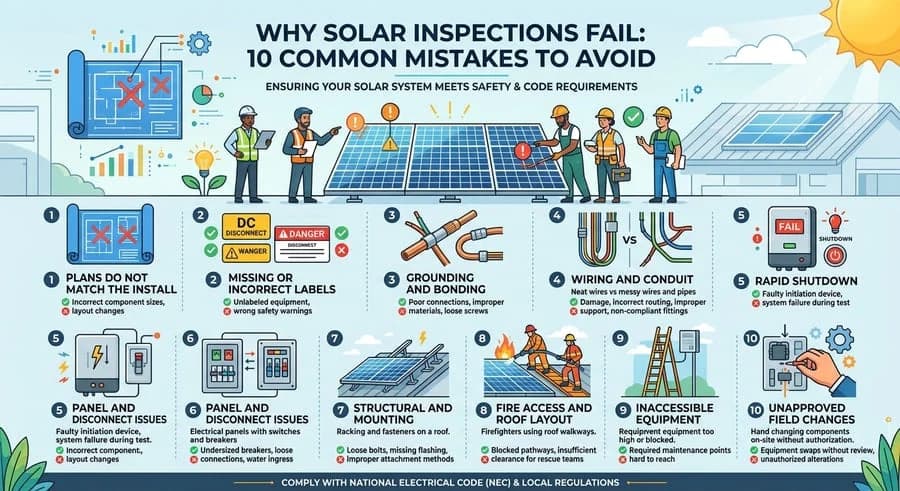
Why Solar Inspections Fail: 10 Common Mistakes to Avoid
Discover the 9 critical reasons solar inspections fail and how to avoid costly m...
Solar Grounding And Bonding: How To Pass Inspection Every Time
Learn how to pass solar grounding and bonding inspections every time. Avoid comm...
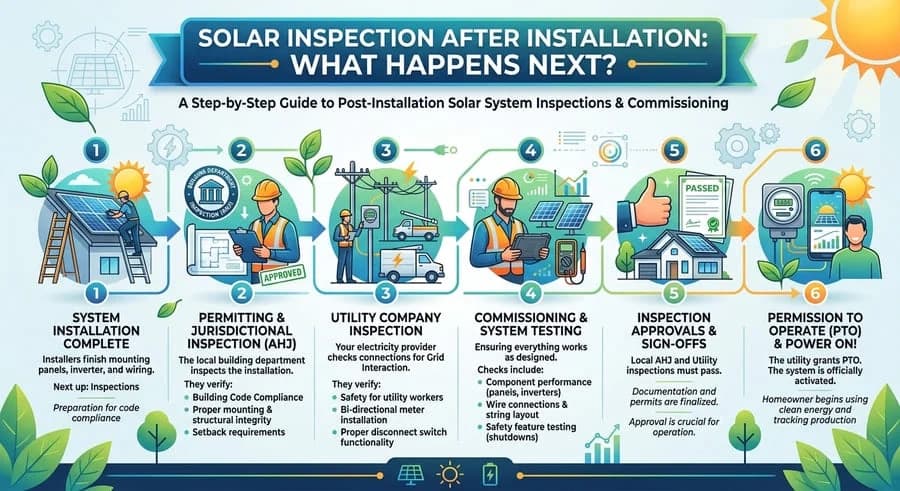
Solar Inspection After Installation: What Happens Next?
Learn how to pass your solar inspection by following essential tips for obtainin...