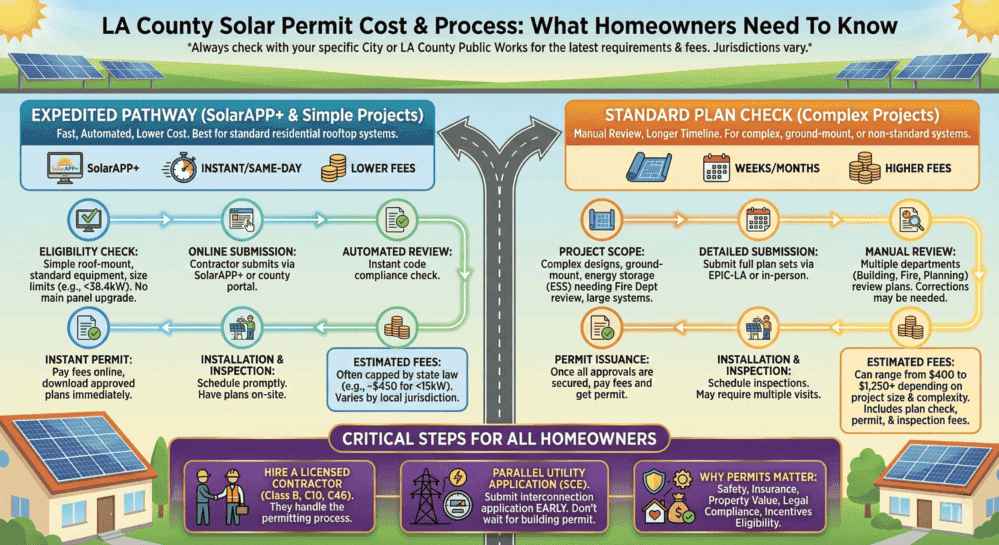
Quick Answer: Unincorporated LA County solar permits are issued by the Department of Public Works (DPW) and cost $300-$500 for residential systems under 15 kW. Expedited approval takes 3-5 business days for systems ≤38.4 kW using the Standard Plan template. Standard plan check requires 10-20 business days. Key requirements include structural affidavits (Form A/B/C), manufacturer specs, electrical diagrams, and fire setback compliance. Five district offices serve different regions of unincorporated LA County.
Installing solar panels in Los Angeles County requires navigating jurisdiction-specific permitting processes that vary dramatically depending on whether your property is in the City of Los Angeles, another incorporated city, or unincorporated LA County areas. This guide focuses exclusively on unincorporated LA County solar permits processed through the LA County Department of Public Works Building and Safety Division.
Understanding the difference between jurisdictions is critical, applying to the wrong authority causes weeks of delays and wasted fees. Whether you’re a homeowner planning residential solar, a contractor managing commercial installations, or exploring off-grid systems, this comprehensive guide covers costs, timelines, required documents, and the exact step-by-step process for 2026.
Understanding LA County Solar Permit Jurisdictions
LA County is NOT a single permitting area. It consists of the City of Los Angeles (separate jurisdiction), 87 other incorporated cities, and unincorporated areas each with completely different permitting processes.
88 Incorporated Cities (Each Has Own Process)
- City of Los Angeles → LADBS authority (see our complete LADBS guide)
- Pasadena → Pasadena Building & Safety Department
- Long Beach → Long Beach Development Services
- Glendale → Glendale Building & Safety
- Pomona → Pomona Building & Planning
- Burbank → Burbank Community Development
- (+82 other cities—each with separate requirements, fees, and timelines)
Unincorporated LA County Areas
Permitting Authority: LA County Department of Public Works (DPW)
Online Portal: https://dpw.lacounty.gov/bsd/
Average Timeline: 3-5 business days (expedited), 10-20 days (standard)
Fee Range: $300-$500 (residential ≤15 kW)
Examples of Unincorporated Areas:
- Altadena
- East Los Angeles
- Florence-Firestone
- West Athens
- Walnut Park
- View Park-Windsor Hills
- Ladera Heights
- West Rancho Dominguez
This article covers unincorporated LA County ONLY.
How to Determine Your Jurisdiction
Step 1: Check Your Property Tax Bill
- Look for “Taxing Agency” or “Service Area”
- If it says “County of Los Angeles” → You’re in unincorporated county (use this guide)
- If it says a specific city name → You’re in that city (contact their building department)
Step 2: Use the Online Jurisdiction Locator
Visit: https://locator.lacounty.gov/
Enter your address to see which jurisdiction serves you
Step 3: Check Your Utility Provider
- LADWP customer? → Likely City of LA (use LADBS guide)
- SCE customer? → Could be unincorporated county or another city
- Pasadena Water & Power? → City of Pasadena (separate process)
- Burbank Water & Power? → City of Burbank (separate process)
⚠️ Critical: Using the wrong permitting authority causes application rejection and fee forfeiture. Always verify jurisdiction before applying.
LA County (Unincorporated) Solar Permit Fees 2026
California AB 1124 caps residential solar permit fees to protect homeowners from excessive charges. Here are the actual costs for unincorporated LA County:
A. Residential Fee Schedule
| System Size | Building Permit | Electrical Permit | Plan Check | Total Cost |
| Up to 5 kW | $150-$200 | $150-$200 | $0-$100 | $300-$400 |
| 6-10 kW | $200-$250 | $200-$250 | $50-$100 | $400-$500 |
| 11-15 kW | $250-$300 | $200-$250 | $100-$150 | $450-$600* |
| Above 15 kW | $300 | $250 | $150 | $450 + $15/kW |
*Maximum base fee: $450 per AB 1124
**Additional $15 per kilowatt for each kW above 15 kW (e.g., 20 kW system = $450 + $75 = $525)
What’s Included in Permit Fees
✅ Plan review and processing
✅ Building permit issuance
✅ Electrical permit issuance
✅ One final inspection
✅ Online portal access and digital permit
Additional Costs NOT Included
❌ Structural engineering stamp: $500-$1,500 (required for non-standard roofs, tile roofs, or heavy systems)
❌ Re-inspection fee: $100-$200 (if installation fails first inspection)
❌ After-hours inspection: $200-$300 (if scheduled outside normal hours)
❌ Plan revisions: $50-$150 per resubmission cycle
❌ Permit extension: $100 (if work not completed within validity period)
B. Commercial System Fees
| System Size | Estimated Total Cost | Notes |
| 10-30 kW | $1,000-$2,000 | Based on valuation method |
| 30-50 kW | $2,000-$3,500 | PE structural/electrical stamps required |
| 50-100 kW | $3,500-$5,000 | Multiple engineering reviews |
| 100+ kW | $5,000+ | Custom quote; environmental review may apply |
Fee Payment Methods
Online Submission:
- Credit/debit card (3% processing fee added)
- Electronic check (no processing fee)
In-Person Submission:
- Cash
- Personal/business check
- Money order
- Credit/debit card (3% fee)
⚠️ No refunds for withdrawn applications or denied permits.
Understanding solar permit costs and strategies to reduce fees helps you budget accurately for your installation.

Two Permit Pathways: Expedited vs. Standard Plan Check
LA County offers two distinct approval routes depending on your system size and complexity.
Expedited Process (3-5 Business Days)
⚡ 2024 UPDATE: LA County increased the expedited pathway limit from 10 kW to 38.4 kW AC nameplate rating for qualifying systems.
Eligibility Requirements (ALL must apply):
✅ Residential rooftop system on one or two-family dwelling
✅ System size ≤38.4 kW AC (Updated from 10 kW in 2024)
✅ Roof-mounted only (not ground-mounted)
✅ Using LA County Standard Electrical Plan template
✅ Service panel ≤225 amps
✅ No major service panel upgrade required
✅ Roof has one layer of roofing material
✅ No structural concerns (roof appears sound)
✅ Panels parallel to roof plane
✅ 2-10 inch gap between panel underside and roof
✅ No panel overhang on roof edges
✅ System weight ≤4 psf (photovoltaic) or 5 psf (solar thermal)
Required Documents:
- Completed application form
- LA County Standard Electrical Plan (download from DPW website)
- Structural Affidavit (Form A, B, or C)
- Manufacturer specification sheets (panels, inverters, racking)
- Roof plan showing module and anchor layout
Timeline: Application → Review (3-5 days) → Approval → Installation → Inspection (1-3 weeks) → Final approval
Download Forms and Templates:
https://dpw.lacounty.gov/bsd/content
Standard Plan Check Process (10-20 Business Days)
Required When:
❌ System >38.4 kW AC
❌ Ground-mounted installation
❌ Commercial property
❌ Multi-family building (3+ units)
❌ Service panel upgrade >225 amps
❌ Flat roof or non-standard roof type
❌ Tile roof or structural concerns
❌ Battery storage system (ESS) over certain capacity
❌ Carport or canopy installation
Additional Documentation Required:
- Complete electrical single-line diagram (professionally drawn)
- PE-stamped structural calculations
- Detailed site plan with dimensions
- Fire department approval (for certain zones)
- Title 24 energy compliance documentation
- Load calculations for service upgrades
Timeline: Application → Initial review (10-15 days) → Corrections (if needed, 5-10 days) → Approval → Installation → Inspection → Final
For complex commercial solar design projects, professional permit design services significantly reduce approval delays.
Solar Permit Solutions
Homeowner Going Solar?
Get the permit-ready plan set your city requires — delivered fast so your solar project stays on schedule.
LA County Solar Permit Process: Complete Step-by-Step Guide
Step 1: Confirm Jurisdiction and Eligibility
Before starting, verify:
- ✅ You’re in unincorporated LA County (use https://locator.lacounty.gov/)
- ✅ You qualify for expedited (≤38.4 kW) OR standard process
- ✅ You have all required documents
Step 2: Gather Required Documents
For ALL Applications:
Application & Site Information:
- [ ] Completed permit application form (download here)
- [ ] Property owner authorization (if applicant is contractor)
- [ ] Contractor license information (C-10 or C-46 required)
Site Plans:
- [ ] Property survey or assessor’s parcel map
- [ ] Site plan showing:
- Property boundaries and dimensions
- Building footprint
- Panel array locations with setbacks
- Fire access pathways (minimum 3 feet from ridge)
- Equipment locations (inverters, disconnects, meters)
Electrical Documentation:
- [ ] Single-line electrical diagram showing:
- PV module specifications and configuration
- String wiring and combiner boxes
- Inverter specifications
- AC/DC disconnect locations
- Connection to service panel
- Grounding and bonding
- Rapid shutdown system
- [ ] Load calculations (for service upgrades)
- [ ] Panel schedule showing available capacity
Equipment Specifications:
- [ ] Solar panel spec sheet (UL 1703 certified)
- [ ] Inverter spec sheet (UL 1741 SA/SB certified)
- [ ] Racking system specifications
- [ ] Rapid shutdown device specifications (NEC 690.12 compliant)
- [ ] Monitoring system details (if applicable)
Structural Documentation:
For Expedited (Standard Roof):
- [ ] Completed Structural Affidavit (Form A, B, or C)
- [ ] Roof plan showing rafter/truss layout
- [ ] Manufacturer’s racking installation instructions
For Standard Plan Check:
- [ ] PE-stamped structural calculations
- [ ] Wind and snow load analysis
- [ ] Attachment point calculations
- [ ] Roof framing evaluation
Fire Safety:
- [ ] Fire setback compliance plan showing:
- 3-foot pathways from eave to ridge
- Ridge setback (3 feet below ridge)
- Access pathway dimensions
- Array dimensions (max 150′ x 150′)
Energy Compliance:
- [ ] Title 24 energy compliance forms (CF-1R for residential)
- [ ] HERS documentation (if applicable)
Step 3: Submit Application
Online Submission (Recommended):
- Visit: https://dpw.lacounty.gov/bsd/
- Create account (if first time) using EPIC-LA system
- Select “Express Solar Roof Mount Residential” or “Solar Roof Mount Residential” permit type
- Upload all documents as PDFs (max 20 MB per file)
- Pay fees by credit/debit card
- Receive confirmation email with permit number
- Track status through online portal
In-Person Submission:
Visit your district office (see locations below) with:
- 2 complete sets of all documents (one returned with comments)
- Payment (cash, check, money order, or card)
- Valid photo ID
- Contractor license verification
Office Hours: Monday-Thursday, 7:30 AM – 5:30 PM
(Friday hours vary by office – call ahead to confirm)
Step 4: Plan Review Period
What Happens During Review:
County reviewers check for:
- ✅ NEC 2023 Article 690 compliance
- ✅ California Title 24 energy code adherence
- ✅ Structural load capacity
- ✅ Fire access pathway requirements
- ✅ Equipment UL certifications
- ✅ Utility interconnection compatibility
- ✅ Zoning compliance
Timeline:
- Expedited (≤38.4 kW): 3-5 business days
- Standard residential: 10-20 business days
- Commercial/complex: 3-4 weeks
If Corrections Needed:
- County emails revision request with specific issues
- You have 30 calendar days to resubmit corrections
- Re-review takes additional 5-10 business days
- Process repeats until approved
Common Correction Requests:
- Missing manufacturer specification sheets
- Incorrect fire setback dimensions
- Wire sizing calculation errors
- Missing rapid shutdown details
- Incomplete structural documentation
Understanding common solar permit rejection reasons helps avoid delays.
Step 5: Permit Issuance
Once approved, you receive:
✅ Email notification with approval status
✅ Digital permit accessible in online portal
✅ Permit number for job site posting
Print Requirements:
- 2 copies of approved permit
- One posted at job site (visible from street)
- One for contractor/owner records
Permit Validity:
- Residential: 180 days from issuance
- Commercial: 1 year from issuance
- Extension available for $100 fee (before expiration)
Step 6: Installation Phase
Installation Requirements:
✅ Must follow approved plans exactly—no deviations
✅ Licensed C-10 (electrical) or C-46 (solar) contractor required
✅ Permit posted and visible at job site
✅ Do NOT cover or conceal work before inspection
✅ Notify inspector if any field changes needed
Typical Installation Timeline:
- Residential rooftop: 1-3 days
- Commercial rooftop: 3-7 days
- Ground-mounted: 5-10 days
Our guide on NEC 2023 Article 690 requirements ensures code-compliant installations.
Step 7: Schedule Final Inspection
How to Schedule:
Online: Through permit portal (preferred)
Phone: (626) 458-4100
Wait Time: 1-3 weeks for appointment (varies by season)
What Inspector Checks:
Structural:
- [ ] Panel mounting meets approved plans
- [ ] Attachment points properly installed
- [ ] No roof damage or penetration issues
- [ ] Proper flashing and waterproofing
Electrical:
- [ ] All wiring matches single-line diagram
- [ ] Proper wire sizing and conduit
- [ ] Grounding and bonding per NEC 690.43
- [ ] Disconnect switches accessible and labeled
- [ ] Rapid shutdown system functional (NEC 690.12)
- [ ] All required labels present and legible
Fire Safety:
- [ ] Fire access pathways meet requirements
- [ ] Ridge setbacks compliant (3 feet)
- [ ] Array dimensions within limits
- [ ] DC conduit in metallic raceways (enclosed spaces)
Common Inspection Failures:
- Panels too close to ridge (<3 feet setback)
- Missing or incorrect rapid shutdown labels
- Improper wire sizing or conduit fill
- No access pathways or insufficient width
- Deviations from approved plans
- Missing equipment labels
Understanding solar inspection requirements ensures first-time pass rates.
If Inspection Fails:
- Inspector provides written correction notice
- Contractor makes required corrections
- Schedule re-inspection ($100-$200 fee)
- Process repeats until approval
Step 8: Utility Interconnection and Permission to Operate
For SCE Customers (Most Common in Unincorporated LA County):
- Apply for Interconnection:
- Visit: https://www.sce.com/residential/generating-your-own-power
- Submit interconnection application
- Include copy of approved building permit
- Pay $132 interconnection fee
- Wait for Interconnection Agreement:
- Timeline: 15-30 business days
- SCE reviews for grid compatibility
- Executes Net Energy Metering (NEM) agreement
- Meter Installation:
- SCE schedules bi-directional meter installation
- Usually 2-4 weeks after agreement
- Must be present for installation
- Permission to Operate (PTO):
- Submit final inspection approval to SCE
- SCE issues PTO (1-2 weeks)
- System can legally operate and export to grid
⚠️ Important: SCE uses NEM 3.0 (Net Billing Tariff) which credits excess generation at approximately $0.08/kWh, NOT retail rates. This is significantly different from LADWP’s retail-rate net metering.
For Other Utilities:
- LADWP (some border areas): Retail-rate NEM still available
- Pasadena Water & Power: Separate NEM program
- Burbank Water & Power: Contact for specific requirements
Complete solar interconnection guide covers utility-specific requirements.
Total Timeline Summary
| Phase | Expedited Path | Standard Path |
| Application to Permit | 3-5 days | 10-20 days |
| Installation | 1-3 days | 3-7 days |
| Inspection Scheduling | 1-3 weeks | 1-3 weeks |
| SCE Interconnection | 3-6 weeks | 3-6 weeks |
| TOTAL | 5-9 weeks | 7-12 weeks |
Compare to average solar permit timelines by state to see how LA County performs nationally.
LA County Building & Safety District Offices
Your application is processed by one of five district offices based on your property location:
1. Alhambra Office (Central/East)
Address: 100 South First Street, Alhambra, CA 91801
Phone: (626) 458-4100
Fax: (626) 458-3526
Email: bsd@dpw.lacounty.gov
Serves: San Gabriel Valley unincorporated areas including:
- Altadena
- East Pasadena
- Monrovia (unincorporated)
- Temple City (unincorporated)
- South San Gabriel
Hours: Monday-Thursday, 7:30 AM – 5:30 PM
(Friday hours vary – call ahead)
Parking: Public lot on First Street (2-hour limit)
Public Transit: Metro L Line (Gold) to Atlantic Station + 10 min walk
2. Downey Office (Southeast)
Address: 12440 East Imperial Highway, Norwalk, CA 90650
Phone: (562) 462-2177
Fax: (562) 462-3776
Serves: Southeast LA County unincorporated areas including:
- East Los Angeles
- Florence-Firestone
- Walnut Park
- West Rancho Dominguez
- Willowbrook
Hours: Monday-Thursday, 7:30 AM – 5:30 PM
(Friday hours vary – call ahead)
Parking: Free on-site lot
Public Transit: Metro C Line (Green) to Norwalk + bus transfer
3. Lancaster Office (North – Antelope Valley)
Address: 335 East Avenue K-6, Lancaster, CA 93535
Phone: (661) 723-6000
Fax: (661) 723-5901
Serves: Antelope Valley unincorporated areas including:
- Unincorporated Lancaster areas
- Unincorporated Palmdale areas
- Leona Valley
- Lake Los Angeles
Hours: Monday-Thursday, 7:30 AM – 5:30 PM
(Friday hours vary – call ahead)
Parking: Free adjacent lot
Public Transit: Antelope Valley Transit Authority (AVTA) local routes
4. Marina del Rey Office (West)
Address: 13650 Marina Pointe Drive, Marina del Rey, CA 90292
Phone: (310) 305-9545
Fax: (310) 305-1652
Serves: Westside unincorporated areas including:
- View Park-Windsor Hills
- Ladera Heights
- Athens
- Westmont
Hours: Monday-Thursday, 7:30 AM – 5:30 PM
(Friday hours vary – call ahead)
Parking: Parking structure (fee applies)
Public Transit: Metro E Line (Expo) to Culver City + bus transfer
5. Van Nuys Office (Northwest – San Fernando Valley)
Address: 6363 Woodman Avenue, Van Nuys, CA 91401
Phone: (818) 374-5050
Fax: (818) 756-9228
Serves: San Fernando Valley unincorporated areas including:
- Universal City (unincorporated)
- Val Verde
- Unincorporated areas near Valley Glen
Hours: Monday-Thursday, 7:30 AM – 5:30 PM
(Friday hours vary – call ahead)
Parking: Public lot on Woodman Avenue
Public Transit: Metro G Line (Orange) to Van Nuys + short walk
Don’t Know Which Office Serves You?
Call: (626) 458-4100 (main office)
Online: https://dpw.lacounty.gov/bsd/
Interactive Map: https://locator.lacounty.gov/

Why LA County Solar Permits Matter
Solar permits are not bureaucratic obstacles they’re essential safeguards protecting your investment, your property, and public safety.
Safety and Code Compliance
Permits ensure installations meet:
- NEC 2023 electrical standards preventing fires and electrocution hazards
- Structural requirements confirming roofs can support panel weight under wind/seismic loads
- Fire safety codes providing emergency access for first responders
- Utility interconnection standards ensuring safe grid connection
Understanding solar electrical fundamentals helps appreciate these requirements.
Financial Protection
Proper permits:
- ✅ Validate insurance coverage (homeowner’s policies often void coverage for unpermitted work)
- ✅ Preserve property value (unpermitted systems must be disclosed and may reduce sale price)
- ✅ Enable incentive eligibility (state rebates require permitted systems)
- ✅ Ensure utility net metering enrollment
Legal Compliance
California law requires permits for ALL solar installations regardless of size. Operating without permits results in:
- ❌ $500-$5,000 fines
- ❌ Forced system removal
- ❌ Utility disconnection
- ❌ Lien on property
- ❌ Difficulty selling property
- ❌ Insurance claim denials
Environmental Accountability
Permits help California meet renewable energy goals by:
- Tracking installed solar capacity
- Ensuring system efficiency through proper design
- Supporting grid integration planning
- Documenting carbon reduction impacts
Research from NREL on solar installation best practices confirms that permitted systems perform better and last longer than unpermitted installations.
Common Mistakes to Avoid
1. Applying to Wrong Jurisdiction
Problem: Submitting to City of LA (LADBS) when property is in unincorporated county
Solution: Always verify jurisdiction using https://locator.lacounty.gov/ before applying
Cost of Mistake: Lost fees ($300-$500) + 2-4 week delay
2. Using Outdated Forms or Templates
Problem: Downloading old Standard Plan templates from unofficial sources
Solution: Always get current forms from https://dpw.lacounty.gov/bsd/content
Cost of Mistake: Application rejection + resubmission delay
3. Missing Required Documents
Problem: Submitting incomplete applications (most common: missing manufacturer specs)
Solution: Use checklist above and verify ALL items before submission
Cost of Mistake: 1-2 week delay for corrections
4. Ignoring Fire Setback Requirements
Problem: Designing system without 3-foot ridge setbacks or access pathways
Solution: Plan layout with fire codes first, then optimize for production
Cost of Mistake: Failed inspection + costly re-installation
5. Assuming Expedited Eligibility
Problem: Submitting Standard Plan for 40 kW system (exceeds 38.4 kW limit)
Solution: Confirm ALL expedited criteria before choosing pathway
Cost of Mistake: Application rejection + standard plan check fees
6. Starting Installation Before Permit Approval
Problem: Installing panels while application is “under review”
Solution: NEVER start work until permit is formally issued
Cost of Mistake: Stop-work order + possible removal + fines
7. Deviating from Approved Plans
Problem: Changing panel placement during installation without approval
Solution: Follow approved plans exactly or request formal amendment
Cost of Mistake: Failed inspection + re-work + re-inspection fees
Learn more about common permit mistakes and how to fix them.
2026 Federal Tax Credit Changes
Critical Update: Federal residential solar tax credits are no longer available for systems purchased in 2026.
What This Means for LA County Homeowners
Direct Purchase Systems (Cash, Loan):
- ❌ NO federal tax credit for systems purchased in 2026
- ❌ 30% tax credit NO LONGER AVAILABLE (expired December 31, 2025)
- ✅ California state incentives still available
- ✅ Property tax exclusion still applies
Third-Party Ownership (Leases, PPAs):
- ✅ Commercial tax credit (Section 48E) still available to system owners
- ✅ Savings passed to homeowner through lower monthly payments
- ✅ No upfront cost, no tax credit needed
If You Installed in 2025:
- ✅ Can claim 30% credit on 2025 tax return
- ✅ Carry-forward rules apply if credit exceeds tax liability
- ✅ Must have completed installation and PTO by December 31, 2025
Complete details in our solar tax credit deadline guide and Third-Party Ownership (TPO) overview.
California State Incentives (Still Available)
Property Tax Exclusion:
- Solar systems exempt from property tax reassessment
- Prevents increase in property taxes despite added value
- Active exclusion (must file with assessor within 30 days of final inspection)
SGIP (Self-Generation Incentive Program):
- Battery storage incentives: $150-$1,000/kWh
- Equity programs offer higher rates
- Available through utilities like SCE
DAC-SASH (Disadvantaged Communities – Single-family Affordable Solar Homes):
- Up to $3/watt incentive for qualifying low-income households
- Covers significant portion of installation cost
- Available in unincorporated areas served by SCE
Check DSIRE California database for current incentive programs.
Conclusion
Securing a solar permit in unincorporated LA County requires understanding jurisdiction boundaries, choosing the correct approval pathway, gathering complete documentation, and following DPW procedures precisely. While the process involves multiple steps, from jurisdiction verification through utility interconnection, the system is straightforward once you know the requirements.
Residential systems under 38.4 kW can achieve approval in as little as 3-5 business days using the expedited pathway, with total project timelines of 5-9 weeks from application to Permission to Operate. Larger or more complex installations take 7-12 weeks through standard plan check, but careful preparation minimizes delays.
The key to success is accuracy and completeness from
the start. Use the correct forms, verify all documentation, follow approved plans exactly, and work with experienced professionals when needed. The five district offices serving unincorporated LA County provide accessible support, and online submission through the DPW portal streamlines the process.
Remember that permit requirements exist to protect your safety, your investment, and the electrical grid. Taking shortcuts or skipping permits creates serious financial and legal risks that far outweigh any perceived time or cost savings. Follow the process, pass inspection the first time, and enjoy decades of reliable solar energy production with full legal protections and utility benefits.
Whether you’re a homeowner exploring solar options, a contractor managing installations, or a property owner evaluating commercial systems, this guide provides the roadmap for successful LA County solar permitting in 2026.
Frequently Asked Questions
Homeowner Going Solar?
Get the permit-ready plan set your city requires — delivered fast so your solar project stays on schedule.
Frequently Asked Questions
Residential solar permits in unincorporated LA County cost $300-$500 for systems under 15 kW, with fees capped by California AB 1124 at $450 base plus $15 per kilowatt above 15 kW. Commercial installations start at $1,000+. Total fees include building permit ($150-$250), electrical permit ($150-$250), and plan check fees ($0-$150). Additional costs may include structural engineering stamps ($500-$1,500) for non-standard installations. These fees are modest compared to total installation investment and long-term energy savings through efficient solar design.
Expedited permits for residential systems under 38.4 kW in unincorporated LA County take 3-5 business days when using the Standard Plan template. Standard plan check for larger or complex systems takes 10-20 business days (2-4 weeks). Commercial installations may require 3-4 weeks. Total timeline from permit application to utility Permission to Operate ranges from 5-9 weeks for expedited residential systems to 7-12 weeks for standard plan check. Timeline varies by district office workload, application completeness, and seasonal demand. You can expedite approval by submitting thorough, error-free documentation and working with contractors experienced in LA County requirements.
No. LA County requires permits for ALL solar installations regardless of size or location. Operating without proper authorization violates California building codes and Los Angeles County ordinances, resulting in serious consequences including fines ($500-$5,000), forced system removal, utility disconnection, insurance claim denials, property liens, and complications when selling your property. Permits verify your installation meets safety standards, structural requirements, electrical codes, and fire safety regulations. Even small residential systems need authorization to protect your home, family, and investment. Always obtain proper permits before installation begins.
If your installation fails inspection, the county inspector provides a written correction notice identifying specific code violations or safety issues requiring correction. Common problems include panels too close to ridge (less than 3 feet), missing rapid shutdown labels, incorrect electrical connections, improper wire sizing, inadequate fire access pathways, or deviations from approved plans. Your contractor must address all issues and request a re-inspection ($100-$200 fee). Most experienced solar installers pass inspections on the first attempt by following approved plans and understanding NEC code requirements. Failed inspections cause minor delays, typically 3-7 days to fix issues and reschedule. This quality control process protects your investment and ensures safe system operation.
Battery storage additions may require supplementary permits beyond standard solar authorizations, particularly when batteries are installed in garages, living spaces, or exceed certain capacity thresholds. Fire safety regulations under California Fire Code apply to energy storage systems (ESS), and some installations need LA County Fire Department approval before Building and Safety permits are issued. For properties considering complete energy independence, explore off-grid solar system design options that incorporate battery storage from the planning phase. Your contractor should identify all required permits during the initial planning phase. While battery permits add documentation requirements, they don't significantly extend overall timelines when properly coordinated. The additional authorization ensures your complete solar-plus-storage system meets all safety standards for reliable, long-term operation.
Unincorporated LA County uses the Department of Public Works (DPW) for permits with 3-5 day expedited processing for systems ≤38.4 kW, accessed through. City of Los Angeles uses the Los Angeles Department of Building and Safety (LADBS) with PermitLA portal offering same-day express permits for qualified systems under 10 kW. Each jurisdiction has different forms, fee structures, timelines, and online portals. Additionally, 87 other incorporated cities within LA County (Pasadena, Long Beach, Glendale, Pomona, etc.) each maintain completely separate permitting processes with unique requirements. Check your property tax bill or visit https://locator.lacounty.gov/ to determine your jurisdiction before applying. See our complete LADBS guide for City of Los Angeles requirements.

SPS Editorial Team
Solar Permit Solutions
Solar Permit Solutions provides professional solar permit design services for residential, commercial, and off-grid installations across all 50 states. Our team ensures permit-ready plan sets delivered fast.
Related Articles
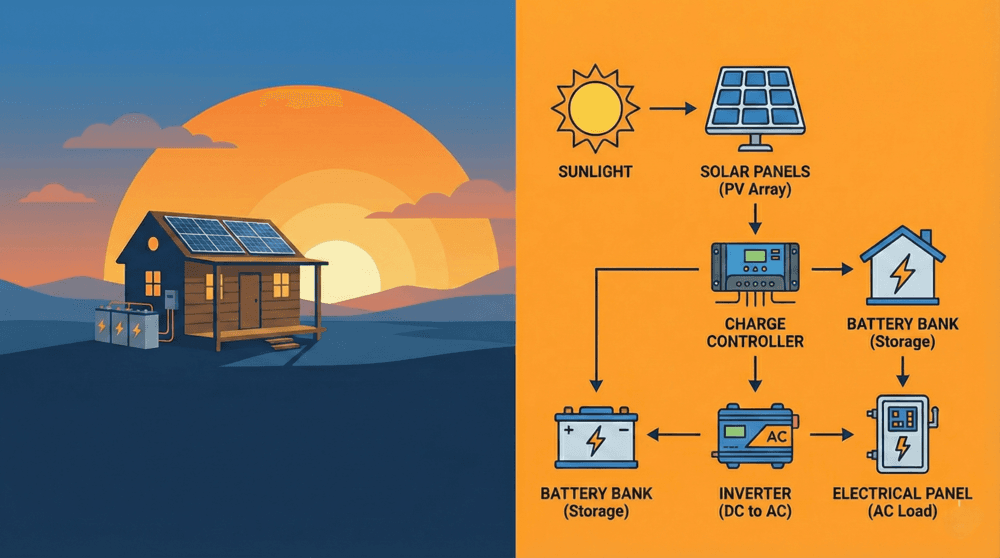
Off-Grid Solar System Requirements: Sizing, Permits & NEC Code Guide
Off-grid solar permit requirements by state: building codes, NEC compliance, bat...
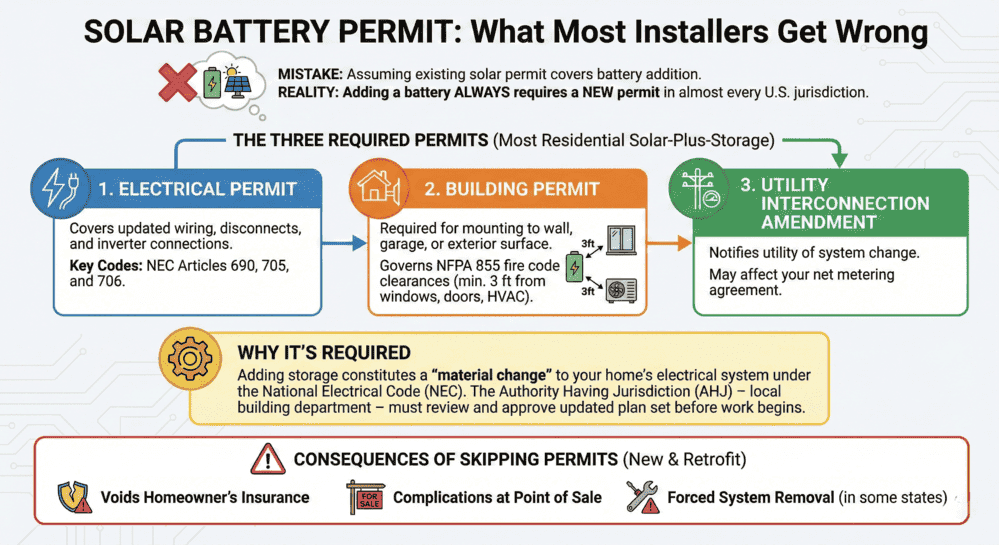
Solar Battery Permit: What Most Installers Get Wrong
Quick Answer: Adding battery storage to a solar system almost always requires ne...
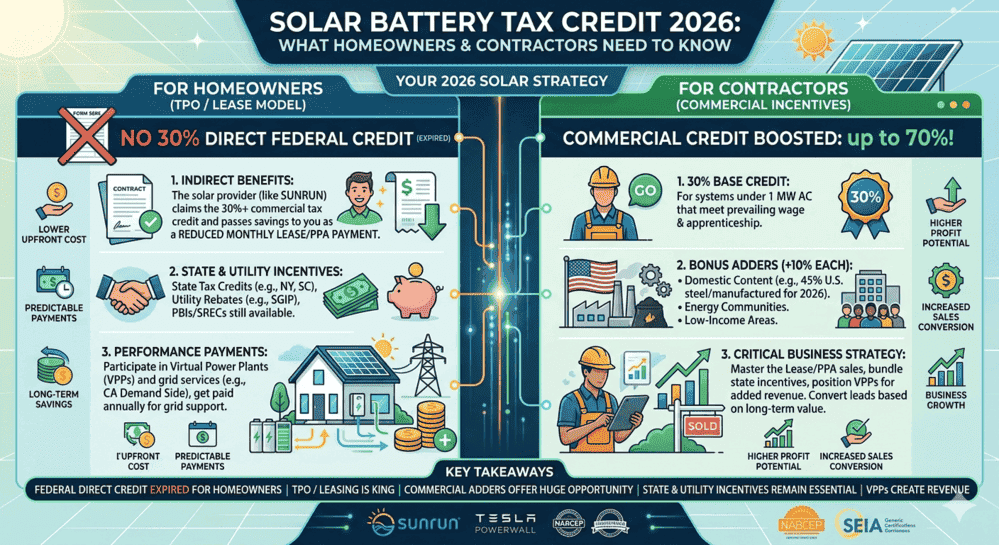
Solar Battery Tax Credit 2026: What Homeowners and Contractors Need to Know
There is no federal solar battery tax credit available to homeowners in 2026. Th...