What happens when a solar lease ends? When your solar lease expires, you typically have four options: have the panels removed at no cost, extend or renew your lease agreement, purchase the system through a buyout clause, or transfer the lease to a new homeowner if you’re selling your property. The best choice depends on your energy goals, financial situation, and how long you plan to stay in your home.
Solar leases and power purchase agreements (PPAs) have made residential solar accessible to millions of homeowners without the upfront costs of purchasing a system outright. However, these agreements typically last 20-25 years, and understanding your end-of-lease options before that date arrives is essential for maximizing your renewable energy investment. This guide breaks down each option, including the costs, benefits, and key contract terms you need to know.

Solar Panel Removal After Your Lease Ends
What occurs when a solar lease concludes can differ between providers and specific contract terms. Before committing to any new or existing lease agreement, always verify the available options outlined in your contract documentation, review our guide on critical questions to ask before signing a solar panel contract for a comprehensive checklist.
Throughout the lease period, while you’re making monthly payments for the solar panel system and consuming the electricity it generates, the system owner typically bears responsibility for keeping everything functioning properly.
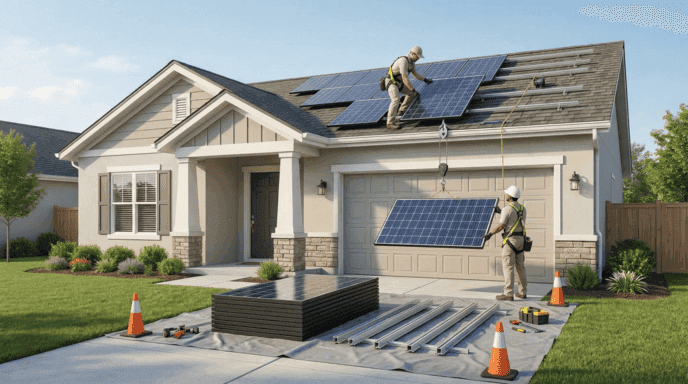
When the time comes to terminate the arrangement and have your solar panels taken down or replaced, that company handles the removal process. (Panel removal represents just one available option at lease end, additional alternatives are detailed below.) Many lease agreements include free panel removal at the conclusion of the contract term. The EPA provides guidelines on end-of-life solar panel regulations that govern proper disposal and recycling procedures.
The removal crew likely won’t arrive on the exact day your lease expires, so expect some delay between the official end of your lease and the actual dismantling of your photovoltaic system components. Your system must pass required solar installation inspections during removal to ensure compliance. However, when removal does happen, it typically comes at no additional cost to you.
Extending Your Solar Lease Agreement
Solar panels gradually lose efficiency as they age, but they can continue producing electricity well beyond 25 years. High-quality solar panels manufactured today commonly include 25-year
warranties guaranteeing the panels will maintain 80-90% of their original efficiency. Understanding how solar panels last through storms and harsh conditions helps you evaluate whether extending your lease makes sense.
Upon reaching your lease’s expiration, you may have the opportunity to extend the agreement at a revised rate reflecting the age of your solar panels. This could translate to several additional years of energy savings using the same equipment. Given that solar energy systems can generate electricity for three decades or longer, renewing your lease for a few extra years allows you to extract maximum value from your existing system.
Starting a completely new lease with fresh equipment might also be possible. This approach would provide you with newer, likely more efficient solar technology, though it typically comes with higher costs. Be aware of potential solar panel defects when evaluating older versus newer equipment.
Purchasing Your Leased Solar System
Some solar providers permit you to buy out a solar lease agreement either before or after the total contract period concludes. Many companies offer buyout options starting after the fifth year of the agreement. Understanding third-party ownership (TPO) solar arrangements helps clarify how buyouts work within these financing structures.
As the new system owner, you’ll eliminate monthly lease payments entirely while the panels continue generating solar power and earning credits on your electric bill. This option becomes particularly attractive if you want to own solar panels but need several years to accumulate the necessary funds. Compare this with other solar panel financing options to determine the best route for your situation.
The solar lease buyout clause in your agreement specifies the purchase price, which is determined by the solar system’s fair market value at that time. Calculating your potential solar panel installation cost and ROI can help you decide if a buyout makes financial sense. Buying out an existing solar lease also represents one of your options when selling your home.
Owning your system can prove to be a worthwhile investment, though you might forfeit some lease advantages. Once you purchase your system, you’ll likely assume responsibility for maintenance and eventual removal of the solar panel system when necessary. Solar panel ownership can enhance your property value, and you may qualify for solar incentives by state, though property taxes may increase unless you reside in a state that exempts solar panels from property tax assessments.
When Can You Buy Out Your Solar Lease?
Most solar leases don’t allow buyouts from day one. The timing restrictions exist because of how leasing companies claim federal tax credits.
When a solar company installs panels under a lease or PPA arrangement, they claim the federal Investment Tax Credit (ITC) on their taxes—not you. However, IRS rules include a “recapture” provision: if the system changes ownership before five full years have passed, the company must pay back a portion of that tax credit. To protect their financial incentive, virtually all lease agreements prohibit buyouts until Year 6 at the earliest.
Here’s what typical buyout windows look like:
Your specific contract may differ, so review your agreement’s buyout clause carefully. Look for sections labeled “Purchase Option,” “Buyout Terms,” or “System Acquisition” to find your exact eligibility dates.
Important deadline: Most contracts require you to notify the leasing company 30-60 days before your desired buyout date. Missing this notification window could delay your purchase by months or push you into the next pricing tier.
How Solar Lease Buyout Prices Are Calculated
This is where many homeowners encounter unwelcome surprises. Lease contracts typically state that buyout prices are based on “fair market value” (FMV)—but that phrase doesn’t mean what most people assume.
Fair market value for a solar system isn’t simply what the panels would sell for on the used equipment market. Instead, leasing companies calculate FMV based on the system’s value to you as an electricity-generating asset. This calculation considers several factors:
System Production Value: The primary driver of FMV is how much electricity your system can produce over its remaining useful life, multiplied by current and projected electricity rates. A system in a high-rate area like California will have a higher FMV than an identical system in a low-rate state.
Equipment Age and Condition: Solar panels typically degrade at 0.5% per year, meaning a 10-year-old system still operates at roughly 95% of its original capacity. Appraisers factor in this degradation, along with the condition of inverters (which may need replacement around year 10-15) and other components.
Remaining Warranty Coverage: Systems with longer remaining warranty periods command higher valuations. If your panels carry a 25-year production warranty and you’re buying out at year 10, you still have 15 years of manufacturer backing—that has measurable value.
Local Electricity Rate Trends: Appraisers consider not just current utility rates but projected increases. In markets where rates have been climbing 3-5% annually, future electricity production becomes more valuable.
Replacement Cost Comparison: What would it cost to install an equivalent new system today? While new installation costs have dropped significantly over the past decade, this benchmark still influences FMV calculations.
The FMV Calculation Problem
Here’s what frustrates many homeowners: the “independent” appraiser determining fair market value is typically hired by the leasing company, creating an obvious conflict of interest. These appraisals often come in higher than homeowners expect because they’re valuing the system’s electricity production potential rather than its resale value as used equipment.
For example, a homeowner in Riverside County, California reported being quoted $46,000 to buy out a system that originally cost $20,000 to install—after just 4 years. The leasing company justified this by including the present value of all projected energy production over the remaining 16-year contract term.
Realistic Buyout Cost Ranges
While every situation differs, here are typical buyout ranges based on system size, age, and market conditions:
Critical comparison: Before accepting any buyout quote, get estimates for installing a brand-new system. In many cases, a new 6 kW system with modern, more efficient panels and a fresh 25-year warranty costs $15,000-$20,000 after tax credits, sometimes less than buying aging leased equipment.
Buyout vs. Remaining Payments: The Math You Need to Do
Before deciding on a buyout, calculate whether it makes financial sense compared to simply completing your lease term.
Step 1: Calculate remaining lease payments. If you have 8 years left at $150/month with a 2.9% annual escalator, your total remaining payments would be approximately $16,200.
Step 2: Get your buyout quote. Request the current buyout price in writing from your leasing company.
Step 3: Factor in ownership benefits. Once you own the system, you eliminate monthly payments while continuing to generate electricity. Calculate the value of that free electricity over the system’s remaining useful life (typically 10-15 more years after a mid-term buyout).
Step 4: Consider maintenance costs. As the owner, you become responsible for repairs. Budget approximately $150-300 annually for maintenance, plus potential inverter replacement ($1,500-$3,000) around year 12-15.
Example calculation:
- Remaining lease payments: $16,200 over 8 years
- Buyout quote: $12,000
- Post-buyout electricity value: ~$1,200/year × 12 remaining years = $14,400
- Estimated maintenance: $3,000 over 12 years
- Net benefit of buyout: $16,200 – $12,000 + $14,400 – $3,000 = $15,600
In this scenario, buying out saves significant money compared to completing the lease. However, run your own numbers—results vary dramatically based on your specific contract terms, local electricity rates, and system performance.
Negotiating Your Buyout Price
Many homeowners don’t realize that buyout prices can be negotiated. Here’s how to strengthen your position:
Document system underperformance. If your system has consistently produced less electricity than the original estimates, gather your production data and utility bills. Underperformance directly impacts fair market value and gives you leverage to request a lower price.
Get competing quotes for new systems. If a new installation with better technology costs the same or less than your buyout quote, present these quotes to the leasing company. They may reduce their price rather than lose the sale entirely.
Time your request strategically. Solar companies, like all businesses, have quarterly and annual targets. Reaching out near the end of a fiscal quarter (March, June, September, December) may find representatives more willing to negotiate to close deals.
Highlight any equipment issues. Inverter problems, damaged panels, or persistent monitoring issues all reduce system value. Document these problems thoroughly.
Consider hiring a solar appraiser. For systems worth $15,000+, paying $300-500 for an independent appraisal can provide ammunition for negotiations. If your appraisal comes in significantly lower than the company’s quote, you have grounds to dispute their valuation.
Know your walkaway point. Calculate the maximum price that makes financial sense for your situation. If the company won’t meet it, you can always complete the lease term or explore other end-of-lease options.
When Buyout Doesn’t Make Sense
A buyout isn’t always the best choice. Consider alternatives if:
- You’re planning to sell your home within 2-3 years (transferring the lease may be simpler)
- The buyout price exceeds the cost of a new system installation
- Your system is near the end of its useful life with limited warranty remaining
- You’re experiencing ongoing performance issues that ownership would make your problem
- Your roof needs replacement soon and you’d prefer the leasing company handle panel removal
Solar Permit Solutions
Need Solar Permit Plans?
Professional, permit-ready solar plan sets delivered fast. Residential and commercial projects across all 50 states.
Terminating a Solar Lease Early
A solar lease constitutes a long-term commitment, often extending up to 25 years. The benefit lies in having long-term, predictable energy costs. The drawback is that canceling before completion can carry financial consequences. Review the pros and cons of solar leasing before making any early termination decisions.
Should you terminate your lease before the contract concludes, you may face an early termination fee. Even when your lease doesn’t include an early termination fee, you might need to cover the cost of panel removal. At the natural end of your lease, panel removal is typically free of charge. Australia’s government provides helpful guidance on replacing and recycling solar systems that applies to end-of-life considerations globally.
Transferring Lease Ownership
Some lease agreements stipulate that ownership of the panels transfers to you at the lease’s conclusion if you don’t select one of the other available options. While this isn’t necessarily disadvantageous, you’ll assume responsibility for any ongoing maintenance requirements and the panels’ eventual removal. The SEIA provides model leases and PPAs that outline standard transfer provisions you should understand.
Comparing Solar Lease vs. Power Purchase Agreement Endings
Solar leases and solar power purchase agreements (PPAs) share nearly identical structures with a few minor differences. The primary distinction is that with a solar lease you pay for the panels, while with a PPA you pay for the electricity those panels produce. For those exploring alternatives, community solar programs offer another path to accessing renewable energy.
Both PPAs and solar leases enable you to install panels with minimal or zero upfront costs, indirectly access benefits from the solar tax credit, and reduce your energy payments for years into the future. State programs like New Jersey’s clean energy solar initiatives provide additional resources for understanding regional lease and PPA structures.
Generally, the conclusion of a lease and the conclusion of a PPA follow similar processes, whether you’re exiting the agreement early or as scheduled. Understanding AHJ solar requirements in your jurisdiction ensures you remain compliant throughout the transition.
Lease vs. PPA – End-of-Contract Differences
Solar leases and power purchase agreements (PPAs) are often discussed interchangeably, and for good reason—they share the same fundamental structure where a third party owns the equipment on your roof. However, understanding their differences becomes important when your contract approaches its end, particularly around final payments, buyout calculations, and what happens if you’ve overpaid or underpaid throughout the term.
The Core Structural Difference
The distinction is simple but significant:
Solar Lease: You pay a fixed monthly amount to rent the solar equipment, regardless of how much electricity it produces. Your payment stays the same whether your system generates 800 kWh or 1,200 kWh in a given month.
Solar PPA: You pay for the actual electricity generated, calculated per kilowatt-hour. If your system produces more, you pay more. If it produces less (cloudy month, equipment issues), you pay less.
Both arrangements typically include annual escalator clauses that increase your payments 1-5% each year, and both make the third-party owner responsible for maintenance and repairs throughout the contract term.
End-of-Contract Options: Mostly Identical
When your lease or PPA reaches its expiration date, you’ll generally have the same four options regardless of which agreement type you signed:
The processes, timelines, and general pricing structures work the same way. Where differences emerge is in the details of final reconciliation and how performance guarantees affect your end-of-term position.
Which Agreement Type Has Better End-of-Term Outcomes?
Neither lease nor PPA is inherently better at contract end – the outcome depends more on your specific contract terms, your provider’s policies, and local market conditions than on the agreement structure itself.
Leases may offer slight advantages when:
- Your system underperformed (you paid the same regardless, while PPA customers pay for actual production)
- You prefer payment predictability throughout the term
- Your provider offers more flexible extension terms for leases
PPAs may offer slight advantages when:
- Your system overperformed (you captured more value per dollar spent)
- You have strong production guarantee protections
- Local electricity rates rose faster than your escalator clause
For most homeowners, the provider’s reputation, contract flexibility, and customer service quality matter far more than whether you technically have a lease versus a PPA.

Summary of End-of-Lease Options
When your solar lease expires, you may choose from several contractual options to maximize the value of your renewable energy agreement:
Panel Removal: Your solar panels will be removed by the installer without any damage to your roof or additional costs. Victoria, Australia offers insights into national approaches to managing solar panel lifecycles that inform best practices worldwide.
Short-Term Lease Renewal: Your lease extends for the remaining usable life of your solar panels in shorter increments, typically 1-5 years.
Full Lease Renewal with Panel Replacement: You receive a new set of panels installed along with a renewed lease for another full term of 20-25 years. If you’re considering off-grid solar system design, this may be an opportunity to explore different configurations.
Lease Buyout: You purchase your solar equipment system outright to gain ownership of the system and its ongoing power production.
Although the end of your solar lease may be decades away, understanding what options you’ll have at contract conclusion before signing any agreement is always the best approach. For commercial properties, commercial solar design considerations differ significantly from residential arrangements.
Decision Framework – Which Option Is Right for You?
With multiple end-of-lease options available, choosing the right path requires evaluating your specific circumstances, financial goals, and future plans. This framework walks you through the key questions and provides clear guidance based on your situation.
The Five Questions That Determine Your Best Option
Before diving into calculations, answer these fundamental questions:
Question 1: How long do you plan to stay in your home?
Your timeline dramatically affects which option delivers the best value.
- Less than 2 years: Lean toward lease transfer or having panels removed. Buyout rarely makes sense for such a short ownership period.
- 2-5 years: Evaluate buyout versus transfer carefully. A buyout can increase home value, but transferring may be simpler if buyers in your market accept leases.
- 5-10 years: Buyout becomes increasingly attractive. You’ll have years to recoup the investment through free electricity.
- 10+ years: Strong buyout candidate if the price is reasonable. Long-term ownership maximizes your return.
Question 2: What’s your roof’s condition?
As covered in Section 8, roof timeline affects every option:
- 10+ years remaining: Roof isn’t a limiting factor
- 5-10 years remaining: Factor removal/reinstallation costs into buyout decision
- Less than 5 years: Coordinate lease end with roof replacement for optimal timing
Question 3: Are you satisfied with your current system’s performance?
- System performing well: All options remain viable
- System underperforming: Leverage this in buyout negotiations, or consider removal and starting fresh
- System having frequent issues: Be cautious about buying equipment that may continue causing problems
Question 4: What’s your financial situation?
- Cash available for buyout: More options, potentially better long-term returns
- Limited upfront funds: Extension or lease transfer may be more practical
- Selling home soon, need clean title: May need to buy out regardless of preference
Question 5: What are local electricity rates doing?
- Rates rising faster than your escalator: Continuing your agreement saves more each year
- Rates stable or rising slowly: Your escalated payments may exceed grid power value
- Time-of-use rates implemented: Evaluate how your solar production aligns with new rate structures
Decision Flowchart
Follow this sequence to narrow your options:

Conclusion
Planning ahead for the end of your solar lease ensures you can maximize the value of your renewable energy investment and avoid unexpected surprises. Whether you choose to have the panels removed, extend your current agreement, upgrade to a new system, or buy out your lease entirely, each option presents distinct advantages depending on your financial situation, energy goals, and long-term plans for your property.
Take time to review your lease agreement carefully, paying close attention to the buyout clause, early termination fees, and available renewal options. Understanding zoning laws and permitting requirements for solar land leases is equally important if you’re considering ground-mounted systems. If you’re approaching the end of your lease term or considering signing a new agreement, contact Solar Permit Solutions to discuss your options with an expert. By understanding your end-of-lease options now, you position yourself to continue benefiting from clean, cost-effective solar energy for years to come.
FAQs
while properly sealing any penetration points. Reputable leasing companies typically guarantee damage-free removal as part of the lease agreement, so confirm this provision in your contract before signing. For expert guidance on solar installations and removals, visit Solar Permit Solutions.
Need Solar Permit Plans?
Professional, permit-ready solar plan sets delivered fast. Residential and commercial projects across all 50 states.
Frequently Asked Questions
At the end of a solar lease, several outcomes are possible. You can end the lease and have the panels removed, extend the lease term, start a new lease with a newly-installed system, or purchase the system from the leasing company. Different lease agreements may have varying stipulations, so thoroughly read and understand your contract.
Some lease agreements include the option to purchase your leased solar panels after a specified period. Many lease plans allow you to purchase the panels from the end of year five through the conclusion of the contract.
The buyout cost for a solar lease is typically based on the system's fair market value at the time of purchase, which is outlined in your lease agreement's buyout clause. This amount decreases over time as the panels age and depreciate. Some contracts may also offer a predetermined buyout schedule, so review your agreement or contact your solar provider for specific pricing details.
Yes, most solar lease agreements allow you to transfer the lease to the new homeowner when you sell your property. The buyer must meet the leasing company's credit requirements and agree to assume the remaining lease terms. Alternatively, you can buy out the lease before selling or negotiate with the buyer to include the buyout cost in the home sale price.
Professional solar installers are trained to remove panels without causing damage to your roof. The removal process involves detaching the panels, racking system, and associated hardware while properly sealing any penetration points. Reputable leasing companies typically guarantee damage-free removal as part of the lease agreement, so confirm this provision in your contract before signing.

SPS Editorial Team
Solar Permit Solutions
Solar Permit Solutions provides professional solar permit design services for residential, commercial, and off-grid installations across all 50 states. Our team ensures permit-ready plan sets delivered fast.
Related Articles
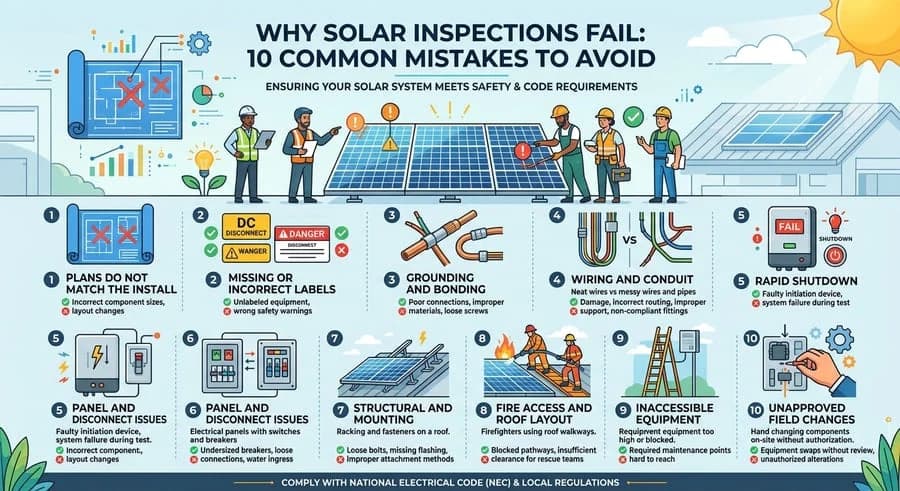
Why Solar Inspections Fail: 10 Common Mistakes to Avoid
Discover the 9 critical reasons solar inspections fail and how to avoid costly m...
Solar Grounding And Bonding: How To Pass Inspection Every Time
Learn how to pass solar grounding and bonding inspections every time. Avoid comm...
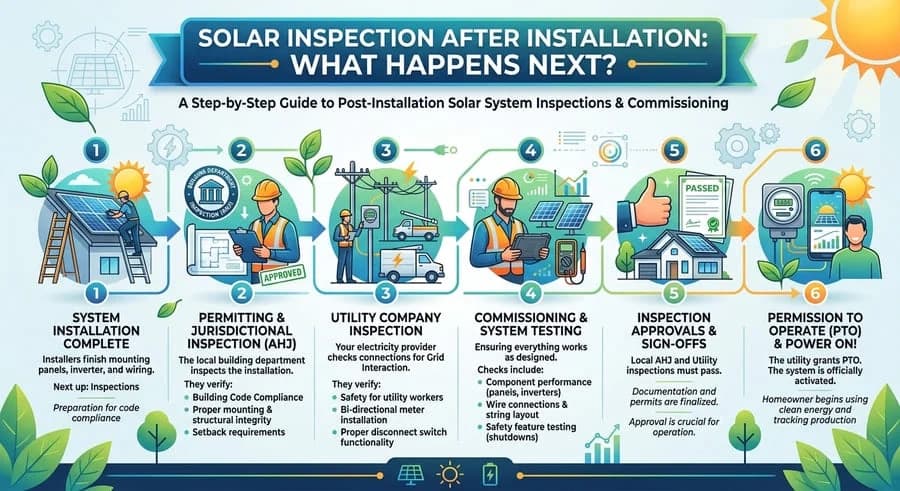
Solar Inspection After Installation: What Happens Next?
Learn how to pass your solar inspection by following essential tips for obtainin...