
Yes, you can replace your roof and add solar together, and in most cases it is the more cost-effective approach. Installing both at once avoids paying twice for labor, eliminates the cost of removing and reinstalling panels later, and lets a single permit plan set cover both the roofing and electrical scopes. The main exception is a roof already within 5 to 10 years of the end of its life.
Doing both together means one crew mobilization, one set of permits to coordinate through your local building department, and no risk of paying a solar contractor to pull panels off a roof they just installed a year earlier. The only homeowners who should slow down are those whose current roof still has 15 or more years of life left and who want solar sooner rather than later. For everyone else weighing a roof that is aging out alongside a solar decision, combining the two projects is the standard, well-supported approach.
Is It Better to Replace Your Roof Before Installing Solar Panels?
In most cases, yes, replacing an aging roof before or during a solar installation is the better call. Solar panels are built to last 25 to 30 years. If your roof cannot match that lifespan, you are setting up a future project where a contractor has to remove a fully wired, permitted solar array just to get at the decking underneath it. That removal and reinstallation work is not free, and it is not always fast. Sequencing the roof first, or doing both at once, avoids that entirely.
The 10-15 Year Rule: Roof Lifespan vs. Solar Lifespan
A widely used rule of thumb among solar installers is that if your roof has less than 10 to 15 years of remaining service life, you should replace it before or alongside your solar installation rather than after. Compare the age of your roofing material against its typical lifespan (asphalt shingles typically last 20 to 25 years, metal roofing 40 to 70 years, and tile 50-plus years) and subtract the years already in service. If the remaining life falls under that 10- to 15-year window, plan the roof work now.
When Your Existing Roof Is Still Suitable for Solar
If your roof is newer, in good structural condition, and has at least 15 years of remaining service life, there is no need to replace it before going solar. A qualified installer will still inspect the decking, flashing, and any existing damage during the site visit, since a solar permit plan set has to reflect the actual condition and structure of the roof it is being mounted to. But a roof that clearly has years of life left does not need to be replaced just because solar is being added.
Benefits of Replacing Your Roof and Installing Solar at the Same Time
Combining the two projects saves money, reduces risk, and simplifies the permitting process compared to doing them years apart. Homeowners who wait and end up needing a roof replacement after solar is already installed almost always pay more in total than those who planned both from the start.
Save on Labor and Avoid Paying for Panel Removal Later
A separate roof replacement after solar is installed requires hiring a crew to safely disconnect, remove, and store the panels, replace the roofing underneath, and then reinstall and recommission the array. That removal and reinstallation labor is an added cost that a combined project avoids completely. You are also not paying for two separate mobilizations, two dumpsters, or two rounds of site cleanup.
One Coordinated Permit Package Instead of Two
When a roof and a solar system are permitted together, a single solar permit design and plan set can account for both scopes in one submission. This gives your authority having jurisdiction (AHJ) a complete picture of the roofing material, the mounting method, and the structural load in a single review cycle, instead of reviewing a roofing permit now and an unrelated solar permit later with no connection between the two.
Solar Permit Solutions
Need Solar Permit Plans?
Professional, permit-ready solar plan sets delivered fast. Residential and commercial projects across all 50 states.
When You Should NOT Install Solar Yet
Combining roof and solar work is not always the right call. Hold off on solar, or at least slow down the timeline, in these situations:
- Your roof was replaced or majorly repaired within the last 5 years and clearly has 15-plus years of remaining life.
- You are still deciding between roofing materials, and the choice will significantly change the mounting method or structural requirements for solar.
- You have not yet obtained multiple quotes for either project, since bundling a rushed decision on two major home systems increases the odds of an expensive mismatch.
- Your home has unresolved structural issues (sagging decking, active leaks, or an outdated electrical panel) that need their own scope of work before either project can be permitted.
- You are planning a home sale within the next 1 to 2 years and want to weigh whether the buyer would rather choose their own system.
In any of these cases, it is worth pausing and getting a professional roof inspection and a solar site assessment separately before committing to a combined timeline.
Already Have Solar? What Happens When You Replace the Roof Underneath It
If you already have solar and now need a new roof, the panels have to come off first, and putting them back is not always as simple as reversing the removal. This scenario, an existing PV system that needs to be temporarily removed for a roof replacement, is arguably searched more often in practice than the reverse case of new roof plus new solar, and it comes with its own cost, timeline, and code-compliance questions that a straightforward new-build project does not.
Panel Removal and Reinstallation: Cost and Timeline
Removing an existing array typically involves disconnecting the system at the inverter and combiner, unmounting the panels and racking, and safely storing everything while the roofing crew works. Reinstallation then means remounting the racking, reattaching the panels, rewiring the strings, and recommissioning the system before it can be reconnected to the grid.
Nationally, contractors typically charge somewhere between $200 and $350 per panel to disconnect, remove, store, and reinstall an existing system, which puts a common 15 to 20 panel residential array in the range of roughly $3,000 to $7,000 for removal and reinstallation alone, separate from the roofing cost. Larger systems, steep roofs, or older racking that needs new hardware can push that higher. Some contractors quote a flat base fee plus a per-panel rate rather than a single blended number, so it is worth asking exactly what is included before comparing quotes.
Timeline-wise, most reinstallations happen within one to two weeks of the roof being completed, assuming the same crew or a coordinating contractor is scheduled in advance. Homeowners should budget for this as a distinct line item separate from the roofing cost itself, and should ask any contractor for a written estimate that separates roofing, panel removal and storage, and reinstallation and recommissioning, since vague all-in quotes make it hard to tell whether reinstallation labor was actually priced in.
Does Your Interconnection Agreement or PTO Need Re-Verification?
Your utility’s interconnection agreement and your original Permission to Operate (PTO) were issued based on the system as originally installed and inspected. Removing and reinstalling the array can trigger a requirement to re-verify that the system still meets the terms of that agreement, particularly if the reinstallation changes panel count, inverter configuration, or the point of interconnection. Some utilities and AHJs require a new inspection before restoring PTO after a system has been physically removed and reinstalled. It is worth confirming this with your utility and your AHJ before work begins, not after the roof is already finished.
Reinstalling Under a Newer NEC Edition: What Can Change
Code editions move forward even when your system does not. A system originally permitted under an older National Electrical Code (NEC) edition that gets removed and reinstalled today may need to meet the code edition currently adopted by your AHJ, not the one in effect when it was first installed. This most commonly shows up around rapid shutdown requirements and PV labeling under NEC Article 690 and directory or plaque requirements under NEC 705.10. A system that was fully compliant in 2017 is not automatically grandfathered in once it is physically removed and reinstalled under current code, so this is worth flagging with your permitting provider before assuming reinstallation is a simple like-for-like swap.

Roof Types That Work Best for Solar
Not every roofing material handles solar mounting hardware the same way. Some materials are straightforward to work with, while others require specialized flashing or mounting systems that add cost and installation time.
Comparison Table: Lifespan, Solar Compatibility, and Install Difficulty
| Roof Type | Typical Lifespan | Solar Compatibility | Install Difficulty |
|---|---|---|---|
| Asphalt shingle | 20 to 25 years | Excellent, most common pairing | Low |
| Metal (standing seam) | 40 to 70 years | Excellent, clamps attach without penetrations | Low to moderate |
| Metal (corrugated/exposed fastener) | 30 to 50 years | Good, it requires penetration-based mounts. | Moderate |
| Tile (clay or concrete) | 50-plus years | Good, but requires tile hooks or replacement mounts | High |
| Wood shake | 25 to 30 years | Fair, fire rating and flashing require extra care | Moderate to high |
| Flat/low-slope (membrane) | 20 to 30 years | Good, typically uses ballasted racking | Moderate |
What Is the Best Order of Installation?
For a combined project, the general order is inspection, roof replacement, solar design and permitting, solar installation, and then final inspection and utility interconnection. The exact sequence can shift depending on your AHJ and utility, but this order minimizes rework and keeps both permits moving in parallel where possible.
- Roof Inspection. A licensed roofer assesses the decking, flashing, and structural condition and identifies the roofing material and layout that the solar design will need to account for.
- Roof Replacement. The new roofing material goes on first, so the solar racking is attached to the final roofing surface rather than a temporary or soon-to-be-replaced one.
- Solar Design, Structural Review, and Permitting. This is the step where SPS’s expertise matters most. A PE-stamped solar plan set is prepared based on the new roof’s actual material, structure, and load capacity, then submitted to the AHJ for review alongside the required structural engineering calculations.
- Solar Installation. Once permits are approved, the racking, panels, and electrical components are installed according to the approved plan set.
- AHJ Inspection and Utility Interconnection. The completed system is inspected by the AHJ, and the interconnection agreement is finalized with the utility before permission to operate is granted.
Permits Required for Roof Replacement and Solar Installation
Combining a roof replacement with solar means coordinating at least two permit types, and often a structural review, through the same AHJ. Treating these as unrelated checkboxes is where many combined projects lose time. Understanding what each permit covers and when a licensed engineer needs to be involved keeps the timeline predictable.
Roofing and Electrical Permits
Most jurisdictions require a separate roofing permit for the reroof scope and an electrical permit for the solar installation. Some AHJs that use SolarAPP+ allow for expedited electrical permit review on standard residential systems, though a combined roof-and-solar project may still require standard plan review given the structural component involved.
When a PE Stamp Is Required (and What It Costs)
A PE stamp is required in most states whenever a solar system’s structural calculations need to be certified by a licensed professional engineer, which is common for roof-mount systems, especially when the AHJ requires proof that the roof structure can handle the added dead load of panels and racking. Requirements vary widely by state and system size: some AHJs require a stamp on every residential system regardless of size, while others only trigger the requirement above a certain kW threshold or for ground-mount and complex roof configurations.
Costs for residential projects typically fall between $150 and $700 depending on whether the project needs a structural stamp, an electrical stamp, or both and how complex the calculations are. A straightforward single-family roof-mount structural letter tends to land on the lower end of that range, while combined structural and electrical stamping, or a system with unusual roof geometry, tends to land higher. Skipping this step, or using an unstamped set where a stamp is required, is one of the more common reasons a submission gets rejected outright, and a rejected submission almost always costs more in delay than the stamp itself would have cost upfront. It is also worth remembering that installing solar without the required permits at all carries its own set of risks around fines, insurance, and resale, well beyond the cost of the stamp itself.
Structural Recalculation If the New Roof Changes Load or Attachment
If a new roof changes the roofing material’s weight (for example, moving from asphalt shingle to tile) or changes the attachment method for the racking, any prior structural calculations tied to the old roof no longer apply. This is a genuine PE-stamp-relevant issue: the new dead load and attachment points need to be recalculated against the applicable ASCE 7 wind and snow load standards before the AHJ will approve the solar permit, whether the project is a first-time install or a reinstallation after a reroof.
Utility Interconnection Approval and Timing
Utility interconnection approval runs on a separate track from the AHJ’s building and electrical permits, and it has its own timeline. Submitting the interconnection application as early as possible, ideally once the solar design is finalized, keeps this from becoming the bottleneck that delays permission to operate after everything else is already complete.
How Much Does It Cost to Replace a Roof and Add Solar?
Combining the two projects typically costs less in total than doing them separately over time, mainly because it avoids paying for a second mobilization and any panel removal and reinstallation labor. Exact costs depend heavily on roof size, roofing material, system size, and local labor rates, so the ranges below should be treated as a starting point for budgeting conversations rather than a quote.
Cost Comparison Table: Separate vs. Combined Projects
| Scenario | What’s Included | Typical Cost Range |
|---|---|---|
| Roof replacement only (asphalt shingle, average home) | Tear-off, decking repair, new roofing material, permit | $8,000 to $24,000 |
| Solar installation only (existing roof, 7 to 10 kW system) | Panels, racking, inverter, electrical, permit, interconnection | $18,000 to $32,000 before incentives |
| Roof + solar, done separately, years apart | Full roofing cost, plus full solar cost, plus later panel removal and reinstallation labor | Roofing and solar totals above, plus $3,000 to $7,000 in removal and reinstallation labor |
| Roof + solar, combined project | Roofing cost plus solar cost, one mobilization, one coordinated permit package | Roofing and solar totals above, with no added removal and reinstallation line item |
These ranges reflect national averages for a standard single-family home; your actual quote will depend on roof size and pitch, roofing material, system size, and local labor rates. The clearest savings in a combined project come from skipping the $3,000 to $7,000 in panel removal and reinstallation labor entirely, along with avoiding a second contractor mobilization and site visit.
On financing: homeowners researching this topic in 2026 should note that the Section 25D residential federal solar tax credit expired for expenditures after December 31, 2025. Current federal incentive status, including Section 48E and battery storage credit details, should be confirmed directly through IRS guidance and state-level incentive databases like DSIRE before budgeting a project around a specific credit amount.
Common Mistakes Homeowners Make
The costliest mistakes in a combined roof-and-solar project almost always come from treating the two scopes as unrelated rather than as one coordinated permit package.
- Hiring the roofing and solar contractors separately with no coordination between them. This is the single most common cause of mismatched timelines, duplicated site visits, and permit packages that do not reference each other. Ask both contractors directly whether they have worked combined projects together before, not just whether they are individually experienced.
- Skipping the structural conversation until after the roof is already finished. If a PE stamp or structural recalculation is needed, it should be scoped before the roof goes on, not discovered afterward, since a roofing material change can invalidate calculations that were already done.
- Assuming an older, already-permitted solar system does not need to meet current code if it is removed and reinstalled. As covered above, code editions move forward independent of when a system was first installed, and an AHJ reviewing a reinstallation will typically apply the code edition currently in effect.
- Not confirming interconnection and PTO status with the utility before removing an existing system. Some utilities require a fresh review before restoring PTO on a reinstalled system, and finding this out after the panels are already off the roof turns a routine reroof into an unplanned delay.
- Choosing roofing material without asking how it affects solar mounting. Some materials, like tile or wood shake, significantly increase mounting complexity and cost, and switching materials partway through planning can force a redesign of the racking layout.
- Underestimating permit timelines. Combined projects often require more AHJ coordination than a single-scope permit, and rushing the submission increases the odds of a rejection and resubmission cycle. Reviewing common reasons solar permits get delayed or rejected before submitting is worth the half hour it takes.
- Accepting a single all-in quote without a line-item breakdown. Whether it is a combined new install or a removal and reinstallation project, ask for roofing, solar equipment, solar labor, and any removal or reinstallation labor to be broken out separately, so you can tell what you are actually paying for.
Ready to Combine Your Roof and Solar Permits Into One Coordinated Package?
Solar Permit Solutions prepares PE-stamped plan sets for roof-mount and ground-mount solar projects across all 50 states, including combined roof-and-solar and panel reinstallation scenarios. Submit your project for a free quote, or browse the full blog library for more permitting guidance.
Frequently Asked Questions
Can I replace my roof and add solar together?
Yes. In most cases, combining the two projects is more cost-effective and better coordinated than doing them separately, unless your current roof still has significant remaining life. Doing both together means one mobilization, one coordinated permit package, and no future panel removal cost.
Is it cheaper to replace the roof before installing solar?
Generally yes, if your roof has less than 10 to 15 years of remaining life. Replacing it first, or alongside solar, avoids the added $3,000 to $7,000 or more in removing and reinstalling panels for a future reroof, on top of the roofing cost itself.
What happens if I already have solar and need a new roof?
The existing panels need to be removed before roofing work begins and reinstalled afterward. This adds removal and reinstallation labor to the project and may require re-verifying your interconnection agreement, PTO, and code compliance depending on how much has changed since the system was first installed and what code edition your AHJ currently enforces.
How much does it cost to remove and reinstall solar panels for a roof replacement?
Nationally, this typically runs $200 to $350 per panel, which puts a common residential array in the $3,000 to $7,000 range for removal and reinstallation alone, separate from the roofing cost. Get a written estimate that separates the roofing cost from the panel removal and reinstallation labor, since these are frequently combined into a single vague number by contractors.
Will I need new permits if I replace my roof and solar at the same time?
Yes. A combined project typically requires a roofing permit and an electrical or solar permit and may require a structural review or PE stamp depending on your jurisdiction and the roofing material involved. If your system includes battery storage, it is also worth reviewing NEC 690 and 706 compliance requirements for storage-specific permitting details.
Does replacing my roof affect my solar warranty?
It can, if panels are removed and reinstalled by a party other than the original installer, or if the reinstallation is not performed to the manufacturer’s specifications. Check both your roofing and solar manufacturer warranties before starting a combined project, and confirm in writing who is responsible for coordinating the removal and reinstallation with each manufacturer.
Need Solar Permit Plans?
Professional, permit-ready solar plan sets delivered fast. Residential and commercial projects across all 50 states.

SPS Editorial Team
Solar Permit Solutions
Solar Permit Solutions provides professional solar permit design services for residential, commercial, and off-grid installations across all 50 states. Our team ensures permit-ready plan sets delivered fast.
Related Articles
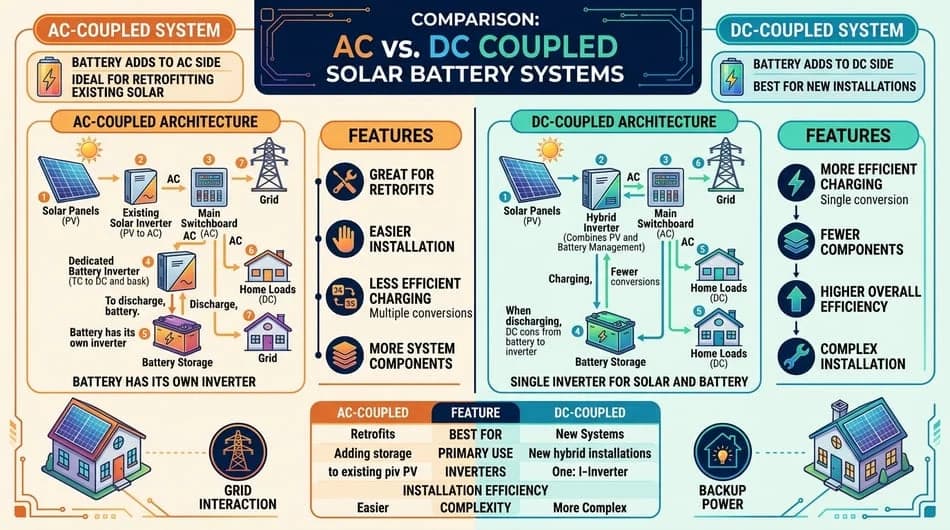
AC vs DC Coupled Solar Batteries: Which Should You Choose?
AC vs DC coupled solar batteries compared: efficiency, costs ($8K-$18K), and ins...
How Many Solar Panels Do I Need to Run Off the Grid?
Most off-grid homes need about 8 to 16 solar panels rated at 400 watts, dependin...
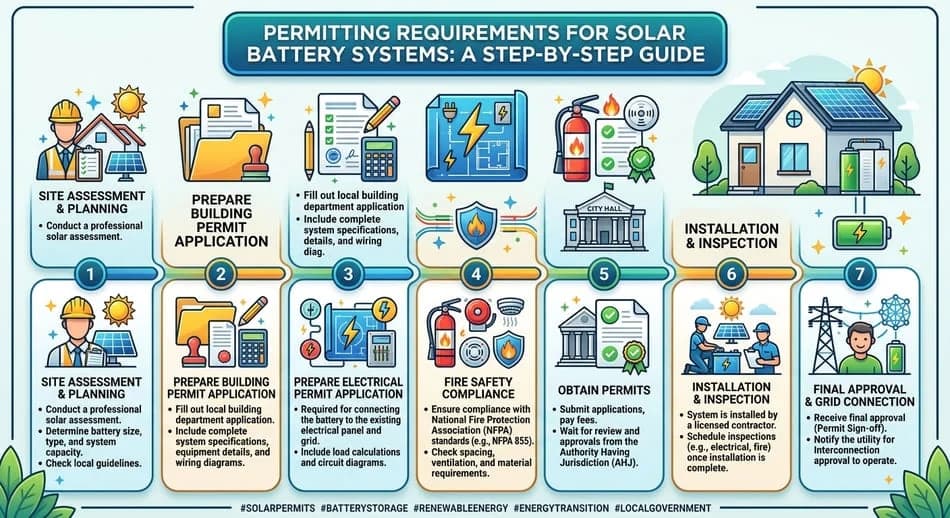
Solar Battery Permit Requirements: What You Need to Know
A solar battery usually needs local approval and a utility review before it can ...