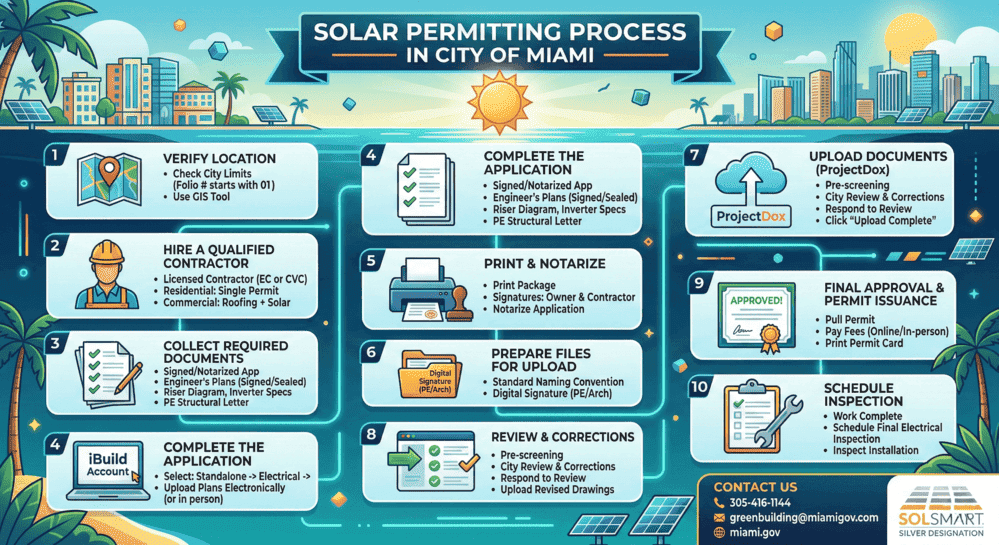
Getting a solar permit in Miami requires two separate processes depending on jurisdiction. Properties with a folio number starting with -01 fall under the City of Miami, which uses the iBuild portal. All other Miami-area properties fall under Miami-Dade County unincorporated jurisdiction. Both require HVHZ-compliant PE-stamped structural engineering, FPL interconnection pre-approval before installation, and a licensed EC or CVC contractor. Residential permits typically take 3 to 6 weeks. Expedited review is available in Miami-Dade County at no extra cost.
What Permits Are Required for Solar in Miami?
Every grid-tied solar installation in Miami requires a building/electrical permit from the local Authority Having Jurisdiction (AHJ), plus FPL interconnection approval. Inside the City of Miami, the Electrical Stand-Alone Solar Panel Permit is required. In unincorporated Miami-Dade County, a combined electrical/structural permit is required. Commercial projects in the City of Miami also require a separate stand-alone roofing permit.
Miami is one of the sunniest cities in the United States, averaging more than 248 sunny days per year. With electricity bills rising and Florida Power and Light (FPL) offering full retail net metering, solar installations across Miami continue to grow. But before a single panel goes on a rooftop, every project must clear a permitting process that is widely considered the most rigorous in Florida.
This guide covers both permitting pathways: the City of Miami process for properties inside City limits, and the Miami-Dade County process for unincorporated areas. It also covers FPL interconnection requirements, incentives, common mistakes, and the exact documents each authority requires.
How Do I Know If I Need a City of Miami or Miami-Dade County Solar Permit?
Check your property folio number. A folio starting with -01 means City of Miami jurisdiction. Use the City of Miami GIS tool at miami.gov to confirm. If your address does not appear, you are in unincorporated Miami-Dade County. Other municipalities like Hialeah, Coral Gables, and Doral have their own building departments.
The most important step before starting any Miami solar permit application is confirming which authority has jurisdiction over your specific address. Miami-Dade County contains dozens of municipalities, each with its own building department. Applying through the wrong authority causes significant delays and wasted fees.
| Your Property Location | Permit Authority |
| Inside City of Miami (folio starts with -01) | City of Miami Building Dept via iBuild portal at miami.gov, 444 SW 2nd Ave, 4th Floor |
| Unincorporated Miami-Dade County | Miami-Dade County Building Dept via Plan Status and Application Submittal Portal, 11805 SW 26th Street |
| Other municipalities (Hialeah, Coral Gables, Doral, etc.) | That municipality’s own building department. All must still meet HVHZ structural requirements. |
Permitting Solar Panels Through the City of Miami
The City of Miami has received a SolSmart Silver Designation from the U.S. Department of Energy’s SunShot Initiative, recognizing communities that have reduced solar permitting barriers. Even so, the City process has specific requirements that frequently catch applicants off guard.
What Is the City of Miami Solar Permit Process?
The City of Miami solar permit process uses the iBuild portal for application submission and ProjectDox/ePlan for document upload. Only contractors with an EC (Electrical Contractor) or CVC (Certified Solar Contractor) license may pull the permit. Residential projects do not require a separate roofing permit. Commercial projects require both an electrical stand-alone solar panel permit and a stand-alone roofing permit.
Residential vs. Commercial: A Critical Difference
| Project Type | Separate Roofing Permit Required? |
| Residential solar installation | No. You do not need a separate roofing permit for a residential solar project in the City of Miami. |
| Commercial solar installation | Yes. You must pull a separate stand-alone roofing permit in addition to the electrical stand-alone solar panel permit. |
Contractor License Requirement: Only contractors holding an EC (Electrical Contractor) or CVC (Certified Solar Contractor) license may pull solar panel permits in the City of Miami. The CVC license is issued by the Florida DBPR Construction Industry Licensing Board and covers residential and commercial solar PV systems. Other contractor license types are not accepted for this permit.

Required Documents for a City of Miami Solar Permit
1. Permit Application, Signed and Notarized
The permit application must be signed by both the property owner and the contractor, with both signatures notarized. You print this application after completing the online iBuild submission. Your package will automatically generate a Miami-Dade County RER/Municipal Application form. You do NOT need to complete that portion.
2. Engineering Plans, Signed and Sealed
Standard projects (valued at $50,000 or more): One set of plans signed and sealed by a Florida-licensed Professional Engineer. Under $50,000 exception: Plans may be prepared by a qualifying contractor holding an EC or CVC license rather than a PE. All content requirements below still apply in both cases.
Plans must include all of the following:
- Riser diagram showing existing equipment sizes and overcurrent protection (OCP) size
- DC/AC inverter specifications and photovoltaic panel specifications
- Diagram of both systems integrated and interconnected
- All required equipment labels shown on drawings
- Full grid calculation and inverter sizing
- Compliance with NEC 705.12(D), the 120% rule for back-fed breakers
- Support and mounting detail
- Confirmation that all components and PV cables are UL Listed
- Verification of existing service to qualify for panel installation
3. PE Structural Letter, 2 Separate Copies
Two copies of a letter signed and sealed by a Florida-licensed Professional Engineer must be submitted. This is a separate document from the plan set. It must state that the photovoltaic system installation will not adversely affect the building structure under normal conditions and during a hurricane event of the Florida Building Code specified intensity.
4. Product Specifications and Material Data Sheets
Manufacturer product equipment specifications and material data sheets for all system components must be submitted.
5. Battery Storage Details (If Applicable)
If batteries are part of the system, plans must indicate battery size, type, and location.
6. Transfer Switch Details
Indicate whether the transfer switch is manual or automatic. Show full switching equipment detail and method for transitioning from and to the public utility electrical system.
City of Miami Solar Permit Application: Step by Step
| Step | What to Do |
| Verify Jurisdiction | Confirm your address is in City of Miami using the GIS tool or check that folio starts with -01. |
| Hire Licensed Contractor | Engage a contractor with an EC or CVC license. Commercial projects require a separate roofing permit as well. |
| Collect All Documents | Prepare plans, PE structural letter (2 separate copies), product data sheets, and battery/transfer switch details. |
| Apply in iBuild | Create or log into your iBuild account at miami.gov. Select Start Application, then Building Application, then Standalone, Electrical Permit, then Solar Panel. |
| Print, Sign, Notarize | Download your application package after submission. Print, sign (owner and contractor), and notarize where required. |
| Name Files Correctly | Apply the City Standard Naming Convention to every file before uploading. File names cannot be changed after assignment. This is the leading cause of rejection. |
| Upload to ProjectDox/ePlan | After submission you receive an email from eplans@miamigov.com with a link to the ePlan/ProjectDox portal. Upload all drawings and documents into the correct folders (Drawings vs. Documents). Once you click Upload Complete, no further uploads are allowed until acceptance. |
| Pre-Screening and Review | City staff pre-screen your submission. You will be notified if problems exist. Correct and resubmit. This cycle may repeat. Do not change file names on resubmissions unless instructed. |
| Pay Fees and Pull Permit | Complete finalization steps including adding or updating contractor. Pay all fees online or at the 4th floor cashier. Print your permit card. The permit is not issued until the card is printed. |
| Keep Card On-Site | Your printed permit card must remain on-site at all times during construction. |
| Electrical Inspection | Once work is complete, schedule your electrical inspection through the City. |
| FPL Interconnection | Submit your passed inspection documentation to FPL’s net metering portal to complete enrollment and receive Permission to Operate. |
| Top Mistake to Avoid: The City of Miami’s two most cited application errors are (1) not following the Standard Naming Convention for uploaded files and (2) uploading more than one page per drawing file in ProjectDox. Both trigger automatic rejection during pre-screening. |
City of Miami Contact Information
| Contact | Details |
| Phone | 305-416-1144 |
| greenbuilding@miamigov.com | |
| In Person | Miami Riverside Center, 444 SW 2nd Ave, 4th Floor, Miami, FL 33130 |
| Application Portal | iBuild at miami.gov (applications) plus ProjectDox/ePlan portal (document uploads) |
Solar Permit Solutions
Skip the Permit Headaches
We design plan sets that pass inspection the first time. Code-compliant, PE-stamped, accepted by AHJs nationwide.
Permitting Solar Panels Through Miami-Dade County (Unincorporated Areas)
Properties in unincorporated Miami-Dade County permit through the Miami-Dade County Building Department. This uses a completely separate system from the City of Miami’s iBuild/ProjectDox workflow, with its own portal, required forms, and review process.
What Are the HVHZ Solar Requirements in Miami-Dade?
| Miami-Dade County sits in the High-Velocity Hurricane Zone (HVHZ). All solar installations require PE-stamped structural calculations proving the mounting system and roof attachments can withstand wind speeds of 170 to 180 mph per ASCE-7 standards. This applies to both residential and commercial projects. HVHZ compliance is shown through engineering calculations, not product-level NOA certifications. |
Miami-Dade and Broward counties are designated High-Velocity Hurricane Zones (HVHZ) under the Florida Building Code. Every solar installation in these counties must include PE-stamped structural calculations demonstrating that the mounting system and roof attachments can resist wind speeds of 170 to 180 mph, the strictest standard in the state. This requirement was established after Hurricane Andrew in 1992 and applies to all permanent structural installations.
Do Solar Panels in Miami-Dade Require a Notice of Acceptance (NOA)?
| No. Standard rooftop solar panels do not require a Miami-Dade Notice of Acceptance (NOA). NOAs are required only for solar attic fans and solar roofing systems with integrated panels, which form part of the building envelope. Standard panels are classified as components and cladding. HVHZ compliance is demonstrated through PE-stamped structural calculations, not product-level NOA certification. |
A common misunderstanding is that standard rooftop solar panels require a Miami-Dade Notice of Acceptance (NOA). This is not correct. Standard rooftop solar panels are classified as components and cladding, meaning they do not form part of the building envelope. No testing requirement or NOA is issued for them by Miami-Dade.
The only solar products that require Miami-Dade NOAs are solar attic fans and roofing systems with integrated or laminated solar electric panels, because those products form part of the building envelope and serve a weatherproofing function.
What HVHZ does require is PE-stamped structural calculations proving that the attachment method, racking system, and roof penetrations can resist the wind uplift forces at the design wind speed for the specific location. The building department reviews these calculations and inspects the work to verify compliance. This is a significant engineering requirement, but it is different from product-level NOA certification.
Required Documents for a Miami-Dade County Solar PV Permit
- Completed Building Permit Application (Yellow Form), signed and notarized by property owner and licensed contractor
- Completed Electrical Fee Sheet (Gold Form), signed by contractor. Use fee code G137 (Solar Mounted System). Note: Miami-Dade uses Electrical Category 34 Solar Photovoltaic on the fee sheet
- Engineered plan set, electronically signed and sealed by a Florida-licensed PE, including: HVHZ structural calculations for 170 to 180 mph wind loads per ASCE-7, site plan and roof plan showing panel location with dimensions, NEC Article 690 compliant electrical single-line diagram, grounding and bonding per NEC 690.47, rapid shutdown details, and inverter and equipment specifications with UL Listed confirmation
- Pre-approved flashing detail (optional but highly recommended): Miami-Dade publishes pre-approved flashing details. Using one exactly as written eliminates the need for custom flashing engineering and qualifies the project for a reduced permit fee. This is one of the most effective shortcuts available for Miami-Dade solar permits.
| Green Building Expedited Review: Projects using solar and other renewable energy qualify for expedited review under Section 8-6 of the Miami-Dade County Code. Request it by completing the SBP New Project Form before submission. This can reduce standard review time from 3 to 6 weeks down to 1 to 2 weeks at no extra cost. |
Miami-Dade Permit Fees and Timeline
Residential solar permit fees in Miami-Dade are calculated using fee code G137 and typically range from $200 to $500 depending on system size. Commercial permits are higher and calculated on project valuation. Standard plan review for a complete application takes 3 to 6 weeks. Expedited Green Building Review can reduce this to 1 to 2 weeks.
FPL Interconnection and Net Metering
Virtually all properties in Miami and unincorporated Miami-Dade County are served by Florida Power and Light (FPL). The FPL interconnection process applies to every grid-tied solar installation regardless of which local permitting authority you use.
What Are the FPL Solar Interconnection Requirements?
| FPL requires interconnection pre-approval before any panels are installed. Submit your application through FPL’s Sunny Portal and wait for written approval before beginning installation. Systems must be sized to produce no more than 115% of annual consumption. FPL offers three tiers: Tier 1 (up to 10 kW AC) for most residential projects, Tier 2 (10 to 100 kW), and Tier 3 (100 kW to 2 MW). |
| Critical Rule: FPL requires pre-approval before installation begins. You must submit an interconnection application and receive approval before any panels are installed. Operating a solar system before FPL has installed a bi-directional meter is strictly prohibited and can result in inaccurate meter readings that increase your bill. |
FPL Net Metering Tiers
| Tier | System Size (AC) | Key Requirements |
| Tier 1 | Up to 10 kW AC | No application fee. No liability insurance required. Streamlined review. Most residential projects qualify. |
| Tier 2 | 10 kW to 100 kW AC | Application fee required. Minimum $1 million liability insurance required. Manual AC disconnect switch required, mounted adjacent to FPL meter socket. |
| Tier 3 | 100 kW to 2 MW AC | Application fee required. Minimum $2 million liability insurance required. Three-phase WYE service required for systems 50 kW and above. |
FPL’s net metering program credits customers at the full retail rate for excess solar generation exported to the grid. Credits carry forward from month to month. At the end of December, if you have unused kilowatt hours in your credit bank, FPL applies a monetary credit to your December bill based on the average annual cost of generation, which is typically $0.02 to $0.03 per kWh, substantially lower than the retail rate. This is a key distinction: intra-year credits roll over at full retail value, but any remaining balance at year-end is settled at the generation cost rate, not retail.
FPL maintains a minimum monthly bill of $25 that solar credits cannot offset, regardless of how much your system produces. FPL does not offer utility rebates or cash incentives for solar beyond the net metering program itself.
System sizing: FPL requires systems to be sized to produce no more than 115% of the customer’s annual kWh consumption. Systems exceeding 90% of the existing service capacity may require additional utility upgrades at the customer’s expense.
After permit inspection is passed, provide FPL with a copy of the approved permit showing electrical and mechanical inspections signed off and the description of work. FPL will then order and install your bi-directional meter at no cost, followed by issuing Permission to Operate (PTO).
Special Situations
Re-Roofing with Existing Solar Panels (Miami-Dade)
When replacing a roof on a Miami-Dade property with an existing permitted solar system, the previously approved PV permit plans with the original Miami-Dade Approval Stamp must be provided as reference documents. A new roof plan is required, showing panel locations with dimensions, roof edges, parapet walls, change in elevations, roof framing material, and spacing. If re-roofing with the same system, existing mounting rails and attachments may be reused if in good condition. A different roofing system requires that new attachments be fully detailed and structural calculations be provided for connections to the new roofing system.
Battery Storage Systems
Adding battery storage in either jurisdiction triggers additional permit requirements. Plans must address battery size, type, location, ventilation, disconnect, and fire department access. UL 9540 listing is required for energy storage systems. FPL requires that grid-tied systems with batteries use an inverter that automatically disconnects from the grid during outages, unless the system uses a certified islanding-capable inverter. Stand-alone battery systems that charge from the grid and do not produce renewable generation are not covered under FPL net metering and require a separate Small Generator Interconnection Application.
Commercial Projects in the City of Miami
Commercial solar projects in the City of Miami require both the Electrical Stand-Alone Solar Panel Permit and a separate Stand-Alone Roofing Permit. Both require an EC or CVC licensed contractor. FPL interconnection for commercial systems 50 kW and above requires three-phase WYE service.
Solar Incentives Available to Miami Property Owners
| Miami solar owners benefit from Florida’s property tax exemption (solar does not increase assessed value), Florida’s 6% sales tax exemption on solar equipment, and FPL’s full retail net metering program. The federal 30% Residential Clean Energy Credit (Section 25D) expired for systems installed after December 31, 2025. The commercial ITC (Section 48E) has separate deadlines. Consult a tax professional for commercial projects beginning construction in 2026. |
What Solar Incentives Are Available in Miami in 2026?Florida Property Tax Exemption
Solar installations are excluded from property tax assessments statewide under Florida law. Adding solar to your home does not increase your assessed value or property tax bill. This incentive has no expiration date and applies to all residential and commercial solar installations in Florida.
Florida Sales Tax Exemption
Solar panels, inverters, racking hardware, and other solar equipment are exempt from Florida’s 6% state sales tax. This exemption applies at the point of purchase and reduces the upfront cost of every Florida solar installation.
FPL Net Metering
FPL credits excess solar generation at the full retail electricity rate. Credits carry forward monthly. At year-end, remaining credits are settled at FPL’s average annual cost of generation. There is a $25 minimum monthly bill. No utility rebates are available from FPL beyond the net metering credit structure.
Federal Investment Tax Credit (ITC): 2026 Status
The 30% federal Residential Clean Energy Credit (Section 25D) expired for homeowner-owned systems installed after December 31, 2025. Homeowners who completed their installations in 2025 can still claim the credit on their 2025 tax return by filing IRS Form 5695. Systems installed in 2026 and after do not qualify for the residential ITC under current law. Commercial solar installations (Section 48E) have separate deadlines: projects beginning construction by July 4, 2026 may still qualify for the commercial ITC. Consult a tax professional for guidance specific to your situation.
City of Miami SolSmart Silver Designation
The U.S. Department of Energy’s SunShot Initiative awarded the City of Miami its SolSmart Silver Designation, recognizing the City’s active efforts to reduce permitting barriers and make solar more accessible. This does not provide a direct financial incentive but reflects a commitment to streamlined permitting that benefits applicants.
Miami-Dade Green Building Expedited Review
Miami-Dade County offers expedited plan review at no additional cost for solar projects under Section 8-6 of the County Code. Requesting this review when submitting can cut the standard 3 to 6 week review time by more than half.
Common Miami Solar Permit Mistakes to Avoid
City of Miami Applicants
- Not following the Standard Naming Convention for uploaded files. This is the number one cause of pre-screening rejection at the City.
- Uploading more than one page per drawing file in ProjectDox.
- Using a contractor license type other than EC or CVC to pull the permit.
- Failing to pull a separate Stand-Alone Roofing Permit for commercial projects.
- Submitting the PE structural hurricane letter inside the plan set instead of as a separate 2-copy document.
- Not designating a main point of contact in iBuild, which delays the document upload notification email.
Miami-Dade County Applicants
- Using a PE who is not familiar with HVHZ structural methodology. Standard Florida Building Code wind calculations alone are not sufficient for the 170 to 180 mph HVHZ requirement.
- Assuming solar panels require a Miami-Dade product NOA. Standard rooftop panels do not need NOAs. HVHZ compliance is demonstrated through PE-stamped calculations, not product certification.
- Skipping the pre-approved flashing detail option. Using a Miami-Dade pre-approved flashing detail saves custom engineering time and qualifies for a reduced permit fee.
- Not requesting Green Building Expedited Review, which is free and can cut weeks from the timeline.
All Miami Applicants
- Starting installation before FPL pre-approval. FPL must approve the interconnection application before any panels are installed.
- Not verifying jurisdiction before applying. Applying to the wrong authority wastes time and fees.
- Waiting until after installation to apply to FPL. FPL net metering requires pre-approval before the system is installed, not just before it is turned on.
How Solar Permit Solutions Helps Miami Projects
Solar Permit Solutions provides complete permit design packages for residential and commercial solar installations across all 50 states, including projects in the City of Miami and unincorporated Miami-Dade County. Our packages are built specifically for the requirements of each jurisdiction.
For City of Miami Projects
- Engineering plans meeting all City of Miami content requirements: NEC 705.12(D), UL Listed components, riser diagrams, integration diagrams, transfer switch details, grid calculations
- Separate PE-signed and sealed structural hurricane letter, prepared as 2 copies, as required by the City and distinct from the plan set
- Files named and formatted per City of Miami Standard Naming Convention for ProjectDox upload
- Battery storage and transfer switch documentation when the system includes energy storage
For Miami-Dade County Projects
- PE-stamped HVHZ structural calculations with 170 to 180 mph wind load analysis per ASCE-7
- Florida-licensed PE stamp and electronic seal on all required documents
- NEC Article 690 compliant electrical single-line diagrams
- Grounding, bonding, and rapid shutdown plans per current NEC
- AHJ-ready plan sets formatted for the Miami-Dade portal, with optional pre-approved flashing detail integration
Turnaround is typically 2 to 5 business days with unlimited revisions until your building department approves the plans. Contact the team at Solar Permit Solutions for a quote tailored to your Miami project.
Conclusion
Getting Your Miami Solar Permit Right the First Time
Miami solar permitting is more complex than most Florida jurisdictions, but it is entirely manageable when you know exactly which system applies to your property and what each authority requires before you submit.
The single most important step is jurisdiction verification. A folio number starting with -01 means City of Miami and the iBuild portal. Any other unincorporated Miami-Dade address means the County Building Department and a separate HVHZ engineering package. Getting this wrong at the start costs time and fees that could have been avoided with a two-minute folio check.
Beyond jurisdiction, the five things that determine whether your permit moves quickly or stalls are: a licensed EC or CVC contractor, PE-stamped structural calculations built for HVHZ wind loads, a plan set that meets NEC Article 690 and the specific document checklist of your AHJ, FPL interconnection pre-approval secured before any installation begins, and complete, correctly named documents on the first submission.
None of these are optional. Each one is a gate. A plan set that passes City of Miami review will not necessarily pass Miami-Dade review, and vice versa. The two systems have different forms, different portals, different document naming conventions, and different engineering standards. That is why this guide covers both pathways in full rather than treating Miami as a single permitting jurisdiction.
If you are a homeowner managing your own project, use the jurisdiction table in this guide as your first filter, then work through the document checklist for your specific authority before engaging any contractor or engineer. If you are a solar installer operating in Miami-Dade, the Green Building Expedited Review in the County and the file naming requirements in the City are the two process details that will most directly affect your project timeline.
Solar Permit Solutions provides PE-stamped plan sets, HVHZ structural calculations, and AHJ-ready permit packages for both City of Miami and Miami-Dade County projects. Turnaround is 2 to 5 business days with unlimited revisions. Visit solarpermitsolutions.com or call (720) 703-9628 to get a quote for your Miami project.
Frequently Asked Questions
Skip the Permit Headaches
We design plan sets that pass inspection the first time. Code-compliant, PE-stamped, accepted by AHJs nationwide.
Frequently Asked Questions
Yes. Every solar PV installation in Miami requires a permit, whether inside the City of Miami or in unincorporated Miami-Dade County. Unpermitted solar systems can block FPL interconnection, create issues when selling the property, and may require mandatory removal.
Use the City of Miami GIS tool at miami.gov to search your address. If your address appears in the tool, you are in City limits and use the iBuild system. You can also check your property folio number. A folio starting with -01 means City of Miami. If your address does not appear, you are likely in unincorporated Miami-Dade County and permit through the County Building Department.
Only contractors holding an EC (Electrical Contractor) or CVC (Certified Solar Contractor) license issued by the Florida DBPR may pull solar panel permits in the City of Miami. The CVC license covers residential and commercial solar PV systems statewide. Other contractor license types are not accepted.
For projects valued at $50,000 or more, yes. Plans must be signed and sealed by a Florida-licensed Professional Engineer. For projects under $50,000, a qualifying EC or CVC licensed contractor may prepare the plans. In all cases, a separate PE structural hurricane letter in 2 copies is required regardless of project value.
No. Standard rooftop solar panels do not require a Miami-Dade Notice of Acceptance. NOAs are required for building envelope products like impact windows, roofing materials, and solar attic fans. Rooftop solar panels are classified as components and cladding and are not subject to NOA product approval requirements. HVHZ compliance for solar racking and attachments is demonstrated through PE-stamped structural calculations proving resistance to the design wind uplift load.
City of Miami: review time depends on application completeness and how many correction cycles are needed. Miami-Dade County: standard review takes 3 to 6 weeks; expedited Green Building Review can reduce this to 1 to 2 weeks. The full process from FPL pre-approval through Permission to Operate typically takes 8 to 14 weeks when the application is properly prepared.
The 30% federal Residential Clean Energy Credit expired for customer-owned systems installed after December 31, 2025. Homeowners who completed their systems in 2025 can still claim the credit on their 2025 federal tax return using IRS Form 5695. For systems installed in 2026 and beyond, the residential ITC is not available under current law. Florida's property tax exemption and sales tax exemption on solar equipment remain in effect and have no expiration.
No. FPL does not offer direct cash rebates for solar installations. Miami homeowners benefit from FPL's full retail net metering program, Florida's property tax exemption, and Florida's sales tax exemption on solar equipment. The federal residential ITC expired December 31, 2025.

SPS Editorial Team
Solar Permit Solutions
Solar Permit Solutions provides professional solar permit design services for residential, commercial, and off-grid installations across all 50 states. Our team ensures permit-ready plan sets delivered fast.
Related Articles
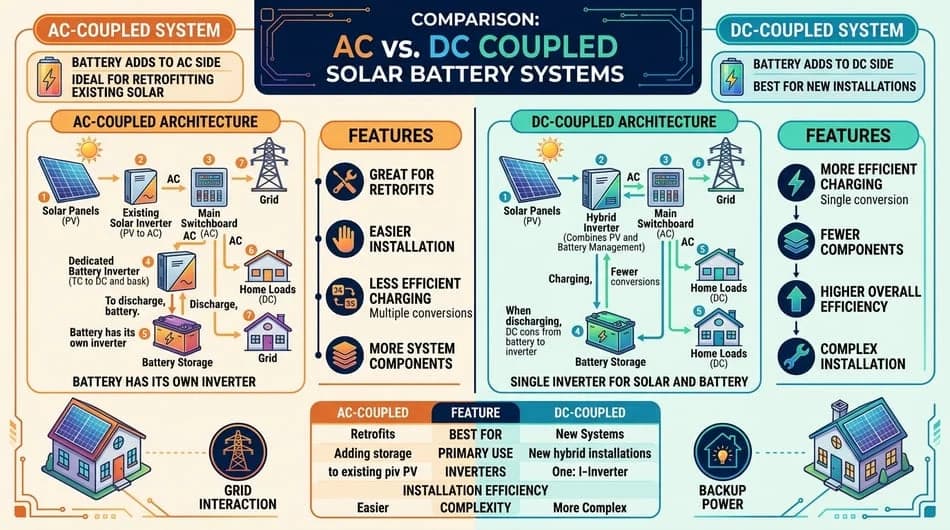
AC vs DC Coupled Solar Batteries: Which Should You Choose?
AC vs DC coupled solar batteries compared: efficiency, costs ($8K-$18K), and ins...
How Many Solar Panels Do I Need to Run Off the Grid?
Most off-grid homes need about 8 to 16 solar panels rated at 400 watts, dependin...
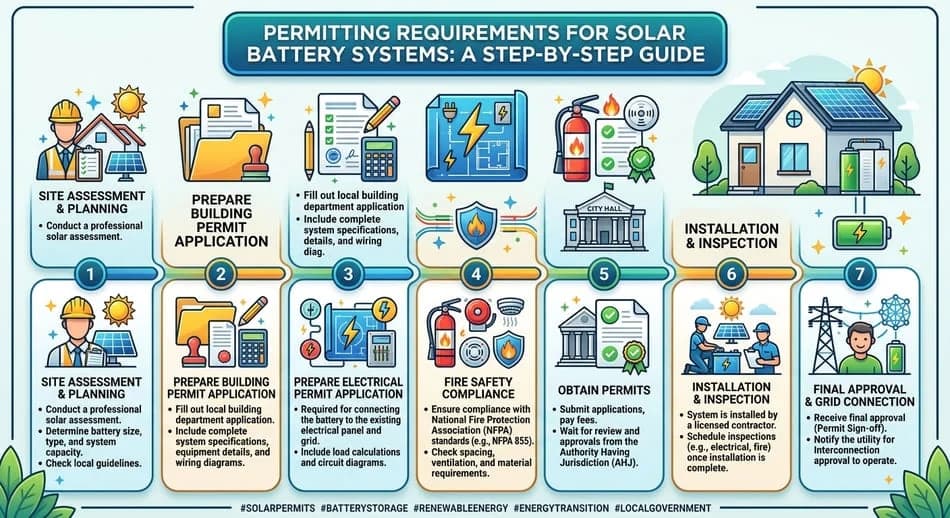
Solar Battery Permit Requirements: What You Need to Know
A solar battery usually needs local approval and a utility review before it can ...