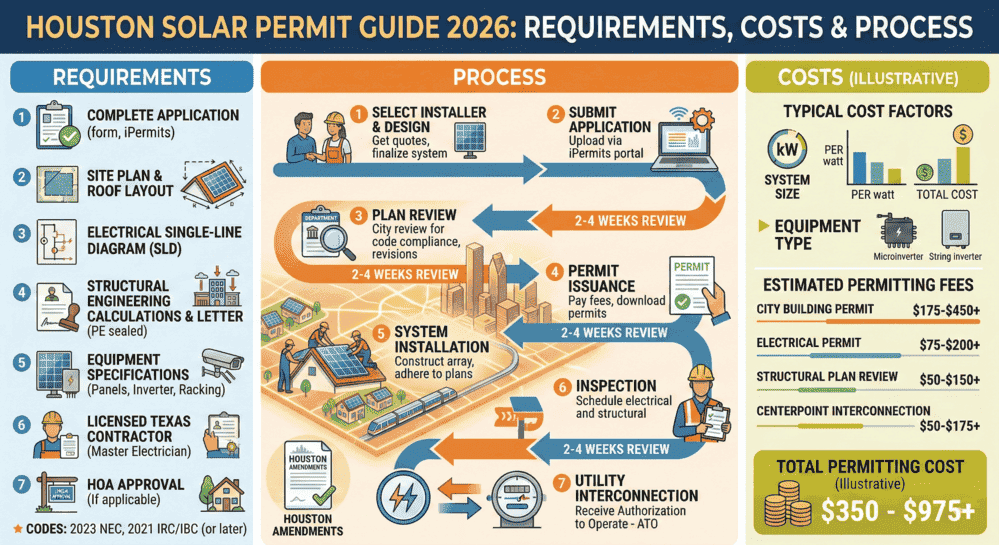
Quick Answer: In Houston, TX, solar PV installations require a building permit (and a separate electrical permit) submitted electronically through the Houston Permitting Center’s iPermits system. Permit fees typically run $250-$500 for residential systems. Licensed contractors can use SolarAPP+ (launched July 2024) to skip traditional plan review for eligible systems. After city permit approval, applicants must separately submit a CenterPoint Energy interconnection application before operating the system. The federal residential solar tax credit (Section 25D) expired December 31, 2025; Texas property tax exemptions and solar rights laws remain in effect.
Why Houston Is One of Texas’s Most Active Solar Markets
Houston homeowners and businesses are installing solar at record rates. Texas is the second-fastest-growing solar state in the nation, and the Houston metro area is a major driver of that growth, with more than 1,080,000 solar systems now installed statewide according to the SEIA Texas Solar Market Insight. With electricity rates climbing 23% since 2021 and the Houston area served exclusively by CenterPoint Energy’s T&D infrastructure, navigating the permitting and interconnection process correctly is critical to a successful installation.
This guide covers every step of the Houston solar permit process, from the City of Houston’s iPermits system and SolarAPP+ eligibility through CenterPoint’s interconnection portal, code requirements, current financial incentives, and Houston-specific considerations like flood zones and high-wind design requirements. For a broader statewide overview, see our Texas Solar Permit Guide. For Houston-specific design and processing services, visit our Houston Solar Permitting Services.
Do You Need a Permit for Solar Panels in Houston?
Yes. The City of Houston requires a building permit for virtually all solar PV installations, including off-grid systems. A separate electrical building permit is also required. There are no exemptions for small systems or DIY installations within city limits. Properties in unincorporated Harris County outside city limits may follow different rules, but most suburban municipalities adjacent to Houston have their own permit requirements.
The Houston Permitting Center serves as the central point for all permit applications. For official requirements, documentation checklists, and fee schedules, see the Houston Permitting Center Solar Panel Permit page. To understand what to expect from the plan review process and how to avoid common rejection reasons, read our guide on Solar Panel Permit Requirements: How to Avoid Delays & Rejections.
Houston Solar Permit Process: Step by Step
Step 1: Prepare Your Permit Package
All plans must be submitted electronically. Before applying, your contractor must be registered with the City of Houston. The required documentation includes:
• Completed Building Permit Application via iPermits
• Declaration Supporting Building Permit Application (signed by property owner, validated against HCAD records)
• Electrical one-line diagram compliant with NEC Article 690 and 2023 NEC Article 705. For a deep dive into the 2023 code updates affecting your plans, see our NEC Article 690 Updates for Installers.
• Dimensioned roof layout showing roof access pathways, spacing, and setbacks (minimum 4-foot access paths per 2015 International Fire Code Section 1204.5.1)
• Specification sheets for all solar panels and electrical equipment showing UL 1703 listing
• Structural compliance documentation: plans must show compliance with wind speed design per Table R301.2(1) using the ASCE 7 Hazard Tool (Wind Speed Lookup) (printed results required)
• Texas PE-sealed letter confirming structural compliance. See our complete overview of PE Stamp Requirements for Texas, California & Florida to understand exactly what’s required.
• NEC Article 690, 691, and 705 labeling and placards
For detailed guidance on what goes into a compliant plan set and how engineering firms navigate AHJ requirements, see our resource on Solar Engineering Requirements for Permits: Meeting AHJ Standards
Step 2: Submit Via iPermits and Pay Plan Review Fee
A plan review fee of 25% of the permit fee must be paid at submission before plans can be uploaded to ProjectDox. After payment, you receive an invitation to upload all documents. Permit fees for residential solar systems in Houston typically range from $250 to $500. Large-scale commercial projects may require additional review steps.
Properties in flood plains, historic districts, or within designated areas near an airport are subject to additional requirements. Check HCAD records to confirm ownership matches permit application documentation.
For strategies to minimize permit costs and reduce back-and-forth with plan reviewers, see our guide on How to Reduce Solar Permit Design Costs and Approval Times.
Step 3: SolarAPP+ Fast Track (Eligible Systems Only)
Since July 15, 2024, Houston became the first — and only — AHJ in Texas to accept applications through the SolarAPP+ streamlined permitting launch announcement. Licensed contractors registered as SolarAPP+ installers with the City of Houston can use the app to skip traditional plan review entirely for eligible systems, dramatically reducing approval time.
Important eligibility restriction: projects located in areas where the basic wind speed design is 140 mph or greater (windborne debris regions) are NOT eligible for SolarAPP+ and must use the traditional plan review process. Given Houston’s hurricane exposure, contractors should verify the specific site’s wind zone before choosing the SolarAPP+ path. Download the full permit and inspection requirements from the City of Houston Solar PV Permit & Inspection Guide (PDF).
Step 4: Three-Phase Inspections
Houston requires three inspection phases for solar installations:
1. Rough-in inspection: before panels are installed, covering conduit, wiring, and mounting
2. Framing/structural inspection: verifying mounting hardware and structural attachment
3. Final inspection (CE-1387 Post Install Solar standards): verifying complete system including labeling, AC/DC disconnects, and rapid shutdown devices
Proper grounding and bonding are among the most frequently cited inspection failures. Review our Solar PV Grounding and Bonding: Essential Requirements guide to ensure your system passes first time.
Solar Permit Solutions
Skip the Permit Headaches
We design plan sets that pass inspection the first time. Code-compliant, PE-stamped, accepted by AHJs nationwide.
CenterPoint Energy Interconnection: A Separate, Required Process
This is one of the most important things to understand about Houston solar: the city building permit and the CenterPoint Energy interconnection application are two completely separate processes, and both are required before your system can operate legally.
An application for interconnection must be submitted directly to CenterPoint Energy for approval and subsequent inspection prior to the start of installation. You cannot turn your system on until CenterPoint issues a Permission to Operate (PTO). Turning the system on before PTO will result in an error on your smart meter, a CenterPoint investigation, account violation status, and delays. For full process details, see the CenterPoint Distributed Generation FAQs.
How to Apply for CenterPoint Interconnection
You or your licensed contractor must register and submit the interconnection application through the CenterPoint Energy DG Interconnection Portal. The application requires a one-line diagram of the system, a site/layout diagram, and make/model of inverters and solar panels (must be IEEE-1547 compliant and UL-1741 certified).
Once approved, CenterPoint sends an Interconnection Agreement (ICA) that must be signed by all parties. After signing, CenterPoint issues the PTO and reprograms your smart meter to capture excess generation data.
For our complete technical walk-through of the interconnection process, including document requirements and common delays, see our Solar Interconnection Agreement: Complete Application Guide. If you’re unsure whether your system qualifies for supply-side vs. load-side connection, see our guide on Supply-Side vs. Load-Side Interconnection Methods.
CenterPoint Interconnection Timeline
Typical CenterPoint interconnection approval takes 2–4 weeks for standard residential systems. However, CenterPoint has reported processing backlogs due to a 50% increase in application volume in recent years, and some applicants have reported waits of 40–50+ business days during peak periods. For self-install projects, CenterPoint will schedule an onsite visual inspection rather than accepting submitted photos.
Net Metering and Buyback in Houston
CenterPoint Energy does not offer net metering and does not buy or sell electricity from customers. CenterPoint captures excess generation values on your smart meter and sends that information to your Retail Electric Provider (REP). Houston solar customers must select a REP that offers a solar buyback or export credit program. For a full overview of Texas solar incentives and what to look for in a solar buyback REP, see Go Solar Texas – Available Incentives.
Houston Solar Code Requirements
Houston solar installations must comply with multiple overlapping code frameworks:
| Code / Standard | Houston Requirement |
|---|---|
| Electrical | NEC Article 690 (PV Systems) + 2023 NEC Article 705 (Interconnection) |
| Fire Safety | 2015 International Fire Code Sec. 1204.5.1; 4-ft roof access pathways required |
| Rapid Shutdown | Required per NEC 690.12; must be included in permit package |
| Structural | 2021 IRC / 2021 IBC; site-specific wind speed from ASCE 7 Hazard Tool required |
| Energy Conservation | 2015 International Energy Conservation Code (Harris County) |
| Engineering Seal | Texas PE seal required; systems over 10kW always require PE stamp regardless of type |
| Solar Ready | Houston Solar Ready provision (Appendix U) applies to new construction |
| Panel Listing | UL Standard 1703 listing required for all solar modules |
Wind Speed Design: A Houston-Specific Concern
Houston’s coastal location means wind speed design is a critical permitting factor. Plans must show compliance with the minimum wind speed design for the specific address. Use the ASCE 7 Hazard Tool (Wind Speed Lookup) and include the printed results in your permit submission. Properties in windborne debris regions (basic wind speed 140 mph or greater) are ineligible for SolarAPP+ and must undergo full plan review.
NEC Circuit Sizing Compliance
Circuit-related violations under NEC 690.8 account for 30–40% of all solar permit rejections nationwide. Common failures include incorrect ampacity calculations and improper derating. Review our NEC 690.8 Circuit Sizing: Stop Permit Rejections to make sure your conductor sizing and overcurrent protection calculations are inspection-ready.
Grounding and Bonding Requirements
Proper grounding and bonding under NEC 690.41–690.47 is essential for both safety and permit approval in Houston. For the equipment specifications and installation practices that meet NEC standards, see our NEC-Compliant Solar Grounding Equipment Selection guide.
PE Stamp Requirements
All engineered sheets must be sealed, signed, and dated by a Texas-licensed professional engineer. Systems over 10kW require a PE stamp regardless of whether the installation is residential or commercial. Our detailed breakdown of PE Stamp Requirements for Texas, California & Florida explains the difference between structural and electrical PE stamps and which projects require each.
Understanding Your AHJ
The City of Houston acts as the Authority Having Jurisdiction (AHJ) for all permit approvals. Understanding how AHJs interpret and enforce code requirements is key to avoiding delays. Read our guide on What Is the AHJ in Solar and Why It Controls Your Project Timeline for insight into how Houston’s permitting office operates and what to expect during plan review.
Houston vs. Other Major Texas Cities: Permit Comparison
| City | Permit Fee | Utility | SolarAPP+ | Timeline |
|---|---|---|---|---|
| Houston | $250-$500 | CenterPoint | Yes (July 2024) | 2-4 weeks |
| Dallas | $300-$600 | Oncor | No | 3-5 weeks |
| Austin | $200-$400 | Austin Energy | No | 1-2 weeks |
| San Antonio | $275-$525 | CPS Energy | No | 2-4 weeks |
Houston’s adoption of SolarAPP+ makes it the most streamlined major city in Texas for eligible projects. For a full breakdown of how requirements differ across all Texas municipalities, see our Texas Solar Permit Guide.
Houston Solar Incentives & Financial Benefits in 2026
Federal Solar Tax Credit (Section 25D) — EXPIRED
The 30% federal residential solar Investment Tax Credit (Section 25D) expired December 31, 2025, following the passage of the One Big Beautiful Bill Act (OBBBA) signed July 4, 2025. This is a hard termination with no phase-down period. For the IRS’s official guidance on the credit’s expiration and how carried-forward credits are treated, see the IRS FAQs on Section 25D Expiration Under OBBBA.
Third-party-owned systems (leases and PPAs) may still qualify under the commercial Section 48E credit if construction began by July 4, 2026 and the system is placed in service by December 31, 2027.
Texas Property Tax Exemption (Still in Effect)
Texas Property Tax Code Section 11.27 provides a 100% property tax exemption for solar installations. This exemption has been in place since 1978 and remains fully in effect. When you install solar panels in Houston, the added value to your property is completely exempt from property taxes for as long as the system is operational.
Texas Sales Tax Exemption on Solar Equipment
Solar energy devices are exempt from Texas state sales tax under Texas Tax Code Section 171.107. This exemption covers traditional solar panels, microinverters, power optimizers, mounting systems, and (as of May 2025 per HB 431) solar roof tiles.
HOA Protections Under Texas Law
Texas HOAs cannot outright ban solar installations. HB 431 (effective May 29, 2025) expanded these protections to cover solar roof tiles. SB 1036 and SB 1697 (effective September 1, 2025) added consumer protection requirements including mandatory solar retailer registration with TDLR. For the full picture of homeowner solar rights in Texas, see Go Solar Texas – Solar Rights & Regulations.
PACE Financing
Property Assessed Clean Energy (PACE) financing allows Houston area property owners to finance solar installations through their property taxes, spreading costs over 15–20 years. Payments stay with the property upon sale. PACE availability depends on your specific location within the Houston metro.
Realistic Houston Solar Permit Timeline
| Phase | Timeframe | Description |
|---|---|---|
| 1 | Week 1 | System design, documentation preparation, structural assessment |
| 2 | Week 1-2 | iPermits submission + plan review fee payment; CenterPoint pre-application |
| 3 | Week 2-4 | City permit approval (SolarAPP+ eligible: often same day to 3 days; traditional: 2-4 weeks) |
| 4 | Week 3-5 | Physical installation + three-phase city inspections |
| 5 | Week 5-9 | CenterPoint interconnection review and PTO issuance (2-4 weeks typical; can be 8-10 weeks during backlogs) |
| Total | 6-12 weeks | From permit submission to system activation; SolarAPP+ can shorten to 4-6 weeks for eligible systems |
Can I DIY Solar in Houston?
DIY solar installations are permitted in Houston, but several restrictions apply. You still need a full building permit and a licensed electrician to sign off on the electrical work. The interconnection application to CenterPoint requires a licensed contractor for most efficient processing; self-install projects trigger a mandatory CenterPoint onsite visual inspection (rather than the photo-based review used for installer-submitted projects). You also need a Texas PE-sealed structural letter.
Most DIY installers work with a solar permit design service to prepare the required stamped engineering drawings, then hire a licensed electrician for final sign-off and inspection. Our Residential Solar Permit Design service is available to both licensed contractors and DIY enthusiasts throughout Houston and Harris County.
Commercial Solar Permitting in Houston
Commercial solar permitting in Houston follows the same basic iPermits process but involves additional complexity: large-scale commercial projects require full plan review before approval (not eligible for SolarAPP+), and commercial systems have additional NEC Article 691 requirements.
The commercial solar ITC under Section 48E remains available for projects that began construction by July 4, 2026, and are placed in service by December 31, 2027. For commercial solar permitting and design packages, see our Commercial Solar Permit Design services.

Energy Independence in the Bayou City: Solar + Battery Backup Houston (2026)
For Houston homeowners, the energy conversation has shifted. In 2026, it’s no longer just about saving a few dollars on a monthly bill – it’s about resilience. Between the increasing frequency of extreme weather events and the evolving demands on the ERCOT grid, “Solar + Battery Backup” has become the gold standard for home energy in Southeast Texas.
Why Houston is Leading the Battery Revolution
Houston is unique. We face high humidity, soaring summer temperatures, and the constant threat of hurricane season. While solar panels provide the power, a battery backup (like the Tesla Powerwall 3 or Enphase IQ 5P) provides the security.
In 2026, a solar system without storage is only a partial solution. Without a battery, your solar panels are required by law to shut down during a grid outage to prevent “back-feeding” power to utility lines. With a battery, your home automatically “islands” itself, allowing your panels to keep charging your battery and powering your AC, fridge, and medical devices even when the rest of the neighborhood is in the dark.
The Financials: Incentives and Value in 2026
The economics of solar storage in Houston have reached a tipping point. While the federal tax credit landscape saw some shifts in mid-2025, several key incentives remain available to drive your ROI:
- CenterPoint Energy Rebates: In 2026, CenterPoint has officially extended its solar incentive program, offering up to $2,025 for residential installations. These funds are limited and allocated on a first-come, first-served basis.
- Property Tax Exemption: Under Texas Tax Code §11.27, 100% of the value added to your home by a solar + battery system is exempt from property taxes. You get the increased home value without the tax hike.
- Virtual Power Plants (VPPs): This is the biggest change in 2026. Houstonians can now enroll their batteries in programs like the Tesla Electric VPP or the new Rhythm Energy VPP. These programs pay you to “dispatch” your stored energy back to the grid during peak stress events, essentially turning your battery into a revenue-generating asset.
Conclusion: Your Houston Solar Permit Roadmap
Getting a solar permit in Houston requires navigating two separate approval processes, the City of Houston’s iPermits system and CenterPoint Energy’s interconnection portal, before your system can legally operate. Understanding both is the difference between a smooth 6-week installation and a frustrating 3-month delay.
Here’s what to keep in mind as you move forward:
The permit process is fully digital. All Houston solar permit applications go through iPermits, with plans uploaded via ProjectDox. Licensed contractors registered with SolarAPP+ can skip traditional plan review entirely for eligible systems, making Houston the fastest major city in Texas for qualifying installations.
Wind zones matter more in Houston than anywhere else in Texas. Your site’s specific address determines whether you qualify for SolarAPP+ or need full structural plan review. Run your address through the ASCE 7 Hazard Tool before committing to a permitting pathway.
CenterPoint is a separate process, and the most common source of delays. Submit your interconnection application as early as possible. Do not turn your system on before receiving your Permission to Operate, even if your city permit and inspections are complete.
The federal 30% tax credit is gone for 2026 system owners. Section 25D expired December 31, 2025 with no phase-down. Texas’s 100% property tax exemption and HOA solar rights protections remain fully in effect and continue to make Houston one of the stronger solar markets in the country despite the federal credit loss.
PE stamps are non-negotiable. Every Houston solar permit package requires a Texas-licensed PE seal on structural and electrical plans. Systems over 10kW require it regardless of size or type.
Whether you’re a Houston homeowner going solar for the first time, a DIY installer pulling your own permit, or a contractor managing multiple Harris County projects, Solar Permit Solutions prepares complete, code-compliant permit packages, stamped engineering drawings, CenterPoint interconnection coordination, and iPermits submission support included.
Related Resources
- Texas Solar Permit Guide – Complete Texas statewide permitting overview
- NEC Article 690 Compliance Guide – NEC Article 690 deep dive for solar professionals
- Net Metering Policies by State – Net metering and buyback programs by state
- Battery Storage System Design – Battery storage system design and NEC 706
- PE Stamp Requirements by State – PE stamp requirements: 50-state directory
- Houston Permitting Center Solar Panel Permit – Official Houston Permitting Center solar page
- CenterPoint Distributed Generation FAQs – CenterPoint Energy distributed generation FAQs
- Go Solar Texas – Available Incentives – Texas solar rights and available incentives
Frequently Asked Questions
Skip the Permit Headaches
We design plan sets that pass inspection the first time. Code-compliant, PE-stamped, accepted by AHJs nationwide.
Frequently Asked Questions
Residential solar permit fees in Houston typically range from $250 to $500, with a plan review fee of 25% of the permit fee due at submission. A separate electrical building permit is also required. Fees are calculated based on system scope and project valuation. Commercial projects may incur higher fees.
Yes. Houston launched SolarAPP+ on July 15, 2024, making it the only AHJ in Texas using the platform. Eligible contractors registered with both SolarAPP+ and the City of Houston can skip traditional plan review. However, projects in high-wind zones (140+ mph basic wind speed) are not eligible and must use the standard review process.
SolarAPP+ eligible projects can receive approval in as little as same day to 3 business days. Standard plan review typically takes 2-4 weeks. The separate CenterPoint interconnection process adds another 2-4 weeks (or longer during backlog periods). Total project timeline from permit submission to Permission to Operate is typically 6-12 weeks.
Yes. All engineered plans must be sealed by a Texas-licensed PE. This includes structural documentation confirming the roof can support the added load. Systems over 10kW require a PE stamp regardless of system type. The PE letter must confirm compliance with Houston Building or Residential Code structural requirements.
No. The 30% federal residential solar tax credit (Section 25D) expired December 31, 2025, following the passage of the OBBBA. Houston homeowners installing solar in 2026 and beyond as system owners cannot claim this credit. Texas property tax exemptions and HOA solar rights protections remain fully in effect. Third-party lease/PPA arrangements may still access commercial tax credits under Section 48E for qualifying projects.
CenterPoint Energy does not offer net metering or buy/sell electricity from customers. CenterPoint captures excess generation values on your smart meter and sends the data to your Retail Electric Provider (REP). You must select a REP with a solar buyback program to receive credits for excess energy exported to the grid.
Properties in flood plains are subject to additional review requirements from the Houston Permitting Center. Check your flood zone status through Harris County Flood Control District before starting your permit. Our team is experienced with Houston's specific flood zone considerations and ERCOT interconnection requirements across all Harris County property types.

SPS Editorial Team
Solar Permit Solutions
Solar Permit Solutions provides professional solar permit design services for residential, commercial, and off-grid installations across all 50 states. Our team ensures permit-ready plan sets delivered fast.
Related Articles
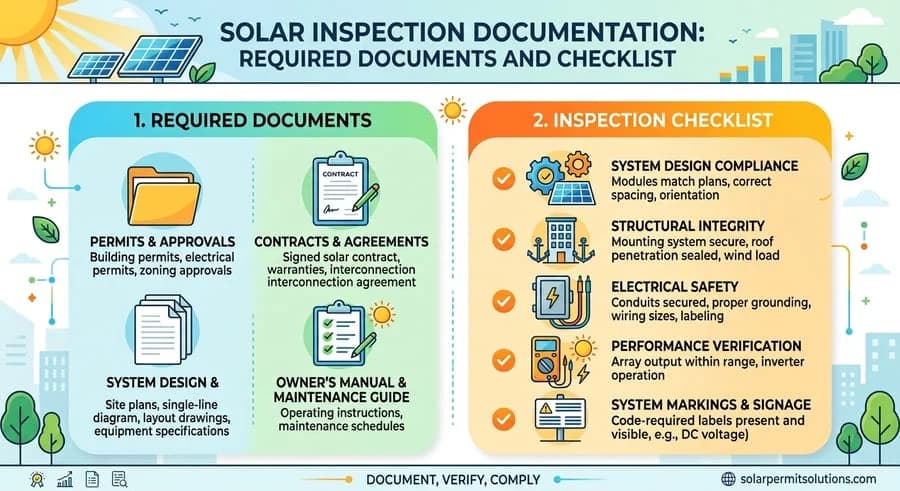
Solar Inspection Documentation: Required Documents and Checklist
Learn about solar inspection documentation, including permit requirements, NEC c...
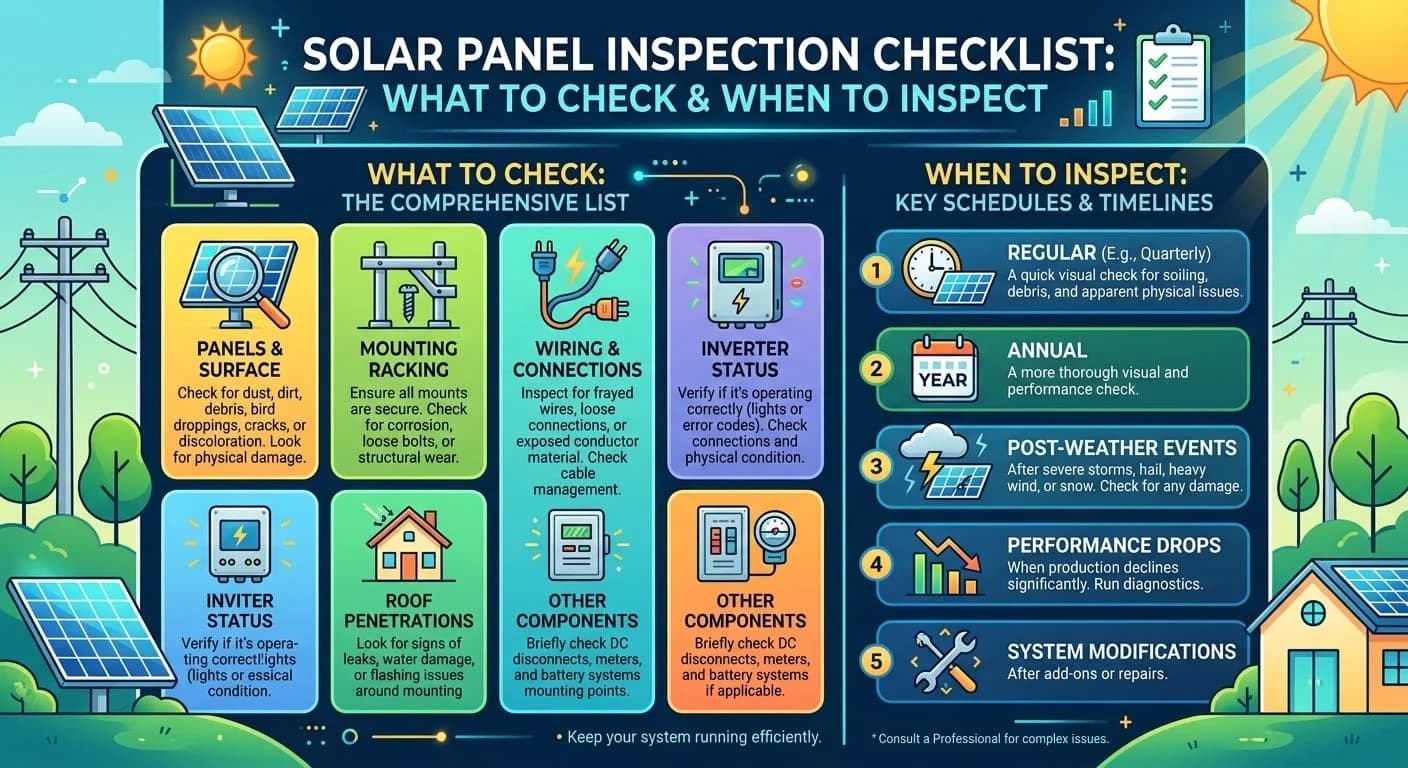
Solar Panel Inspection Checklist: What To Check & When To Inspect
Solar panel inspection guide: Learn what to check, when to inspect (annually + e...
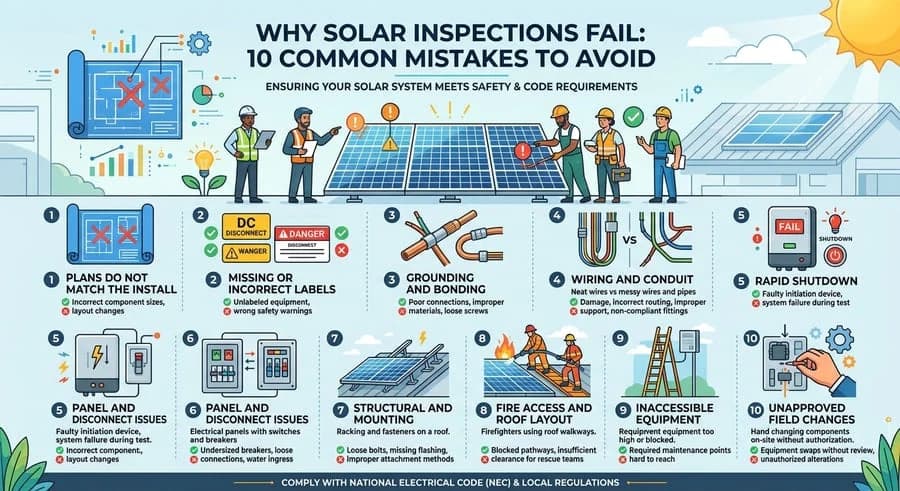
Why Solar Inspections Fail: 10 Common Mistakes to Avoid
Discover the 9 critical reasons solar inspections fail and how to avoid costly m...