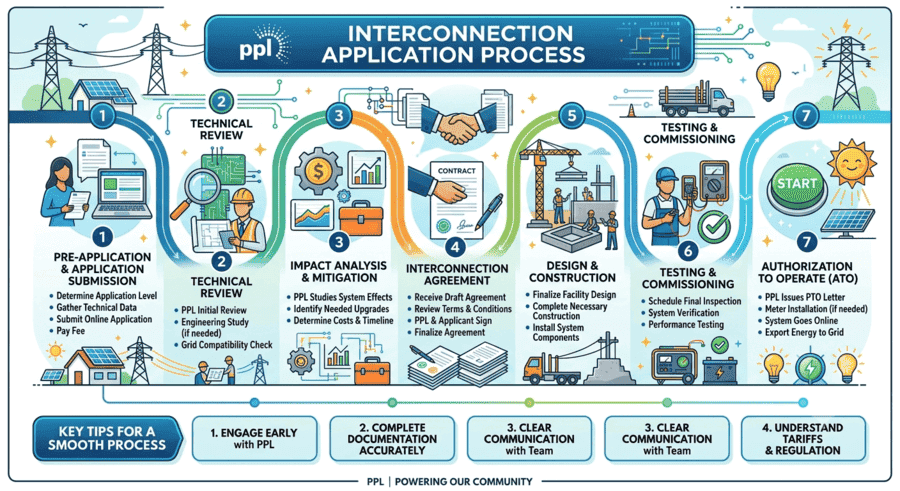
PPL Electric requires a separate interconnection application before any solar system can legally export power, in addition to the local building permit. The process has four fee tiers based on system size and inverter type: $100 flat for certified inverter-based systems 10 kW or less, scaling up to $350 plus $2/kW for larger or non-inverter-based systems. Most residential applications under 25 kW receive a response within 3 to 4 weeks.
This guide walks through the exact sequence our team follows when filing PPL interconnection applications for residential and small commercial systems, cross-checked against PPL Electric’s own published requirements. It covers the required documents, the fee schedule, the e-signature steps most guides skip, how PPL interconnection approval differs from your local building permit, and what happens to net metering once you’re approved.
What Is the PPL Electric Interconnection Process?
PPL Electric Utilities is the investor-owned utility serving 29 counties across central and eastern Pennsylvania, including the Lehigh Valley, Harrisburg, Lancaster, and Scranton. Before any grid-tied solar system in PPL territory can export power, PPL must review and approve a separate interconnection application under Pennsylvania’s Public Utility Commission (PUC) interconnection standards at 52 Pa. Code § 75.21. This review confirms the proposed system won’t create voltage, protection, or safety issues on PPL’s distribution grid and that the inverter meets IEEE 1547 anti-islanding requirements.
Interconnection Approval vs. Your Local Solar Permit
This is the single most common point of confusion for installers new to Pennsylvania: your AHJ building permit and your PPL interconnection application are two entirely separate approvals, run by two different organizations, and passing one does not satisfy the other.
- Your local Authority Having Jurisdiction (AHJ), the city or township building department, reviews structural adequacy and electrical code compliance under the Pennsylvania Uniform Construction Code, then issues the building and electrical permits. Our Pennsylvania solar permits guide covers the full AHJ-by-city breakdown, since requirements vary meaningfully between Philadelphia, Harrisburg, and the smaller boroughs in PPL territory.
- PPL Electric reviews the same system from a grid-safety standpoint (inverter certification, service capacity, transformer loading) and issues Permission to Operate (PTO). PPL will not issue PTO until the local AHJ has also signed off on the installation, so the two processes have to run in parallel, not sequentially.
Understanding what an AHJ actually is, and where its authority stops, matters here; see our explainer on what an AHJ is in solar and our broader guide to AHJ requirements nationally if you’re coordinating a multi-state project alongside your Pennsylvania work. A system can pass its final AHJ inspection and still be legally prohibited from generating power until PPL issues PTO. Plan for both tracks from day one; don’t wait for one approval to start the other.
PPL Interconnection Application Fees by Level
PPL groups every application into one of four review levels based on system type and size. This table reflects PPL’s published fee schedule as of this writing:
| Level | System Type | Base Fee | Per-kW Fee |
|---|---|---|---|
| Level 1 | Certified inverter-based, 10 kW or less | $100 | None |
| Level 2 | Certified inverter-based, greater than 10 kW up to 2,000 kW | $250 | $1/kW |
| Level 3 | Non-inverter-based (any size), or inverter-based systems larger than 2,000 kW | $350 | $2/kW |
| Level 4 | Doesn’t qualify for Level 1 or 2 and doesn’t export power | $350 | $2/kW |
Applications will not be approved before the fee is paid. If you need to change equipment, nameplate rating, or system size after submission, PPL requires you to cancel the existing application and submit a new one with a new fee; technical details can’t be edited on an active application.
PPL Solar Interconnection Application Steps
Here’s what actually happens between submitting an application and getting Permission to Operate, based on our team’s direct experience filing PPL applications:
Step 1: Gather Required Documents
Before starting the application, have these ready:
- One-line electrical diagram, including communications and existing distribution facilities. See our single-line diagram guide for what PPL and your AHJ both expect on this document.
- Site plan, including geographic features
- Equipment datasheet for the inverter, confirming UL 1741 Supplement B certification (only approved inverters are permitted)
- Confirmation of your interconnection method (supply-side or load-side), since this affects both the diagram PPL reviews and the busbar calculations your AHJ will check. See our supply-side vs. load-side interconnection guide.
- For systems 500 kW or larger, additional documentation is required beyond the standard package
- For battery storage paired with the array, a separate submission for approval; a PV-only application does not cover the storage scope. See our NEC 690/706 battery storage compliance checklist and our interconnection agreement checklist for the full document set utilities typically request.
Step 2: Submit Through the Online Portal
Applications with existing electric service are submitted through PPL’s Contractor Services Online Portal at pplelectric.com/renewable. If this is your first submission, you’ll need to set up a Contractor ID tied to your email address before you can file. Once submitted, a work order number is generated for the project; this is the reference number you’ll use for every subsequent step.
Step 3: E-Sign the Interconnection Agreement (ICA)
After the work order is created, an email goes out from Adobe/echosign (sender: echosign@echosign.com) to the customer, requesting an e-signature on the Interconnection Agreement (ICA). This step catches installers off guard when it isn’t flagged in advance. Tell your customer to expect this email and to sign promptly, since the application doesn’t move forward until the ICA is signed and forwarded to PPL.
Step 4: Engineering and Electrical Diagram Review
PPL runs two layers of technical review on every application:
- Service review, performed on all applications regardless of size, to determine whether the service wire and transformer need upgrading to support the DER request.
- Impact Review: For systems under 50 kW, PPL conducts this review but often does not issue a formal report if there’s no system impact; in these cases you’ll simply receive an approval notification. Larger or more complex systems may trigger a full report detailing required upgrades and costs.
If PPL’s engineering team finds the electrical diagram unacceptable, you’ll hear directly from engineering with the specific correction needed. This is a distinct step from the AHJ’s plan review and uses PPL’s own criteria, not the local code officials’.
Step 5: Pay the Application Fee
Once PPL confirms the application and diagram are acceptable, you’ll receive a notice that engineering review is required or complete, along with instructions to pay the application fee from the table above. Payment must be received before PPL will move the application to approval.
Step 6: Install the System and Pass Electrical Inspection
With the application fee paid and engineering review cleared, proceed with installation per your approved plan set. The township or municipal electrical inspector then submits a certified electrical inspection directly onto the PPL work order. This is the AHJ side of the process feeding back into PPL’s system, and it’s a required input before PPL will proceed to the next step. This inspection checks the installation against the National Electrical Code as adopted locally and against our overview of what a full solar permit plan set includes.
Step 7: Request and E-Sign the Certificate of Completion (COC)
Once the AC disconnect is installed and in sight of the PPL meter, and PPL has installed its DER management device (or completed a site visit confirming the installed inverter matches the application on file), you can request the Certificate of Completion through the work order. This option only becomes available once every other requirement on the application has been released. A second e-signature email goes out, this time to both the contractor and the customer, requesting e-signature on the COC. The COC is forwarded to PPL only after both parties have signed.
Step 8: Permission to Operate (PTO)
PPL reviews the signed COC and sends an approval-to-activate email; this is Permission to Operate. Only at this point is the system authorized to export power to the grid and begin accruing net metering credits.
Solar Permit Solutions
Solar Contractor? We Design Your Plans.
Outsource your permit plan sets to our team. PE-stamped, code-compliant, fast turnaround so you can focus on installation.
How Long Does PPL Solar Interconnection Take?
For residential systems under 25 kW with a complete application, expect roughly 3 to 4 weeks from submission to a substantive response from PPL. That figure covers the initial review cycle; it does not include the time your customer takes to e-sign the ICA, the time your electrician needs to complete installation, or the local AHJ’s own permit review timeline running in parallel. See our state-by-state solar permit timeline guide for how Pennsylvania’s AHJ side compares nationally.
Larger systems requiring a full impact review, or any project needing utility-side upgrades, will run considerably longer. Those projects trigger PPL’s payment structure for system reinforcements: a 25% deposit due within 45 calendar days of the Interconnection Impact Review invoice, followed by a 75% balance also due within 45 calendar days once engineering design is complete. Construction is typically scheduled 6 to 8 weeks after design completion, and the full project must be constructed within one year of application approval. Build your customer timeline around the AHJ permit and the PPL application running concurrently, not back to back.
PPL Interconnection vs. Pennsylvania Solar Permit
| Requirement | Responsible Party |
|---|---|
| Electrical plans / single-line diagram | Local AHJ (permit) and PPL (interconnection) both require it independently. |
| Structural review | Local AHJ |
| Building and electrical permit | Municipality / local AHJ |
| Interconnection application and fee | PPL Electric |
| Inverter certification (UL 1741 Supp. B) | PPL Electric |
| Electrical inspection | Local AHJ reported onto the PPL work order |
| Permission to Operate (PTO) | PPL Electric only |
PPL Contact Information by System Size
PPL routes application questions based on system size and phase configuration:
- Under 25 kW, single-phase: EUSolarPower@pplweb.com
- 25 kW and greater, three-phase, under 250 kW: BusinessAccounts@pplweb.com
- 250 kW and greater: DERApplications@pplweb.com
Net Metering After Interconnection Approval
Once PPL issues PTO, the system starts operating under Pennsylvania’s net metering framework, which is separate from the interconnection application itself but directly downstream of it. Pennsylvania’s Alternative Energy Portfolio Standards (AEPS) Act requires PPL and other investor-owned utilities to offer net metering to eligible customer-generators. Under 52 Pa. Code § 75.13, Residential systems are eligible for net metering up to a 50 kW nameplate capacity, with higher caps for non-residential accounts.
PPL’s most recent general rate case (PUC Docket No. R-2025-3057164) was decided on June 4, 2026: the PUC approved a settlement authorizing a $275 million increase in annual base distribution revenue, effective for service on and after July 1, 2026. That case addressed base distribution rates, not the net metering crediting mechanism itself. The PUC’s order included only a narrow net metering classification clarification affecting large “no-load” agricultural biogas facilities; it did not change how typical residential or commercial rooftop solar customers are credited. Utility rate structures can still change in future proceedings, so confirm current net metering terms directly with PPL before finalizing a customer’s savings projections. For incentive and credit questions outside of net metering itself, including how the expiration of the federal residential solar tax credit affects project economics, see our 2026 solar tax credit guide and our solar battery tax credit guide for storage-specific implications. DSIRE maintains the most current summary of Pennsylvania-specific incentive programs layered on top of the federal and utility rules covered here.
Documenting the Interconnection Path in Your Plan Set
Your AHJ plan set and your PPL application draw from the same underlying system design, but they’re reviewed independently and need to tell a consistent story. If your single-line diagram shows a load-side connection with a specific busbar calculation, that same configuration needs to match what’s submitted to PPL; a mismatch between the two packages is one of the more common sources of delay on either side. If the installation includes NEC-required labeling, our solar PV labeling requirements guide covers the rapid shutdown, disconnect, and power-source-directory labels an inspector will check against both your approved AHJ plans and the as-built system PPL confirms during its site visit.
Common Reasons PPL Applications Get Delayed
- Post-submission equipment changes. Any change to the kW nameplate, inverter manufacturer or size, required in-service date, or DER ownership structure after the work order is created forces a full new application and a new fee; there’s no in-place edit.
- Missing or late ICA/COC e-signature. Since both signature requests arrive by email from an automated echosign address, they’re easy for customers to miss or flag as spam. Confirm receipt directly with the customer at each stage.
- Uncertified or unlisted inverters. PPL requires UL 1741 Supplement B certification; using an inverter not on PPL’s approved list stalls the application at the engineering stage.
- AC disconnect not situated correctly. PPL requires the AC disconnect directly next to and within sight of the PPL meter, a common as-built deviation that delays Certificate of Completion approval.
- Rate class mismatch. Only residential (RS), small business (GS1 and GS3), and large power (LP4) rates qualify for net metering, and systems over 50 kW require the customer to be on a non-residential rate. Confirm the rate class before submitting.
- Missing electrical inspection on the work order. PTO can’t proceed until the township’s Certified Electrical Inspection has been submitted onto the PPL work order; this step is on the AHJ’s timeline, not PPL’s, so track it separately.
Frequently Asked Questions
Solar Contractor? We Design Your Plans.
Outsource your permit plan sets to our team. PE-stamped, code-compliant, fast turnaround so you can focus on installation.
Frequently Asked Questions
Yes. Every grid-tied solar system in PPL Electric's service territory requires a separate interconnection application and PPL's Permission to Operate before it can legally export power, in addition to the local building and electrical permits.
Most residential systems under 25 kW receive a response within 3 to 4 weeks of a complete, signed application. Systems requiring a full engineering impact review or utility-side upgrades take longer, since those projects also involve a 25% deposit and 75% balance payment cycle plus 6 to 8 weeks of construction scheduling.
A one-line electrical diagram (including communications), a site plan with geographic features, and an equipment datasheet confirming UL 1741 Supplement B inverter certification. Systems 500 kW or larger require additional documentation, and battery storage requires a separate approval submission.
No. PPL's process requires the application, engineering review, and fee payment to clear before installation proceeds toward Certificate of Completion, and the system cannot be energized to export power until PPL issues Permission to Operate, regardless of whether the local AHJ has already approved the installation.
PPL's interconnection application itself doesn't require a PE stamp on the electrical diagram in every case, but most Pennsylvania AHJs require structural and, in many cases, electrical plans sealed by a design professional licensed in the Commonwealth for the building permit side of the project. See our Pennsylvania PE stamp requirements guide for state-specific thresholds.

SPS Editorial Team
Solar Permit Solutions
Solar Permit Solutions provides professional solar permit design services for residential, commercial, and off-grid installations across all 50 states. Our team ensures permit-ready plan sets delivered fast.
Related Articles
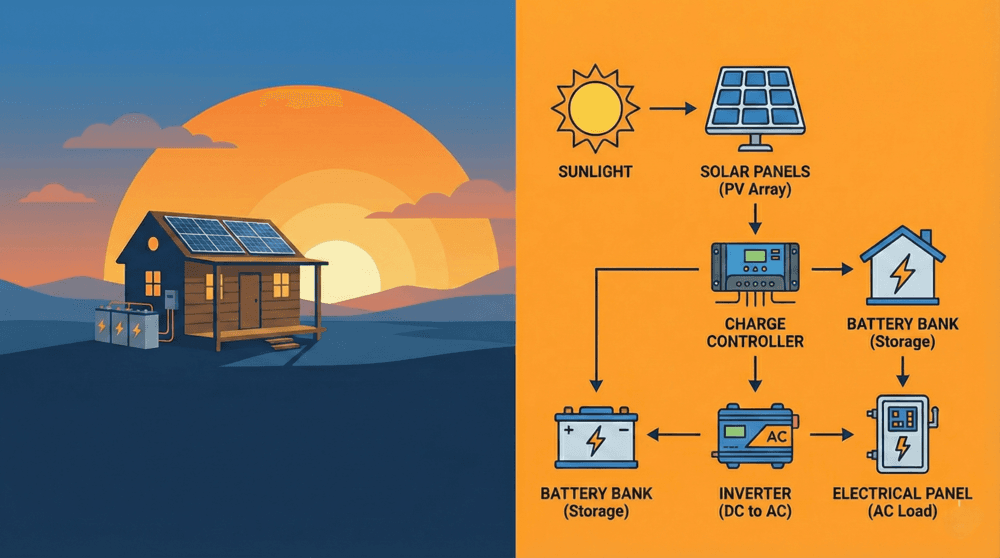
Off-Grid Solar System Requirements: Sizing, Permits & NEC Code Guide
Off-grid solar permit requirements by state: building codes, NEC compliance, bat...
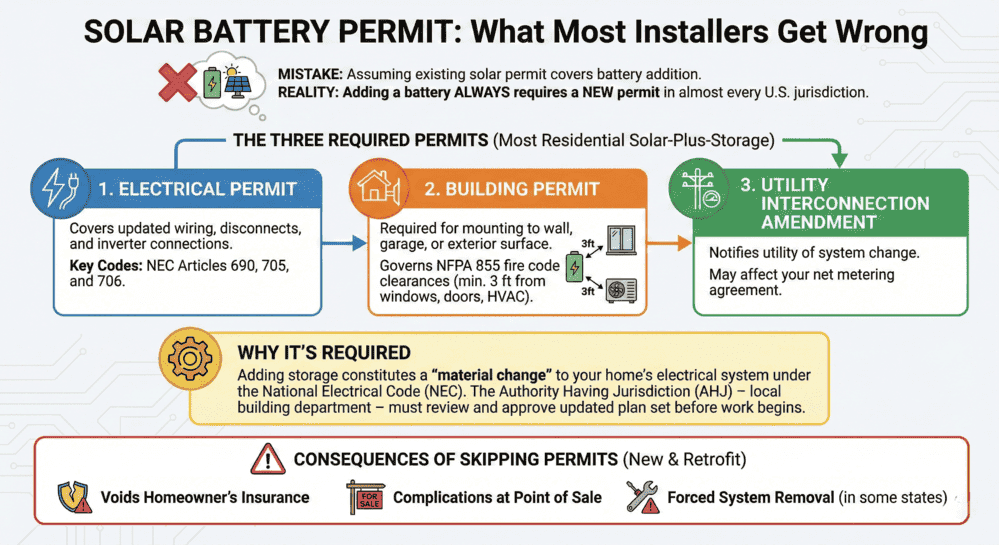
Solar Battery Permit: What Most Installers Get Wrong
Quick Answer: Adding battery storage to a solar system almost always requires ne...
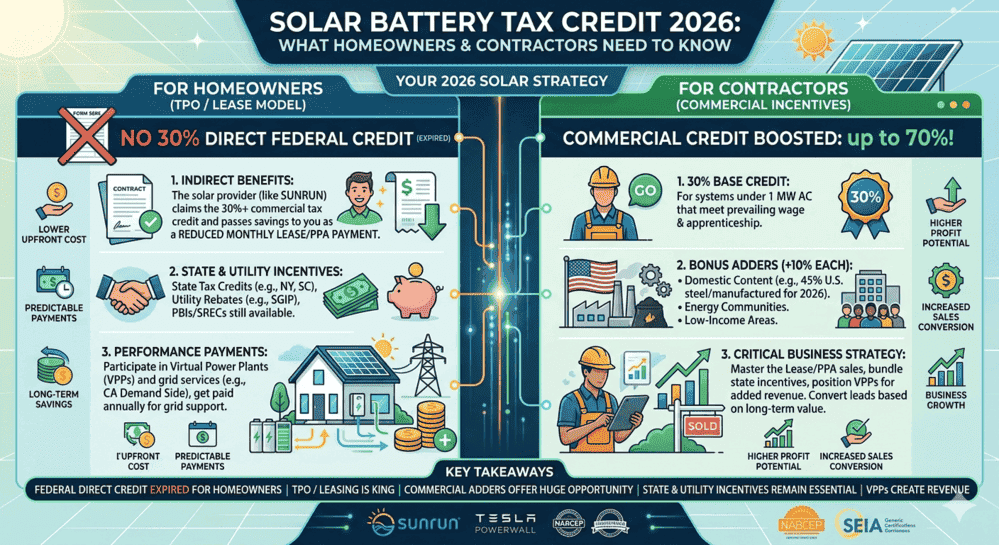
Solar Battery Tax Credit 2026: What Homeowners and Contractors Need to Know
There is no federal solar battery tax credit available to homeowners in 2026. Th...